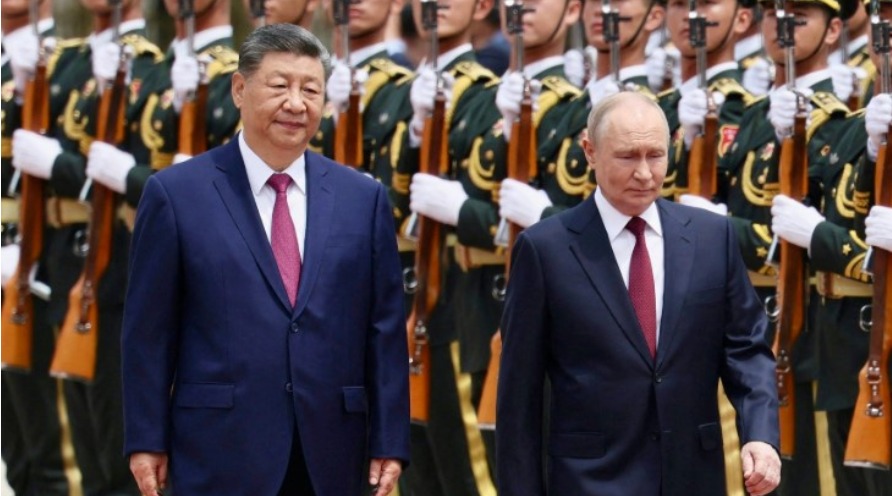
Russian President Vladimir Putin visited Beijing for high-level talks with Chinese President Xi Jinping, in a meeting framed by both sides as a clear signal that relations between China and Russia have reached an unprecedented level. The visit came only days after U.S. President Donald Trump’s presence in China, giving additional geopolitical weight to the encounter, which both Beijing and Moscow used to emphasize continuity, stability and mutual trust in their bilateral relations.
During the talks, Xi highlighted that the relationship between the two countries has entered a new phase characterized by deep political trust, strategic coordination and expanding cooperation across multiple sectors. Putin echoed these messages, stressing that Russia and China share a common approach to key global issues and should continue strengthening coordination in the face of what both sides described as growing international pressure and instability.
A central part of the visit is the signing of around 40 bilateral documents, covering a wide range of areas including economic cooperation, energy, infrastructure, trade and broader strategic coordination. In addition to these agreements, a comprehensive joint statement spanning dozens of pages is expected to formalize the direction of the partnership and outline shared positions on international issues, further institutionalizing the relationship between the two countries.
Putin used the visit to reiterate that Russia and China should jointly oppose what he described as “unilateral violence” in global politics, sending a clear message regarding their stance toward Western influence and international power structures. The language used during the meeting reflects a consistent alignment between the two countries in advocating for a multipolar world order and resisting external political and economic pressure.
Economic relations were also an important part of the discussions, with trade between the two countries reaching 240 billion dollars in 2025. Although this figure represents a decline of 6.5 percent compared to the previous year and marks the first drop in five years, both sides emphasized that the overall level of economic cooperation remains high and that there is significant potential for further growth in key sectors.
The Kremlin underlined that the substance of the visit outweighs its ceremonial aspects, presenting the trip as a working meeting focused on tangible results and long-term cooperation rather than symbolic diplomacy. The presence of large delegations from both countries, including ministers and business representatives, further reinforced the practical dimension of the visit and its role in advancing concrete projects.