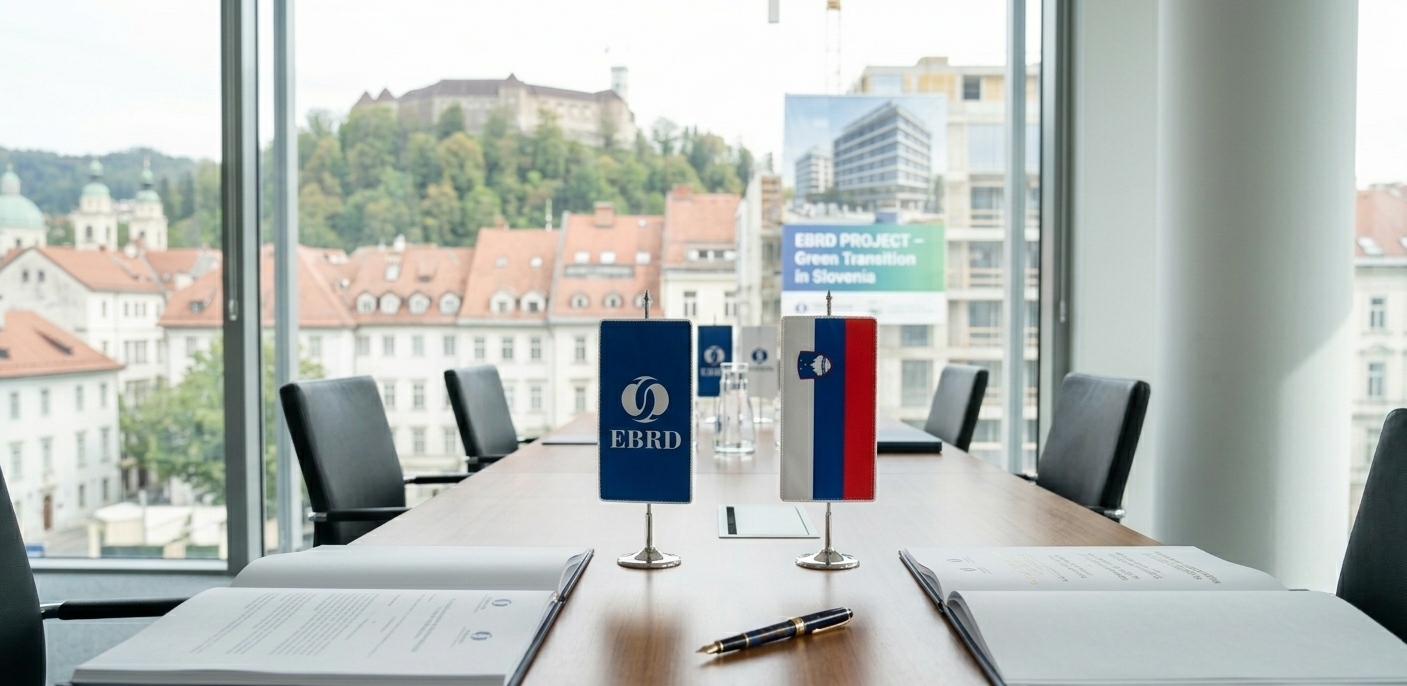
The European Bank for Reconstruction and Development is lending up to €70 million to Slovenia based NGEN Energetske Rešitve to finance five large scale battery energy storage systems across Latvia, Poland, Romania, and Slovenia, marking one of the most significant multi country storage portfolios yet assembled in Central and Eastern Europe. Announced on the 20th May, the deal will deliver a combined 302 megawatts and 604 megawatt hours of capacity using Tesla Megapack technology, with the facilities operating under a merchant model that sells electricity directly into wholesale markets. The transaction is backed by a first loss guarantee from the EU’s InvestEU Fund, reflecting Brussels’ growing urgency to shore up grid stability as renewable generation surges across the continent.
NGEN, a vertically integrated energy storage company headquartered in Žirovnica, has quietly built one of the region’s most ambitious BESS portfolios using private capital and Tesla equipment. The EBRD backed project includes one installation in Latvia, two in Poland, one in Romania, and one in Slovenia, specifically a 70 MW / 140 MWh facility that will rank among the largest standalone utility scale batteries in the Slovenian market, alongside a 100 MW / 200 MWh plant set to be one of Latvia’s biggest. The systems will be optimized through NGEN’s proprietary Energy Smart Grid Platform, an AI driven software stack designed to coordinate grid connected assets, provide frequency regulation, and reduce renewable curtailment in inertia constrained power systems. By deploying in markets where large scale storage remains largely untested, NGEN is betting that falling battery costs, down 37% for lithium iron phosphate systems between 2022 and 2025, and rising wholesale price volatility will make merchant based storage commercially viable without dedicated subsidy schemes.
The EBRD’s involvement signals a maturing financing environment for European energy storage at a pivotal policy moment. As a leading implementing partner for InvestEU, the bank is not only providing a senior secured loan but also leveraging EU de-risking tools to crowd in private capital for a total project cost of €163 million. The investment arrives as the bloc’s regulatory framework tightens, by June 2026, transmission system operators must assess national flexibility needs and set non fossil storage targets, while new rules will require all batteries over 2 kWh to carry digital passports by 2027. With Europe’s installed storage capacity recently crossing the 100 GW threshold and lithium ion systems dominating the project pipeline, the NGEN portfolio exemplifies a shift from pilot program to bankable, cross border infrastructure. The facilities are expected to displace fossil fuel generators in balancing markets, strengthen energy security, and help Latvia, Poland, Romania, and Slovenia absorb higher shares of intermittent wind and solar power.
For a company that until recently relied solely on private capital and has already deployed some of the largest BESS assets in Slovenia, Austria, and Croatia, the EBRD loan represents both a validation of its business model and a springboard for the 1-2 GW capacity target NGEN’s leadership has set for the coming years. As Europe races to build flexibility into its grids, the project underscores that the energy transition is no longer just about building renewables, it is about storing them. Whether NGEN can turn its first mover advantage in underdeveloped CEE storage markets into lasting profitability will be watched closely by an industry eager to prove that batteries can pay for themselves.