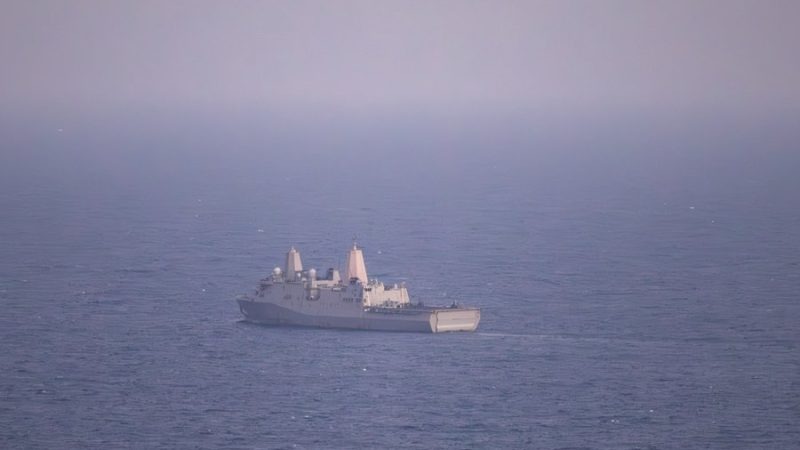
The U.S. military has launched new strikes in southern Iran, targeting missile launch sites and vessels that were allegedly attempting to lay mines near the Strait of Hormuz, according to reports citing U.S. Central Command.
CENTCOM said the operation was carried out in self-defense and was intended to protect American troops from threats posed by Iranian forces. A spokesperson for the command, Captain Tim Hawkins, said U.S. forces “continue to defend themselves” while exercising restraint during the ongoing ceasefire.
The strikes reportedly took place near Bandar Abbas, a major port city in southern Iran and home to an Iranian naval base along the strategically important Strait of Hormuz. Iranian media reported that three explosions were heard in the area, though it remains unclear whether the blasts occurred inside the city, offshore, or near military facilities.
Iran has not yet issued a direct official response to the latest U.S. strikes, but Iranian military officials have warned that any further aggression would be met with a much stronger response. Iranian Armed Forces spokesperson Abolfazl Shekarchi said that future attacks could trigger retaliation that would extend beyond the region.
The incident comes as Washington and Tehran continue efforts to reach a broader agreement to end the conflict. Iranian Foreign Ministry spokesperson Esmail Baghaei said earlier that some progress had been made in talks, but that a deal was “not imminent.”
U.S. Secretary of State Marco Rubio said a diplomatic agreement remains possible, pointing to discussions involving Iran’s foreign minister and Qatar’s prime minister. However, Rubio also stressed that the Strait of Hormuz must remain open, calling any attempt to disrupt shipping there “illegal” and “unacceptable.”
It remains unclear whether the latest strikes will affect the fragile ceasefire or the ongoing diplomatic efforts. The Strait of Hormuz remains one of the world’s most critical maritime routes, and any escalation in the area could have broader consequences for global security and energy markets.