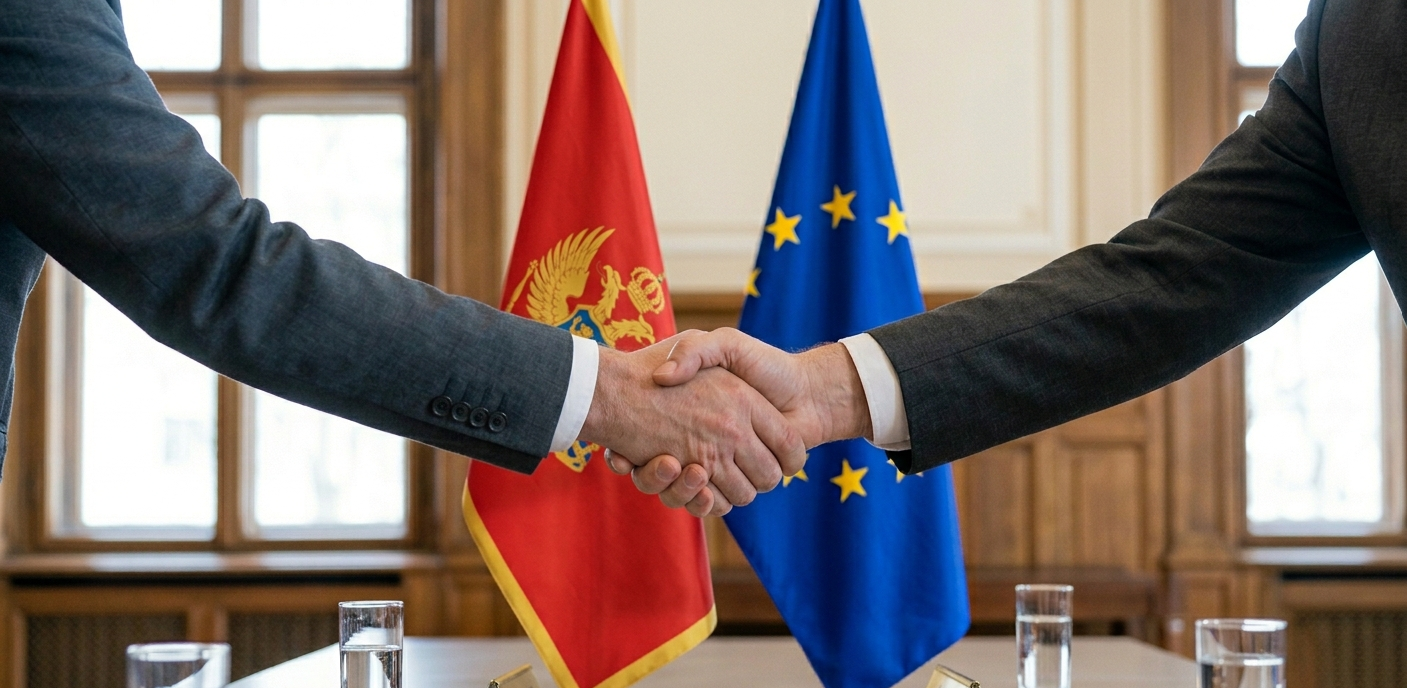
Montenegro’s Foreign Minister Ervin Ibrahimović has underscored the critical role that Council of Europe recommendations play in the country’s European integration process, meeting with Ljiljana Tangi, rapporteur of the Parliamentary Assembly of the Council of Europe (PACE), as part of the ongoing post monitoring dialogue. The encounter comes at a pivotal moment for Podgorica, which is racing to complete reforms necessary to achieve full EU membership by the end of 2028, a goal that has become the centerpiece of its foreign policy agenda. Ibrahimović emphasized that CoE reports serve as an essential framework for improving Montenegro’s legislative and institutional systems, while Tangi welcomed the country’s commitment to reforms and expressed hope that her visit would provide comprehensive insight into progress made and upcoming priorities.
Montenegro’s EU ambitions have gained significant momentum in recent months. The European Commission’s positive assessment for 2025 confirmed its status as the most advanced candidate for membership among the Western Balkans, and the trend of closing negotiation chapters has continued into 2026. As of May 2026, the EU had approved an Ad Hoc Working Party to finalize the legal fine print on Montenegro’s accession, with Brussels reportedly aiming for an 80 to 85% overlap with Croatia’s accession treaty. European Commissioner for Enlargement Marta Kos has stated that Montenegro could complete negotiations by 2028, making it the frontrunner in the current enlargement wave. The successful hosting of the EU Western Balkans Summit in Tivat earlier this year delivered encouraging messages from European officials, further validating Podgorica’s trajectory.
Beyond EU accession, Ibrahimović highlighted Montenegro’s multifaceted diplomatic engagement. The country remains committed to credible NATO membership, strengthening good neighborly relations, and deepening regional cooperation. Notably, Montenegro currently chairs both the Western Balkans Fund and the Berlin Process in 2026, while preparing to assume the presidency of the Council of Europe Committee of Ministers, a rotation that would mark a significant milestone in its multilateral standing. Ibrahimović assessed that completing the post monitoring process with the Council of Europe would further strengthen Montenegro’s international position ahead of this important presidency. The visit by Tangi, which ran from June 9 to 12, focused on fact finding across areas including the rule of law, media freedom, and anti corruption efforts.
The path to 2028 is not without obstacles. Montenegro still has 19 of 33 negotiation chapters remaining to be closed, and the issue of the Montenegrin language’s status as a potential EU official language has emerged as a sticking point. Domestically, the governing coalition includes pro Russian parties such as New Serb Democracy and the Democratic People’s Party, raising questions about long term alignment with EU values. Analysts warn that the 2028 target has created high expectations that, if unmet, could trigger a socio political crisis. Yet with strong support from EU member states like France, President Emmanuel Macron recently pledged that “Montenegro can count on French support in the final stage of the EU accession process”, and an 80% public approval rating for EU membership, Podgorica appears determined to press forward. The coming months will be decisive as Montenegro works to close its remaining chapters and demonstrate that its reform momentum is both durable and irreversible.