Serbian President Aleksandar Vučić’s suggestion that Serbia could consider changing the course of the Ibar River has triggered a new political dispute with Albania and sharp reactions from Kosovo. The Ibar River dispute has since developed into an exchange involving the Serbian and Albanian foreign ministers, followed by a direct response from Albanian Prime Minister Edi Rama.
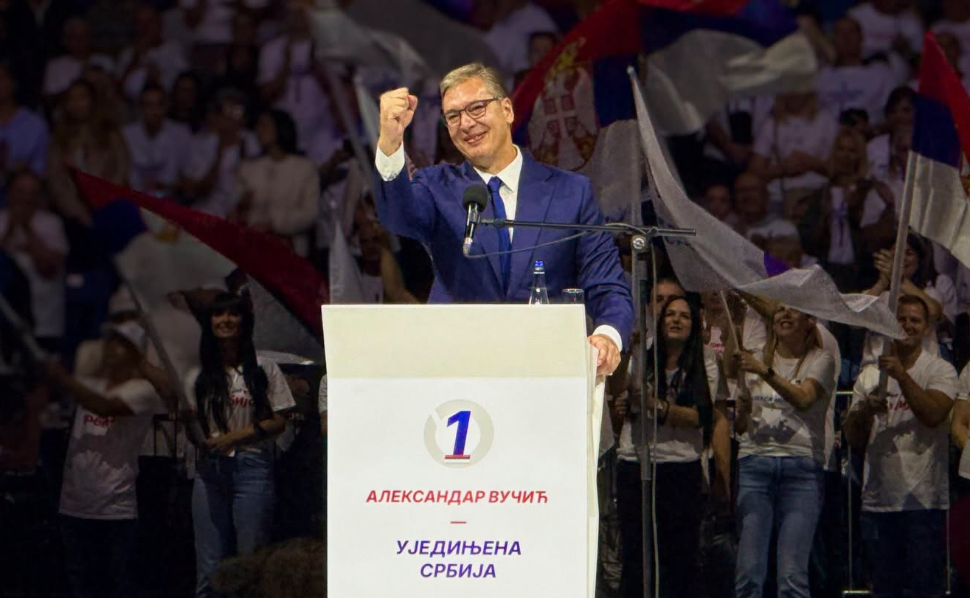
Vučić said Serbia was gathering construction experts, engineers and others to examine whether the course of the Ibar could be changed. He linked the idea to what he described as the difficult situation facing Serbs in Kosovo and said Serbia was doing everything possible to make their lives easier.
“Let us see, we have different reasons for changing the course of the Ibar, so we will see what the Albanians will do and how they will behave,” Vučić said, adding that Serbia is a sovereign country and would act according to its interests. He made the remarks while visiting reconstruction and conversion works at the Old Railway Bridge in Belgrade.
Vučić also said he did not consider going to war with NATO an option. He argued that Serbia was instead using the means available to it to help the Serbian population in Kosovo.
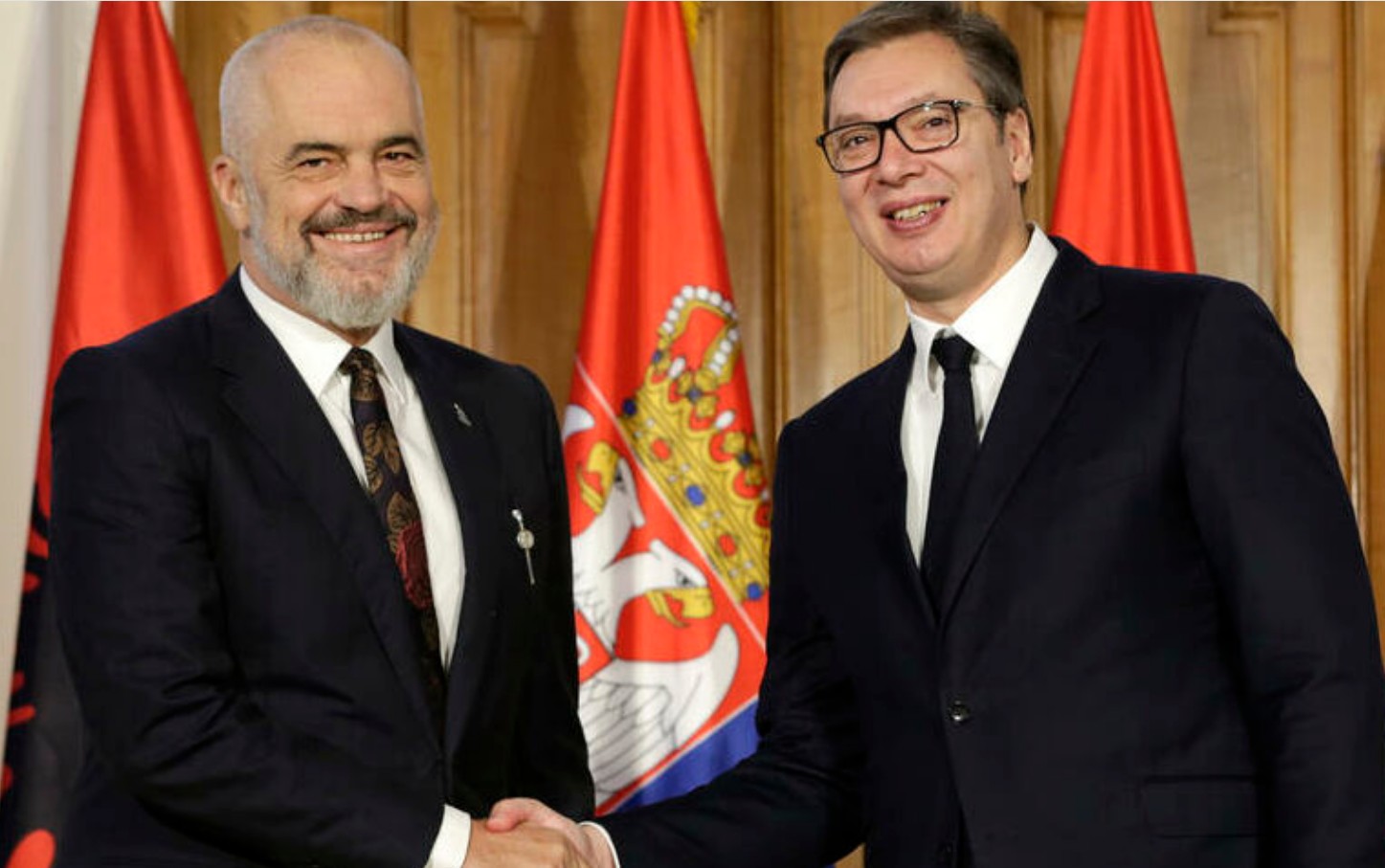
Albania and Serbia Exchange Sharp Messages
Albanian Minister for Europe and Foreign Affairs Ferit Hoxha expressed deep concern over Vučić’s statement and reports that Serbian experts and institutions were examining the possibility of changing the river’s course. He argued that altering a river forming part of a transboundary water system could not be treated exclusively as an internal matter when the consequences could affect another territory, its environment, water security, water supply and population.
Hoxha referred to principles of international water law concerning the equitable and reasonable use of transboundary waters, prevention of cross-border damage, cooperation, exchange of information and consultations on measures with potential cross-border effects. He also noted that Serbia has been a party to the UNECE Convention on the Protection and Use of Transboundary Watercourses and International Lakes since 2010.
According to Hoxha, any project capable of affecting the flow, quantity or quality of waters affecting Kosovo should be handled transparently, on the basis of scientific data, with an assessment of cross-border effects and consultations with the affected side. He said water should not be used as an instrument of political pressure or as a means of punishing another country or population.
Serbian Foreign Minister Marko Đurić responded by accusing Albania of attempting to change the subject and divert attention from what he described as continuing violations of the basic rights of Serbs in Kosovo. He argued that Albanian officials were showing concern in one direction while ignoring the rights and security of the Serbian community.
Đurić stressed that the Ibar does not flow through Albania and said Albania was not a riparian state in the river basin. He therefore argued that Tirana had no territorial or hydrological basis for determining how Serbia manages water resources on its territory in accordance with its constitution, laws and international obligations.
He also said Albania’s intervention raised questions about its political motives and referred to concerns over regional concepts treating Serbian territory and resources as belonging to a wider Albanian political sphere. Đurić said there was no place for a “Greater Albania” or any other project based on ethnic expansionism and the redrawing of borders in the region’s European future.
At the same time, Đurić said the goal should be a region in which borders progressively lose their power to divide people and become open to people, trade, cooperation and shared prosperity, while respecting the sovereignty and territorial integrity of every state. He maintained that Serbia would independently decide how to manage its natural resources and called for lower rhetoric and a return to good-neighborly relations based on mutual respect and cooperation.
Rama Rejects “Greater Albania” Claims and Defends Kosovo
Prime Minister Edi Rama later entered the Ibar River dispute, describing the Serbian position as a form of political folklore and rejecting suggestions that Albania had territorial ambitions toward Serbia. He said Albania did not need a project of “Greater Albania” in order to support Kosovo.
Rama said Kosovo was a separate state with its own republic and institutions and that Kosovo Albanians had the right to decide their own future. He maintained that Albania would continue supporting that right and said the territory and natural resources of Kosovo were not Serbian territory or Serbian resources.
On the river itself, Rama said the central issue remained that the Ibar constituted a transboundary water system. He acknowledged that Serbia was free to manage resources under its jurisdiction but argued that possible consequences for another country could not simply stop at Serbia’s border, pointing to the existence of international water law.
Rama also addressed the position of the Serbian community in Kosovo, saying their rights, security, property, language and cultural and religious heritage must be protected. He argued that acknowledging those rights was compatible with Albania’s support for Kosovo.
He rejected Đurić’s warnings about ethnic expansionism, arguing that Albania was simultaneously being warned against territorial ambitions while Kosovo was being treated by Serbia as Serbian territory. Rama nevertheless agreed with the idea that borders in the region should gradually become less divisive, but said that required first accepting the borders that already exist.
Rama said Albania wanted good relations with Serbia and wanted the entire region, including Serbia, within Europe. However, he insisted that good-neighborly relations could not require Serbia’s neighbors to accept what he called Serbia’s version of history.
Kosovo’s acting president Albulena Haxhiu also described the idea of redirecting the Ibar as absurd and threatening. She said the Ibar-Lepenac system and Gazivoda Lake were crucial for Kosovo’s water supply, energy and agriculture and argued that using water resources as an instrument of pressure was unacceptable.
Haxhiu called the proposal a destabilizing approach and said it warranted an international response. The reports state that the Ibar-Lepenac system supplies water to several municipalities, irrigates agricultural land and provides water used to cool thermal power plants in Obilić.
Rama concluded his response by saying Albania’s position would remain unchanged: respect for Serbia and support for good-neighborly relations, alongside continued support for Kosovo. Referring again to the dispute over the river, he said the Ibar would continue to follow geography rather than political folklore.