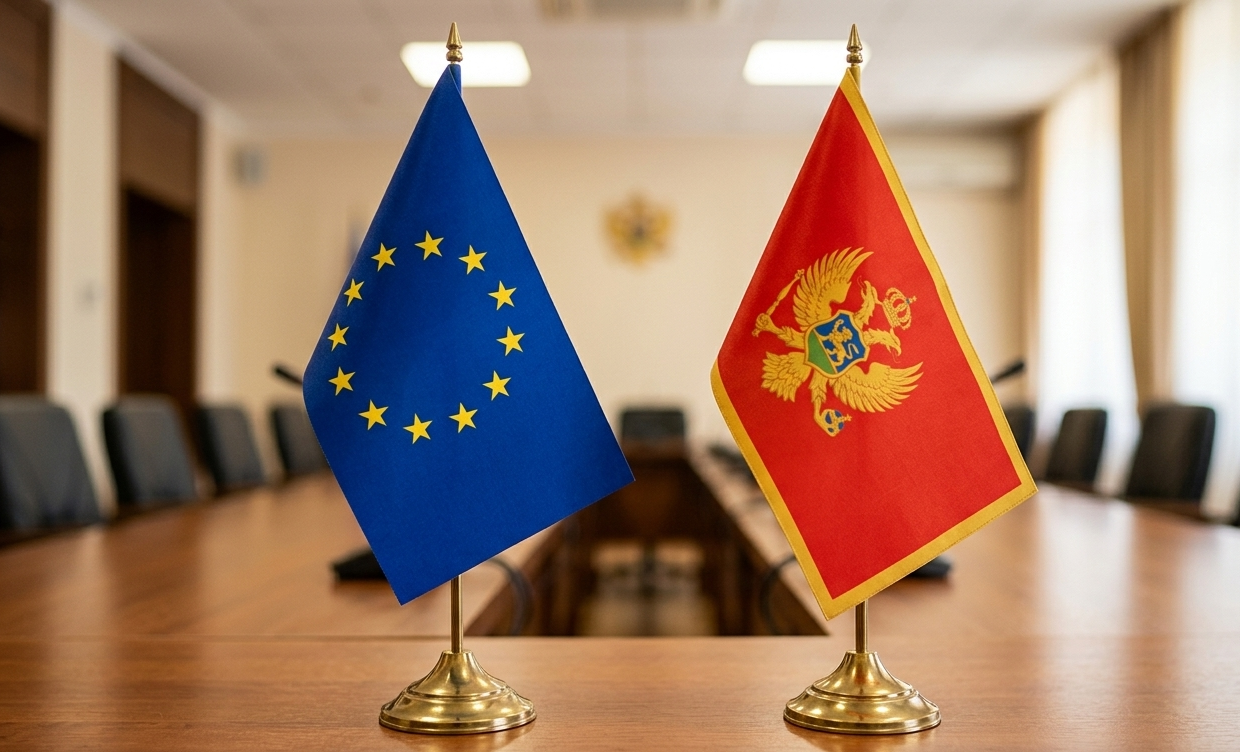
The European Union’s annual report on human rights and democracy worldwide delivers a mixed assessment of Montenegro, recognizing legislative progress while warning that vulnerable groups continue to face discrimination, hate speech and hate crimes. Published by the European External Action Service, the review notes that Podgorica adopted a new anti discrimination law aligned with EU standards in December 2025. However, Roma and Egyptian communities, people with disabilities and LGBTI persons continue to experience systemic prejudice and violence.
Brussels says Montenegro must fully implement recommendations from the European Committee for the Prevention of Torture, the European Commission against Racism and Intolerance, and the Group of Experts on Action against Violence against Women and Domestic Violence. The EU’s assessment highlights the continuing gap between formal legal protections and the experiences of vulnerable citizens in everyday life.
Democratic Institutions and EU Integration Face Continued Challenges
Democratic institutions in Montenegro remained largely stable during 2025, but the report identifies recurring vulnerabilities linked to political polarization and institutional disputes. One of the most serious episodes followed Parliament’s controversial December 2024 decision to unilaterally declare a Constitutional Court judge retired. The Venice Commission subsequently found the move inconsistent with constitutional procedures in a June 2025 opinion.
The opposition responded by blocking parliamentary proceedings for months, raising concerns about judicial independence and the separation of powers. A political agreement reached in March 2025 eventually restored legislative activity, but the dispute exposed institutional weaknesses that remain significant despite Montenegro’s position as an EU frontrunner. The European Commission’s 2025 country report similarly found that progress on legislative alignment in rule of law chapters slowed during early 2025 because of domestic political tensions, although six negotiating chapters were provisionally closed by the end of the year.
Parliament also adopted electoral amendments in July 2025 addressing some long standing recommendations from the OSCE and ODIHR. The changes included stronger campaign finance oversight, higher gender quotas and a unified day for local elections. However, the EU noted that local electoral processes in Kotor and Šavnik remained incomplete and that the amendments had not been fully consulted with relevant stakeholders, leaving Montenegro’s electoral framework below European standards.
Civil society organizations continue to operate in a generally enabling environment, but the report says their participation in policymaking can remain largely formal. The Council for Cooperation between the Government and NGOs has also not resumed its work. International rankings illustrate some of the broader challenges, with Montenegro placed 37th in the Reporters Without Borders press freedom index, 55th in the World Justice Project rule of law index and 65th in Transparency International’s corruption perceptions index. CIVICUS gave the country a score of 77 out of 100, pointing to concerns over the narrowing of civic space.
Despite these challenges, Montenegro has maintained its focus on European integration and continued to receive substantial EU support. The Western Balkans Reform and Growth Instrument provided €20.9 million in budget support, while IPA III and NDICI funding supported initiatives including the 2024–2027 War Crimes Investigation Strategy and Montenegro’s first National Strategy on Victims’ Rights, adopted in December 2025.
Amendments to the Criminal Code have also been introduced in line with Council of Europe recommendations concerning hate speech, while the legal aid framework has been strengthened for vulnerable victims. Nevertheless, Brussels says several obligations remain unfinished, including ratification of pending international instruments such as the 2014 ILO Protocol on forced labor and improvements in Montenegro’s reporting to UN human rights bodies.
The overarching message from the EU report on Montenegro is that legislative alignment alone is not enough to secure lasting progress. Sustainable EU accession will depend on whether Podgorica can turn legal reforms into meaningful protection for vulnerable citizens, strengthen institutional resilience and develop a political culture that respects constitutional checks and balances.