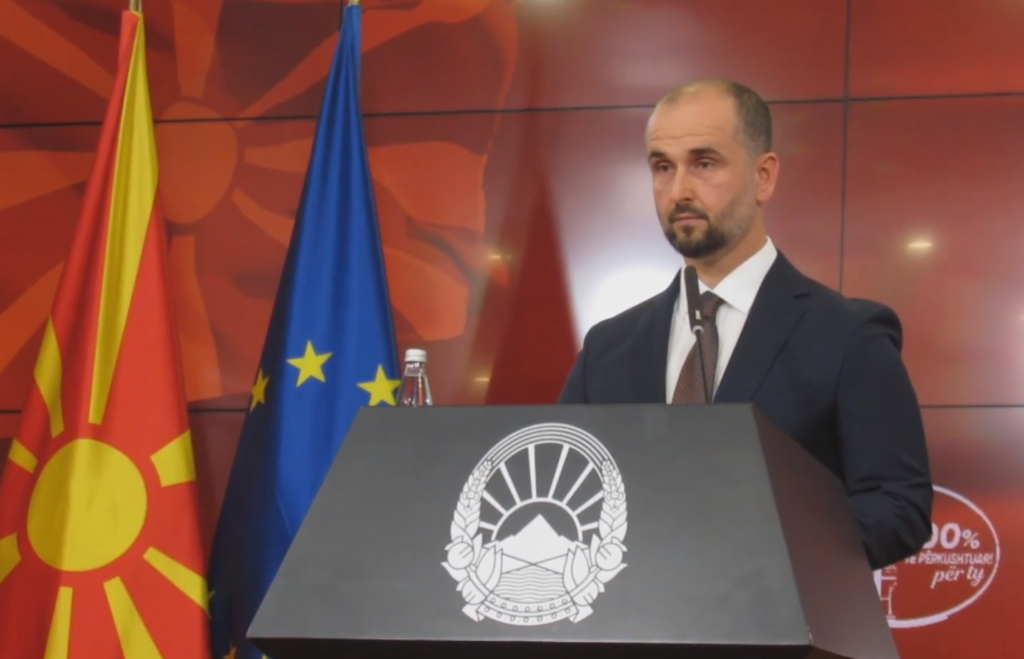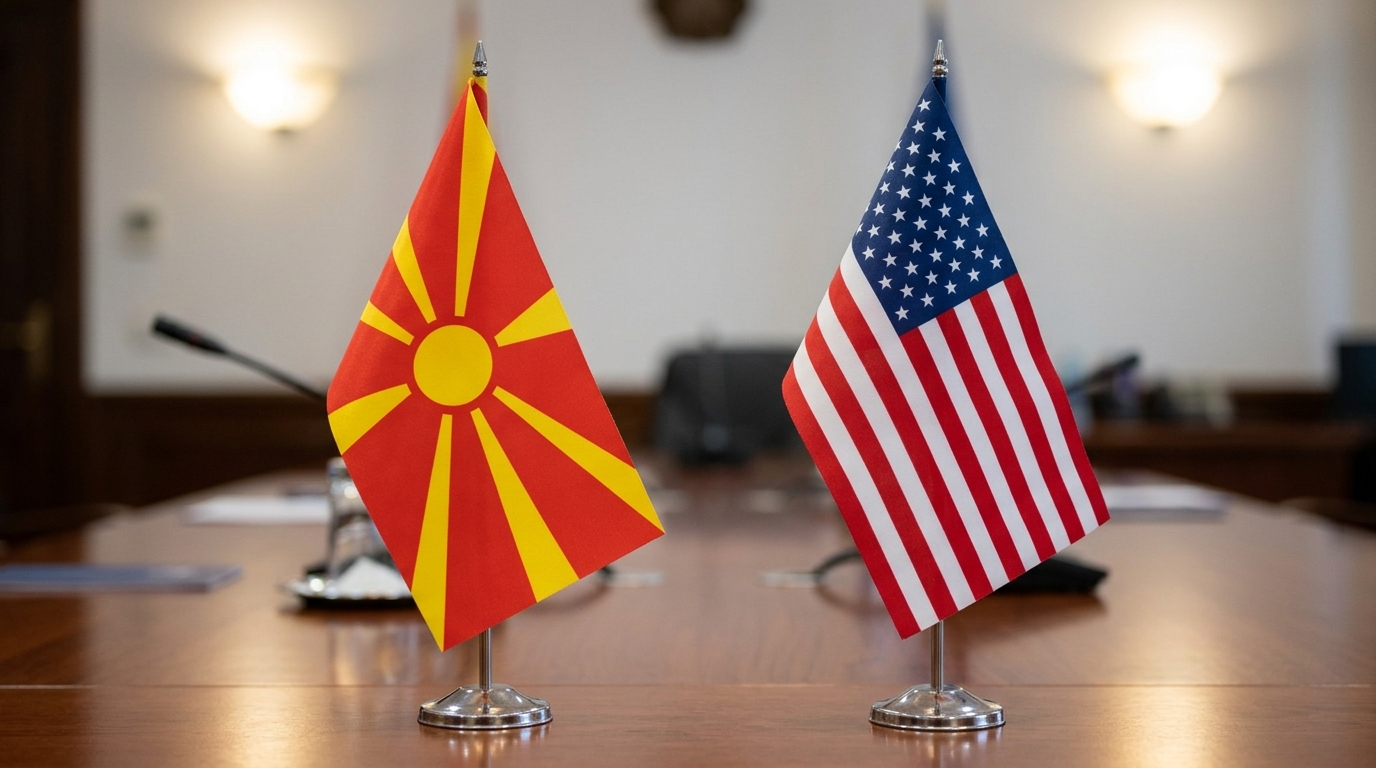
National Bank Governor Trajko Slavеski met with representatives of the U.S. Embassy to discuss current economic conditions, the outlook for Macedonia’s domestic economy and wider global and regional developments affecting the country. The meeting brought together Bradley Gardner, head of the Embassy’s Political Economic Section, Economic Attaché Barnabas Birkeland and senior economist Jordan Damchevski, along with National Bank Vice Governor Ana Mitreska.
The discussions focused on the challenges facing the Macedonian economy amid continued uncertainty in the global economic environment. Particular attention was given to international and regional economic trends and how developments abroad could influence domestic prices, financial conditions, economic growth and overall economic stability.
Governor Slavеski presented the National Bank’s current priorities, emphasizing the importance of maintaining price stability, a stable exchange rate and a resilient financial system. The central bank also highlighted its efforts to modernize Macedonia’s financial sector and strengthen its ability to respond to potential economic and financial risks.
According to the National Bank, Macedonia’s financial system remains resilient and capable of withstanding potential shocks stemming from both domestic and international developments. The institution said it continues to monitor risks closely and is prepared to introduce appropriate measures when necessary to preserve confidence in the banking sector and the broader financial system.
Macedonia and U.S. Continue Economic Dialogue
The meeting also underlined the importance of continued cooperation and regular dialogue between Macedonia and the United States on economic issues. Such discussions are particularly relevant as policymakers worldwide deal with uncertainty surrounding international trade, inflation, energy markets and geopolitical developments, all of which can have an impact on smaller, open economies such as Macedonia.
For Macedonia, maintaining macroeconomic stability remains important not only for protecting households and businesses from economic shocks but also for creating a more predictable environment for investment and long term growth. The National Bank has repeatedly stressed the importance of stable prices and a resilient financial system as foundations for sustainable economic activity.
The meeting ultimately provided an opportunity for the two sides to exchange views on Macedonia’s economic direction and the challenges ahead. While no major new policy measures were announced, continued dialogue between Macedonian institutions and international partners reflects the importance of cooperation as the country navigates an increasingly uncertain global economy.