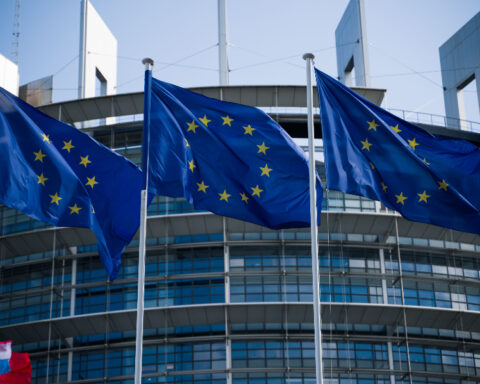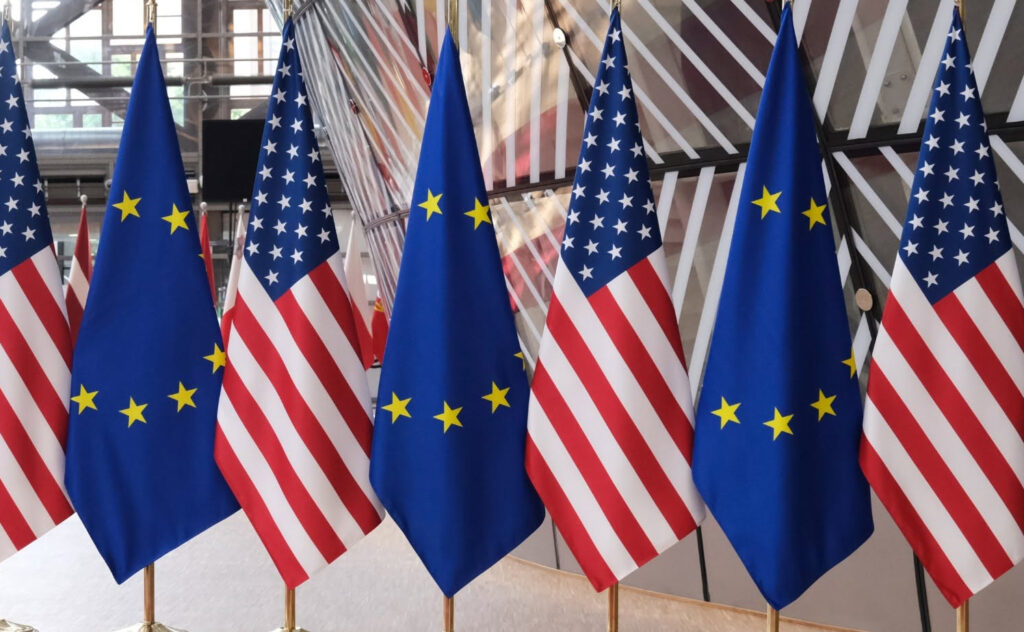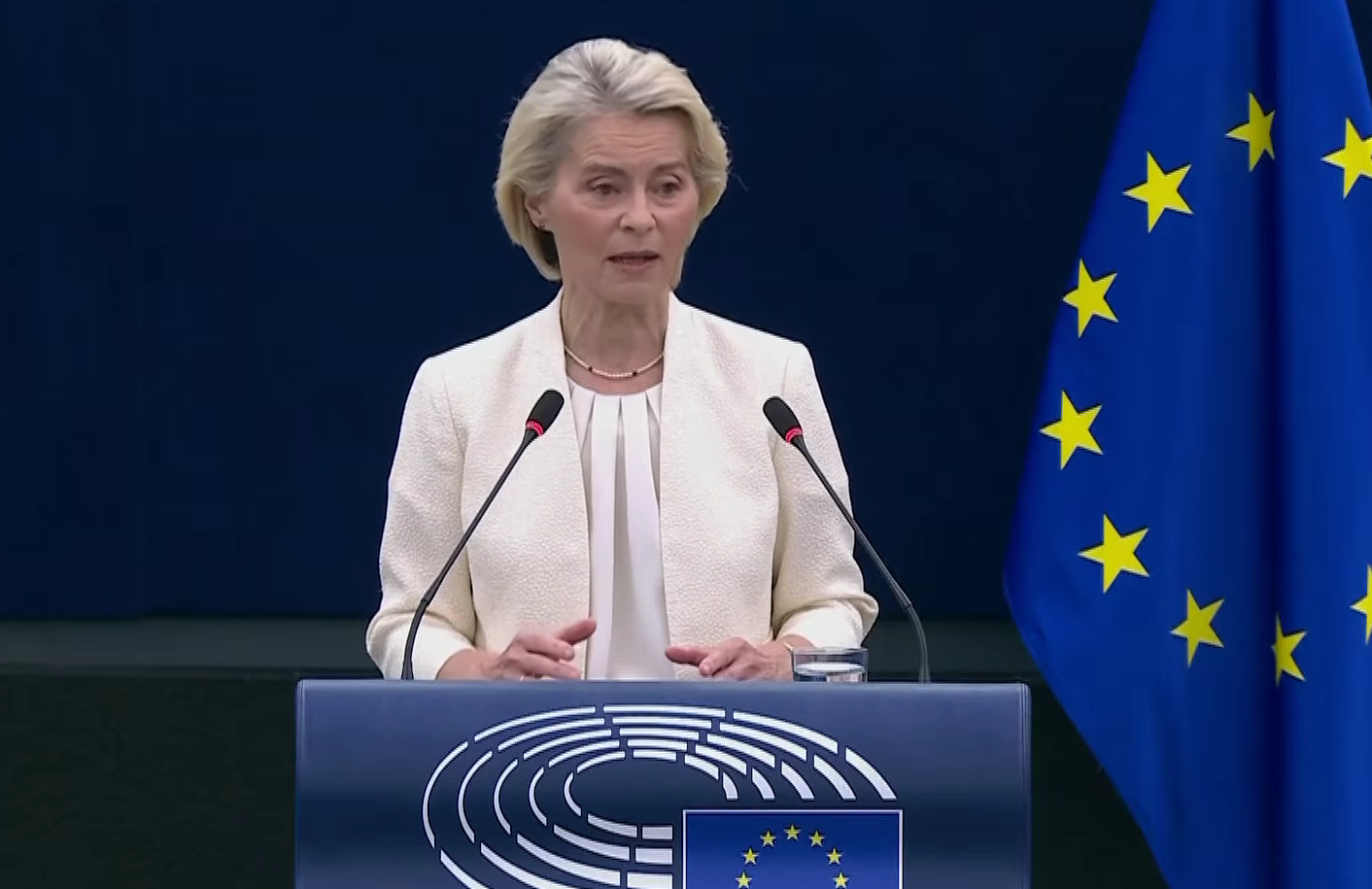
European Commission President Ursula von der Leyen and Canadian Prime Minister Mark Carney are exploring a new form of partnership that could give Canada a special status within the European Union. The proposal aims to strengthen economic security, reduce dependence on the United States and protect both sides from political and trade pressure, but divisions remain among European governments.
Canada and the European Union are moving toward a closer political and economic relationship as U.S. President Donald Trump’s trade policies reshape traditional alliances among Western countries.
At a meeting in Montreal, Canadian Prime Minister Mark Carney and European Commission President Ursula von der Leyen backed the idea of creating a special status for Canada within the EU, potentially making it the bloc’s first “associate member,” according to the Associated Press.
The proposal would not make Canada a full member of the European Union. Instead, it would establish a new framework for cooperation, potentially serving as a model for a broader international alliance involving countries with shared economic and security interests.
The initiative, referred to as an “Alliance for the Future,” is intended to help participating countries become less vulnerable to political pressure, trade restrictions and disruptions to global supply chains.
Officials stressed that the proposed alliance would not be an exclusive club but would remain open to other trusted partners willing to cooperate on economic security and technological independence.
Von der Leyen warned that economic interdependence, once widely viewed as a guarantee of stability, is increasingly being used as a tool of political pressure.
She said the consequences are ultimately felt by ordinary citizens through higher prices for food, cars and other products, describing economic coercion as a direct challenge to national sovereignty.
Carney linked the initiative to Canada’s determination to maintain control over its own future. He argued that stronger European ties would help the country withstand international economic shocks and reduce the ability of foreign governments and major technology companies to influence its strategic decisions.
Carney’s Warning About the International Order
The initiative follows Carney’s speech at the World Economic Forum in Davos in January, when he warned that the international order built under American leadership was changing and that economic dependence could be turned into a weapon.
He called on middle powers to work together to reduce their vulnerability to pressure from the world’s most powerful countries.
Although Canadian and European officials insist the closer relationship is not directed against Washington, the proposal has already drawn criticism from Trump.
The U.S. president warned that a special arrangement between Canada and the EU could be considered a hostile move and threatened additional tariffs on Europe.
The White House, meanwhile, confirmed that American and Canadian trade representatives had recently held discussions, although no breakthrough was announced.
Divisions Within the European Union
The idea of associate membership has not received unanimous support among EU governments.
France and Germany are among the countries expressing reservations about the proposed terminology and its potential institutional consequences, according to Anand Sundar, an adviser at the European Council on Foreign Relations.
Sundar suggested that opposition from member states could create a political challenge for von der Leyen and make the proposed designation difficult to approve.
The European Commission president nevertheless continues to support the concept.
She explained that Canada’s geographical position makes full EU membership impossible, but argued that the two sides could establish a relationship closer than existing cooperation frameworks with non-EU countries.
She described the concept as bringing countries together without requiring formal accession.
Carney played down the disagreement over terminology, arguing that the substance of the agreement matters more than its name. He also confirmed that Canada has no plans to pursue full EU membership and that any comprehensive agreement would be subject to consideration by the Canadian Parliament.
What Would the Partnership Include?
The proposed partnership could cover trade, defense, technology, scientific research and critical raw materials.
One of the expected developments is an agreement that would give Canadian businesses and research teams access to a network of 12 European supercomputers, strengthening cooperation in artificial intelligence.
Carney also announced the possibility of a Canadian investment of up to 1.6 billion Canadian dollars in artificial intelligence company Cohere, which previously announced plans to merge with Germany’s Aleph Alpha.
According to Carney, Cohere would retain its Canadian identity and invest at least 1.7 billion Canadian dollars in new domestic computing infrastructure.
The broader objective is to give Canada greater control over the development and application of advanced technologies.
Defense cooperation is another major priority.
Canada is the only non-European country participating in the EU’s €150 billion SAFE defense procurement program, designed to support joint military purchases.
However, European countries remain divided over the rules governing future participation. France favors stronger preferences for products manufactured in Europe, while Germany supports a more open approach that would allow greater involvement from Canadian companies.
Reducing Dependence on the U.S. Market
Trade cooperation already has a foundation in the Comprehensive Economic and Trade Agreement (CETA), which eliminated most tariffs between Canada and the EU.
Nevertheless, Canada remains heavily dependent on the American market. In 2025, the United States accounted for 71.7 percent of Canadian merchandise exports.
Carney wants to double Canada’s exports to markets outside the United States over the next decade.
Critical minerals are another important part of the proposed partnership. Lithium, cobalt, nickel and graphite are essential for batteries, electric vehicles, advanced manufacturing and other strategic industries.
The value of EU imports of these materials from Canada increased by 62 percent last year, reaching €3.3 billion.
For both sides, closer cooperation could help build more reliable supply chains and reduce dependence on a limited number of international partners.
Analyst Tobias Gehrke cautioned that economic and military dependence on the United States cannot be overcome quickly, particularly given the possibility of American retaliation.
However, he noted that current political circumstances have created opportunities for cooperation that would have been difficult to imagine only a short time ago.
For Canada and the European Union, the challenge now will be turning political ambitions into concrete agreements without further escalating tensions with Washington.