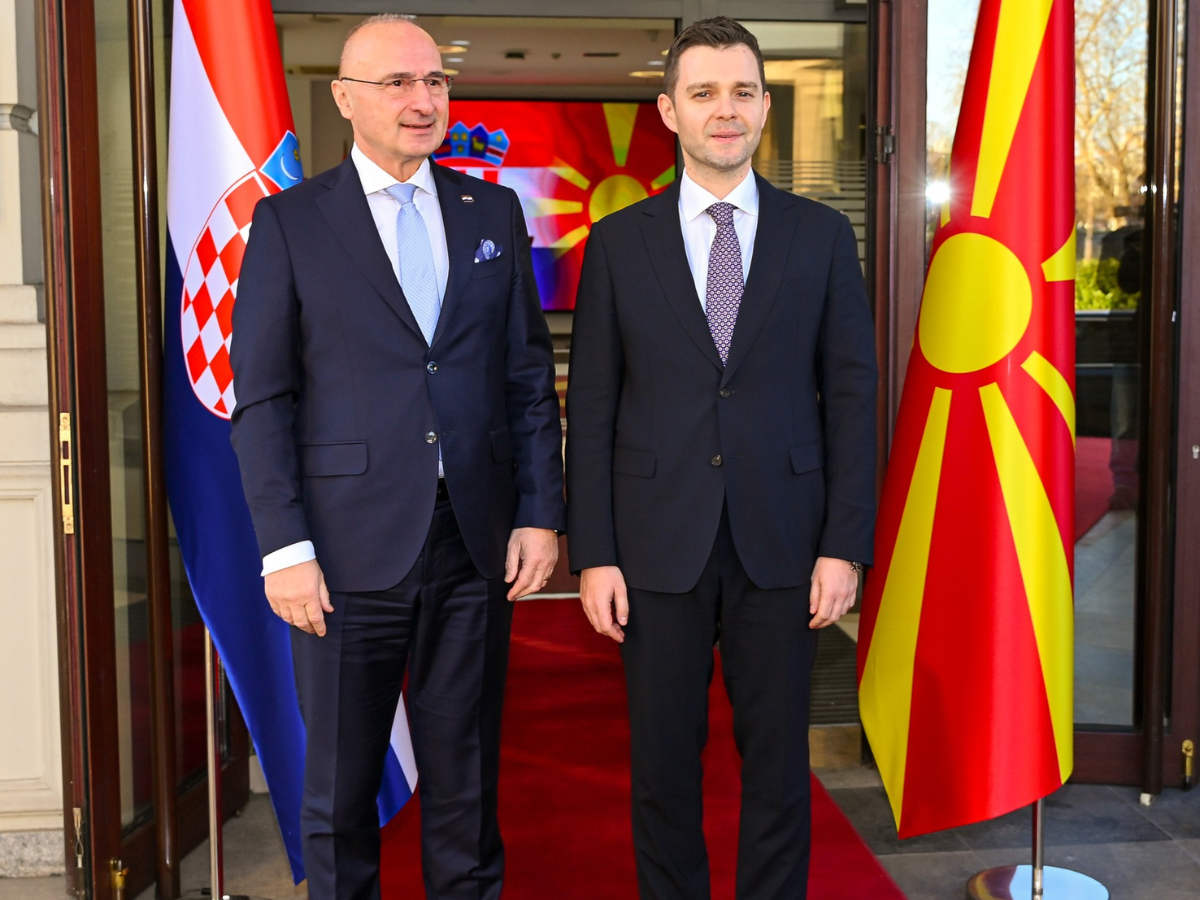
North Macedonia took a central diplomatic step forward as Foreign Minister Timčo Mucunski hosted Croatia’s Minister of Foreign and European Affairs Gordan Grlić Radman in Skopje, reaffirming the country’s European course and strengthening bilateral cooperation. The meeting placed clear emphasis on North Macedonia’s EU integration process, with Croatia reiterating firm support and readiness to share its accession experience. Talks also focused on economic and energy cooperation, NATO coordination, and the signing of a forthcoming Strategic Cooperation Agreement that is expected to mark a new phase in relations between the two countries.
Mucunski: Croatia as a Key Partner and Mentor in the EU Process
Minister Mucunski highlighted Croatia as an important strategic partner and mentor for North Macedonia in its European integration efforts. He underlined that Zagreb’s political and technical experience from its own EU accession can provide valuable guidance for Skopje, particularly in the implementation of reforms and strengthening of institutional capacities. The discussions reflected North Macedonia’s continued commitment to advancing its EU agenda and maintaining constructive regional partnerships.
Mucunski emphasized the importance of maintaining dynamic political dialogue and translating bilateral goodwill into tangible cooperation across sectors. The visit, according to official statements, represents confirmation of traditionally friendly relations and mutual respect between the two countries.
Strategic Cooperation Agreement to Mark a New Phase
A key outcome of the visit is the preparation of an intergovernmental Strategic Cooperation Agreement, expected to formalize and elevate bilateral relations. The agreement is grounded in shared European values, trust, and long-standing political ties, and is intended to “round off” a new chapter in cooperation between Skopje and Zagreb.
The ministers expressed readiness to expand collaboration beyond political dialogue, focusing on practical areas that directly benefit citizens. The agreement is positioned as a framework for sustained and structured cooperation in the years ahead.
Economy and Energy at the Forefront
Economic cooperation and energy were identified as priority areas for further engagement. Both sides stressed the need to strengthen trade relations, encourage business partnerships, and deepen sectoral collaboration. Reports also referenced additional fields of cooperation, including health, culture, and tourism, indicating a broadening of bilateral ties.
From the Macedonian perspective, expanding economic and energy cooperation aligns with national development goals and efforts to enhance regional connectivity and resilience.
Strong Croatian Support for North Macedonia’s EU Membership
During the visit, Croatia reiterated its firm backing for North Macedonia’s EU path. Grlić Radman stated that North Macedonia is prepared and deserves EU membership “very soon,” stressing that advancing negotiations would be particularly important for Macedonian citizens. He noted that progress in the accession process would provide both political and psychological momentum.
The discussions reaffirmed that Croatia will continue to actively support North Macedonia within EU institutions and advocate for enlargement that recognizes the country’s reform efforts and readiness.
NATO Partnership and Regional Issues
As NATO allies, the two ministers also emphasized the importance of close coordination within the Alliance. Strengthening cooperation in the security and defense sphere was described as essential for regional stability and broader Euro-Atlantic security.
The meeting additionally included exchanges of views on current regional and international developments, as well as domestic political and economic circumstances in both countries, reinforcing North Macedonia’s proactive diplomatic engagement in the region.