President Donald Trump on Sunday defended the ambitious plan to build a new ballroom at the White House, saying the project is progressing faster than expected and remains under budget despite facing legal hurdles and public opposition.
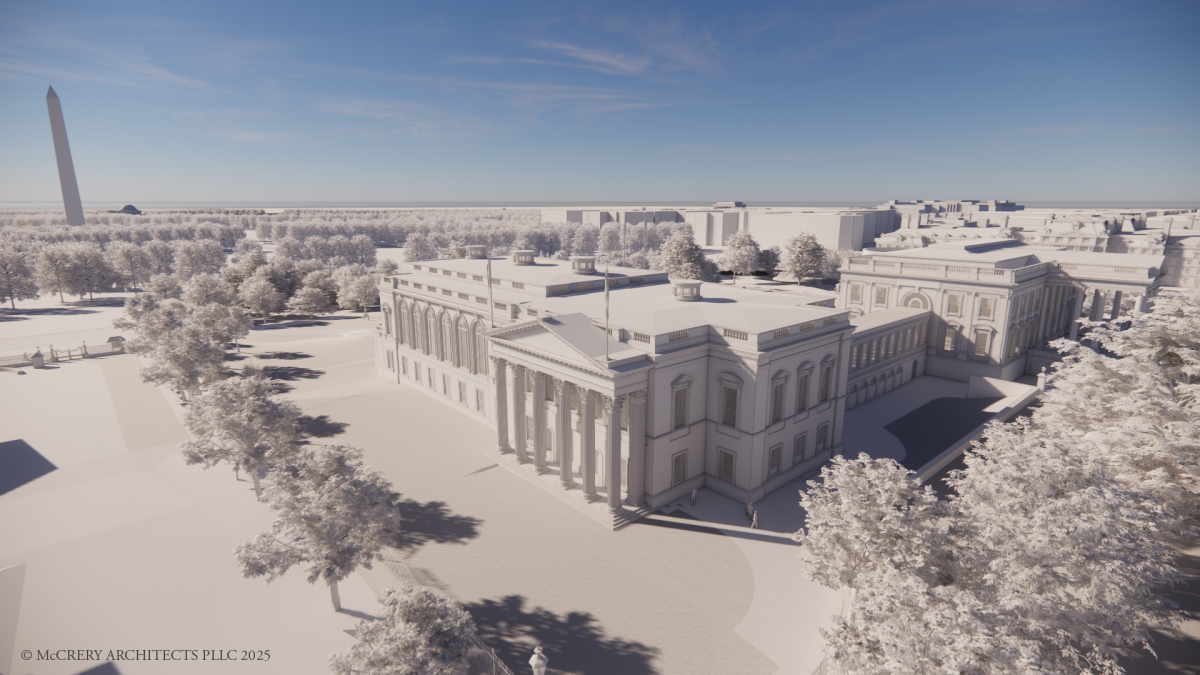
Speaking to reporters aboard Air Force One, after returning to Washington from his Florida residence, Trump shared updated renderings of the planned space and reiterated his confidence in the project’s timeline. He described the construction, which involves demolishing the historic East Wing to make way for the ballroom, as “ahead of schedule” even as opponents push to halt it in court.
Legal dispute and preservation concerns continue
The project has drawn criticism from preservation groups, including a lawsuit from the National Trust for Historic Preservation arguing that the administration bypassed essential environmental reviews and public input processes. A federal judge is expected to rule by the end of March on whether to temporarily block construction while the legal challenge proceeds.
Despite these challenges, the White House has not provided a firm completion date but says it expects the ballroom to be finished well before the end of Trump’s term.
Security features and design vision
Trump described the ballroom as more than an event space, characterizing it as effectively a protective “shed” for what he said is a large military complex being built underneath. He said the structure will include features such as bulletproof glass and a roof designed to withstand drone threats, reflecting what he portrayed as modern security needs.
The roughly $400 million initiative, Trump has previously said, will be funded entirely through private donations and is part of a broader effort by his administration to reshape major federal landmarks.
Political and public backlash persists
While Trump frames the ballroom as a necessary and strategic addition to the White House, critics from historic preservation and architectural communities argue the plan threatens the integrity of one of the nation’s most symbolic buildings. Public comment periods and online opposition have underscored widespread skepticism of both the design and the process behind it.