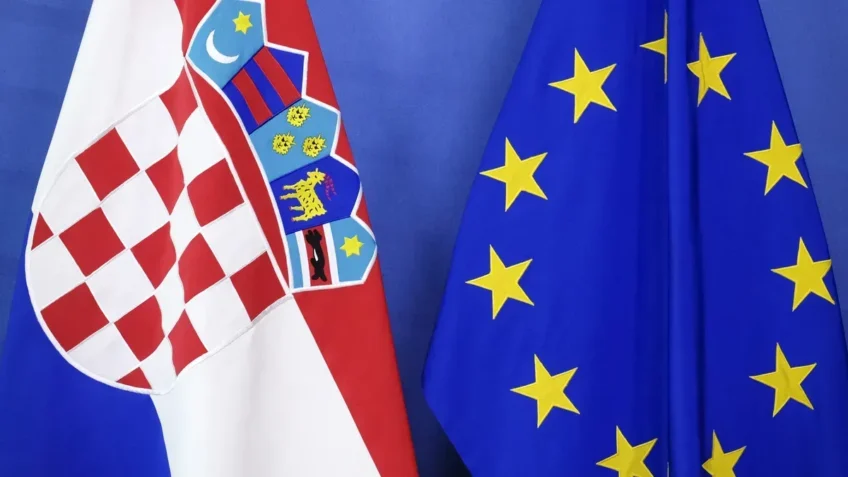
A major scandal has erupted around Croatia’s mission to the United Nations in New York after U.S. authorities accused a former employee of unlawfully extracting about $750,000 from the diplomatic mission through false invoices and duplicate payments. The suspect, identified as Renata Supina-Saltus, was arrested on April 1 and brought before a court in Connecticut, where U.S. prosecutors charged her with wire fraud and two counts of money laundering.
According to the case described in the reports, she worked on financial and administrative matters at the Croatian mission from July 2017 until November 2023, and the alleged scheme was carried out through her access to the payment system. One method, according to the accusations, involved issuing a real payment to a legitimate supplier and then sending a second payment in the same amount to bank accounts under her control. The second alleged method was the creation of false invoices, in some cases even for non-existent companies, after which the money was again redirected to accounts linked to her.
The reports state that the case did not begin with an American investigation from scratch but with an internal control procedure conducted by Croatia’s Ministry of Foreign and European Affairs. The ministry said the irregularities were established during an extraordinary internal inspection, after which the employee was dismissed toward the end of 2023, and Croatia’s anti-corruption office, USKOK, was informed. Croatian authorities say the state is a victim in the proceedings and that compensation will now be sought within the U.S. judicial process.
The broader significance of the affair lies in the fact that it concerns one of Croatia’s most sensitive diplomatic outposts and that, according to the allegations, the fraud continued for nearly six years before it was stopped. The reporting says traces of the irregularities began to surface after a new accounting system was introduced at the mission, and discrepancies appeared between recorded obligations and actual payments.
Some media reports cited in the coverage also say the money was allegedly spent on tuition, travel, hotels, and shopping, giving the case an additional political and reputational dimension. In that reading, the scandal is being seen not only as theft from a public budget but also as a blow to trust in an institution meant to represent Croatia at the United Nations.
For the Croatian authorities, the case presents a double problem: first, because the alleged fraud is said to have lasted for years inside a key diplomatic mission, and second, because it has now become an international matter involving a U.S. indictment, arrest, and court proceedings. While institutions in Zagreb are emphasising that they uncovered the abuse themselves, the central question raised by the reports remains how such transfers could go unnoticed for so long.