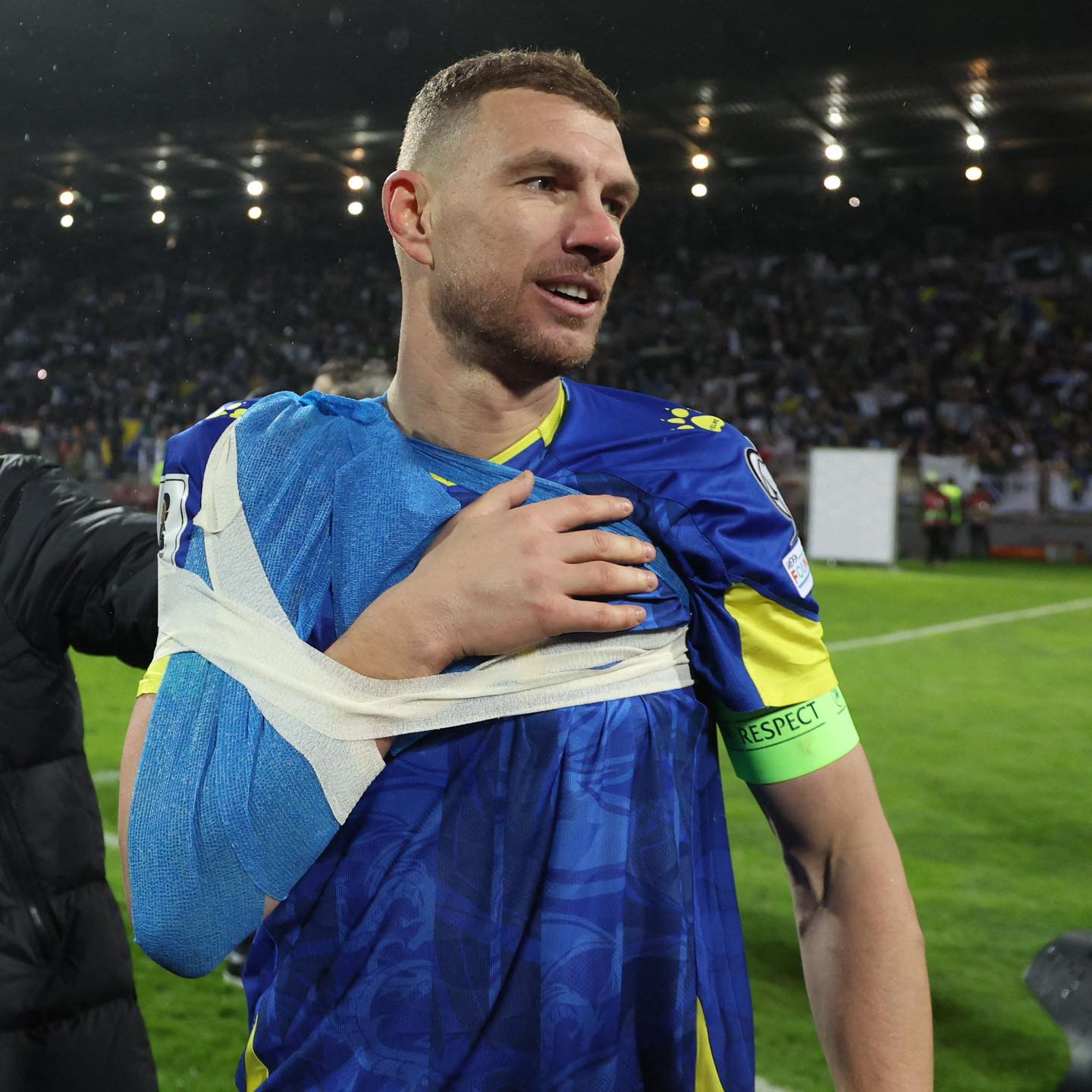
After Bosnia and Herzegovina eliminated Italy in a dramatic World Cup playoff and secured qualification for the 2026 tournament, one of the moments that drew particular attention was Edin Džeko’s conduct after the final whistle. Bosnia and Herzegovina advanced after a 1-1 draw over 120 minutes and a successful penalty shootout, in what the coverage described as one of the brightest moments in the history of the national team. Amid the celebrations, Džeko was seen consoling Italian players, adding a note of sportsmanship to a night of major significance for Bosnian football.
Consoling former teammates from Roma
The reports highlighted that Džeko comforted former Roma teammates Gianluca Mancini and Bryan Cristante after Italy’s defeat. He was also said to have greeted Arsenal defender Riccardo Calafiori. The focus of the coverage was not only on Bosnia and Herzegovina’s sporting success but also on the way Džeko behaved toward opponents he had previously shared a club dressing room with, presenting the gesture as one of respect and personal class in an emotionally charged moment.
Italian reaction praised Džeko’s character
The article noted that Džeko’s behaviour was warmly received in Italy, where his gesture was publicly praised. A Roma fan page described him as a “true champion”, emphasising that while Bosnia was celebrating, he still went to comfort his former teammates. The reaction framed the moment as proof that greatness is measured not only by performance and results, but also by the way a player behaves in small but meaningful moments after a match.
Sportsmanship added to the scale of the achievement
The wider context of the story remained Bosnia and Herzegovina’s qualification for the 2026 World Cup, which the coverage portrayed as a historic success. Yet Džeko’s post-match reaction gave the victory an added human dimension, as the captain of the national team was shown sharing in the joy of qualification while also acknowledging the disappointment of the defeated side. The reports presented that combination of triumph and empathy as the reason his conduct resonated so strongly after the match.
A captain’s image strengthened further
Taken together, the coverage presented Džeko not only as the leader of a team that achieved a major sporting milestone but also as a figure whose reputation was reinforced by his attitude after the game. In a night remembered for Bosnia and Herzegovina’s victory over Italy and qualification for the World Cup, his decision to comfort former teammates became one of the most talked-about details and was welcomed as a gesture that reflected dignity, respect, and the broader meaning of sportsmanship.