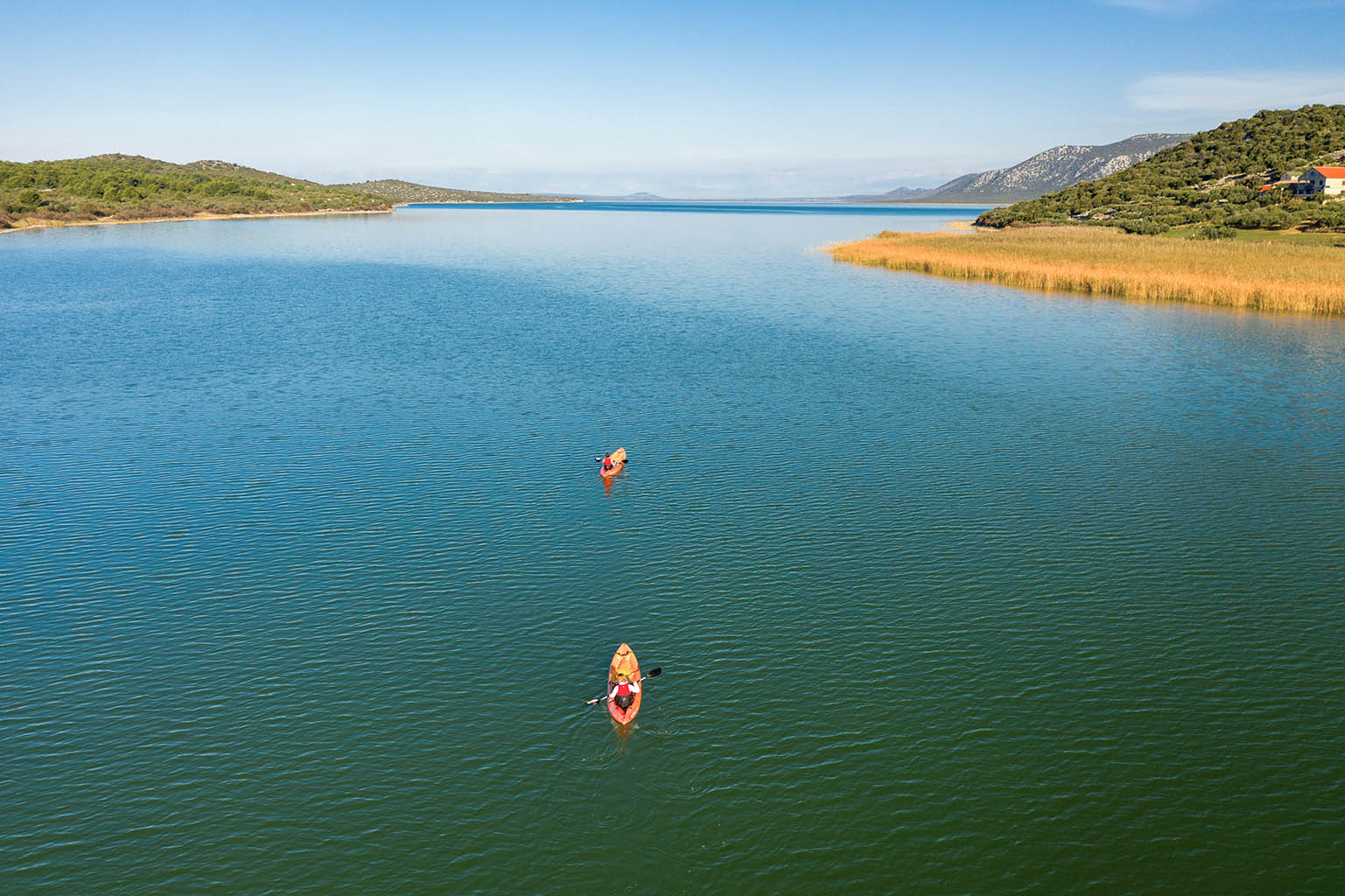
A relatively known natural site in the Balkans remains strictly protected—not because of mystery or exclusivity, but because human lives depend on it. Located on the Croatian island of Cres, this lake is not a tourist attraction, despite its striking beauty and unique geological features.
The lake, known as Vransko Lake, plays a crucial role as the primary source of drinking water for both Cres and the neighboring island of Lošinj. Its importance is so significant that access to the area is heavily restricted, with swimming, fishing, and even approaching the water strictly prohibited.
What makes the lake particularly remarkable is its unusual structure. While its surface lies above sea level, its bottom extends deep below it—reaching depths of around 60 meters. Formed within a karst basin, the lake has developed over thousands of years through complex geological processes.
The natural filtration through surrounding rock formations keeps the water exceptionally clean, so it requires minimal treatment before use for consumption. This purity is one of the key reasons behind the strict protection measures.
Beneath the surface, a delicate balance exists between freshwater and seawater. Although seawater seeps into the lower layers, the pressure of the freshwater mass prevents it from mixing, preserving the lake’s drinkability. Any disruption—such as a drop in water levels—could allow saltwater intrusion, permanently damaging the lake’s function as a freshwater source.
Because of this fragile equilibrium, the lake is treated as a critical natural resource rather than a destination. Visitors can only observe it from designated viewpoints, ensuring that the surrounding ecosystem, rich in flora, fauna, and birdlife, remains largely untouched.