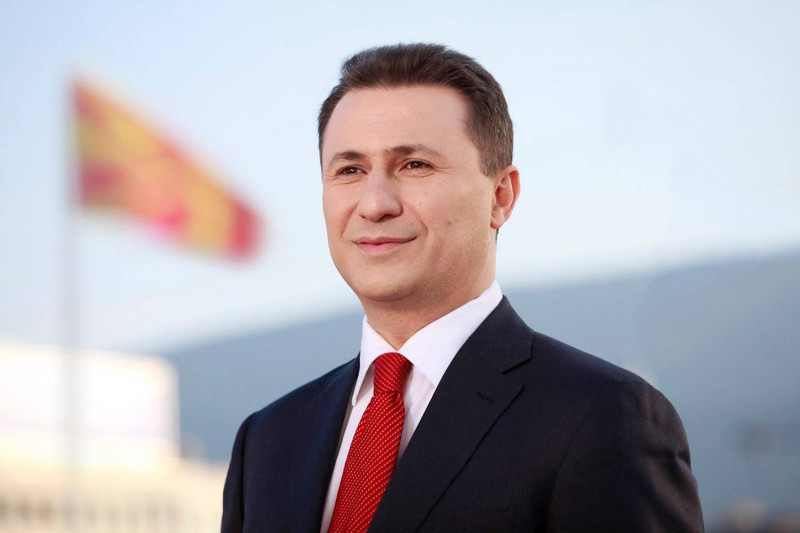
Developments in Hungary following the reported electoral defeat of Viktor Orbán have triggered renewed debate over the status of former Macedonian prime minister Nikola Gruevski, who has been residing in the country under asylum. According to the reports, statements emerging from Hungarian political circles suggest that the period of “hospitality” toward Gruevski could come to an end, opening the possibility of changes in his legal status. These signals suggest that a shift in government could lead to a reassessment of previous decisions related to asylum and protection. The coverage frames these developments as a turning point that could potentially create conditions for renewed extradition procedures.
Calls for extradition from Skopje
In North Macedonia, political reactions have intensified, with opposition leader Venko Filipče explicitly calling for Gruevski’s extradition. According to the reports, Filipče stated that the moment is appropriate for authorities to act and ensure that Gruevski returns to face justice in the country. His position is presented as a clear demand for institutional engagement, emphasizing that legal accountability must be enforced regardless of the time that has passed since Gruevski left the country. The calls for extradition are framed as part of a broader insistence on the rule of law and equal treatment before judicial institutions.
Government stance: no expectations, but clear legal consequences
At the same time, Prime Minister Hristijan Mickoski stated that he has no expectations regarding Gruevski’s return but underlined that if such a scenario occurs, the legal outcome would be immediate imprisonment. According to the reports, Mickoski emphasized that the matter is not political but legal, pointing out that Gruevski has final court rulings against him that would have to be enforced upon his return. His statement reflects a position that avoids speculation about political developments in Hungary while clearly reiterating the obligations of domestic institutions in case of extradition or voluntary return.
Legal and political implications of a potential return
The reports underline that any potential extradition would depend on decisions by Hungarian authorities and the legal framework governing asylum and international cooperation. The discussion presents itself as both a legal and political issue, shaped by changes in Hungary and ongoing demands within North Macedonia. The possibility of Gruevski’s return is therefore portrayed as contingent on external political developments, but with predetermined legal consequences domestically. The coverage consistently highlights that the case remains one of the most prominent unresolved judicial and political issues in the country, linking it to broader questions of accountability and institutional credibility.
A renewed debate shaped by regional political change
Taken together, the reports depict a renewed and intensified debate surrounding Gruevski’s status, driven by political changes in Hungary and increasing pressure from actors in North Macedonia. The combination of signals from Budapest, calls for extradition from the opposition, and the government’s emphasis on legal consequences creates a complex picture in which political developments abroad directly influence domestic expectations. The situation is presented as fluid, with the potential for significant developments depending on the direction taken by Hungary’s new political leadership and the response of institutions in both countries.