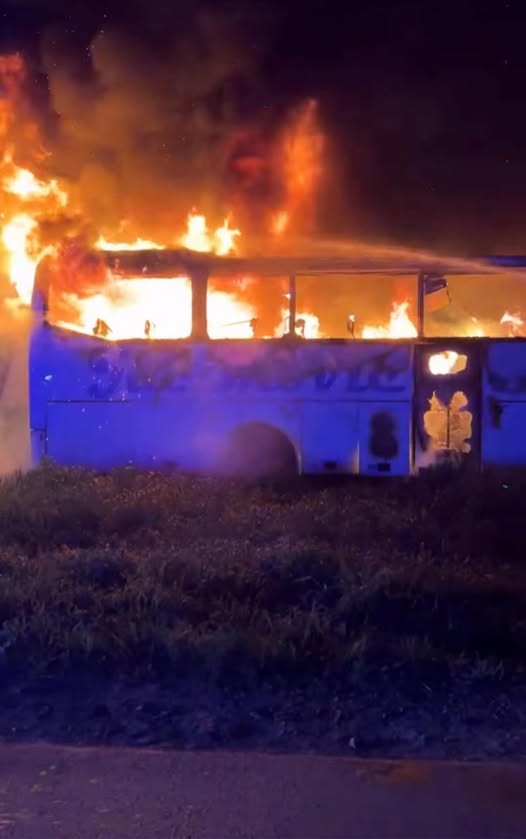
A bus belonging to Milomir Jaćimović, a Serbian transport operator known for supporting student protests, was completely destroyed by fire overnight near the Hungary border in Vojvodina, in what the owner claims was a deliberate arson attack. The incident occurred around 3:30 a.m., with fire crews arriving too late to save the vehicle.
Jaćimović has become a prominent figure in Serbia’s nationwide anti corruption protests that began after the November 2024 Novi Sad train station roof collapse that killed 16 people. He has repeatedly used his buses to transport students to protests across the country, making him a target for months. The arson represents the latest in a pattern of harassment: his driver’s license was revoked in March based on a traffic court ruling, his vehicles’ tires have been slashed multiple times, he and his son have been arrested by authorities, and part of his fleet was temporarily confiscated.
The civic organization “Zborovi Novi Sad” sharply criticized police inaction on Instagram, noting that while authorities are “quick and efficient” when arresting students and citizens, they question whether the same urgency will apply to investigating the bus arson. “This morning the bus of the only carrier who supports citizens in the fight against the mafia was burned,” the group posted.
Jaćimović said that he has provided police with names of suspects but declined to identify them publicly while the investigation continues. Despite the escalating pressure, he posted a defiant message on social media directed at authorities and ruling party supporters, stating that their intimidation tactics will not scare him.
The attack highlights the increasingly tense atmosphere surrounding Serbia’s student led protest movement, which has lasted for months through faculty blockades, mass demonstrations, and the formation of neighborhood assemblies called “zborovi”. As the movement has expanded to include workers, farmers, and professionals, those who provide logistical support, like Jaćimović, have found themselves targeted, raising concerns about whether the state is adequately protecting citizens exercising their right to protest.