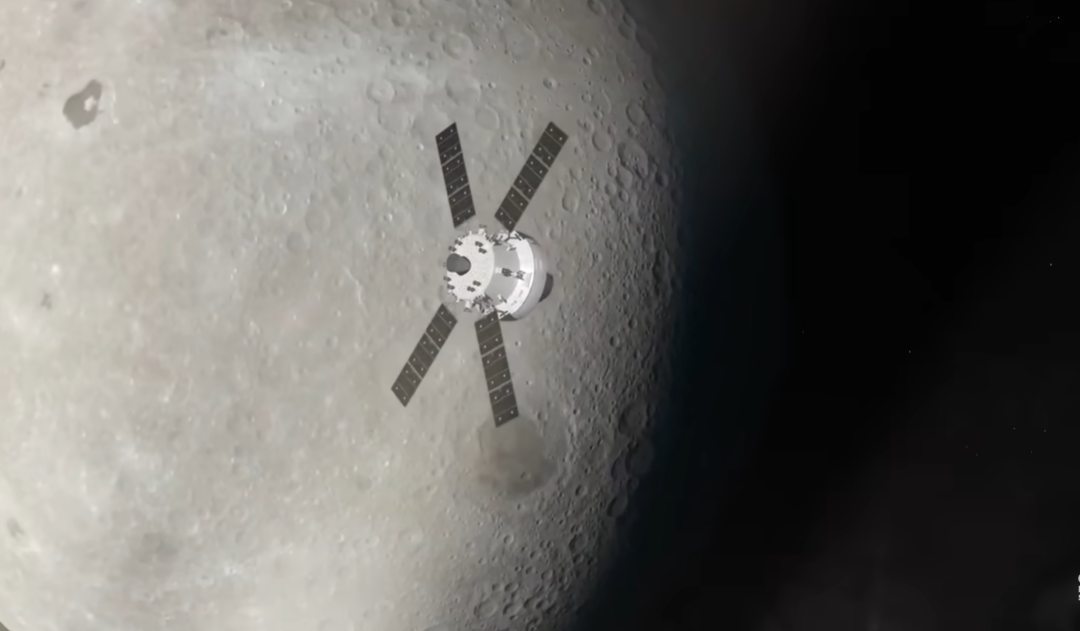
Less than a week after splashing down in the Pacific off the coast of San Diego, the four astronauts of NASA’s Artemis II mission are reflecting not only on a landmark journey around the moon, but also on what the mission revealed about Earth, human ambition and the value of shared purpose. The nearly 10-day flight marked humanity’s first crewed return to the moon’s zone in more than 50 years and set a new record for the farthest distance humans have traveled from Earth.
For the crew, the mission’s meaning was shaped as much by what they saw as by where they went. Victor Glover spoke about the dramatic boundary between light and darkness on the lunar surface. Christina Koch described the sharp outline of lunar mountains against the blackness of space. Jeremy Hansen recalled unusual formations on the moon’s far side, while commander Reid Wiseman said one of the most striking moments was seeing an eclipse from orbit, a view he had not expected and found difficult to fully process. Their descriptions turned a technical mission into a deeply human experience, filled with awe, silence and perspective.
Yet the return to Earth carried its own emotional force. After days in space, the ordinary details of life at home — gravity, family, routine, even a quiet moment on the couch — took on renewed meaning. Koch said everyday life now feels different, shaped by having seen Earth not as a vast backdrop, but as something small and fragile against the wider universe. That shift in perspective has long been one of spaceflight’s most powerful effects, and Artemis II appears to have delivered it in full.
The crew also framed the mission as something larger than exploration alone. Wiseman said the mission showed that people can still come together around a single hopeful idea, while Hansen argued that its deeper message lies in pushing back against the feeling of helplessness that often defines public life. In their view, Artemis II was a reminder that large, difficult goals remain possible when skill, trust and collective effort are aligned.
That may be the mission’s most lasting contribution. Artemis II did not land on the moon, but it proved that a return to deep-space human exploration is no longer symbolic — it is underway. And in doing so, it offered a message that reached beyond science: that even in a fractured world, people are still capable of building something extraordinary together.