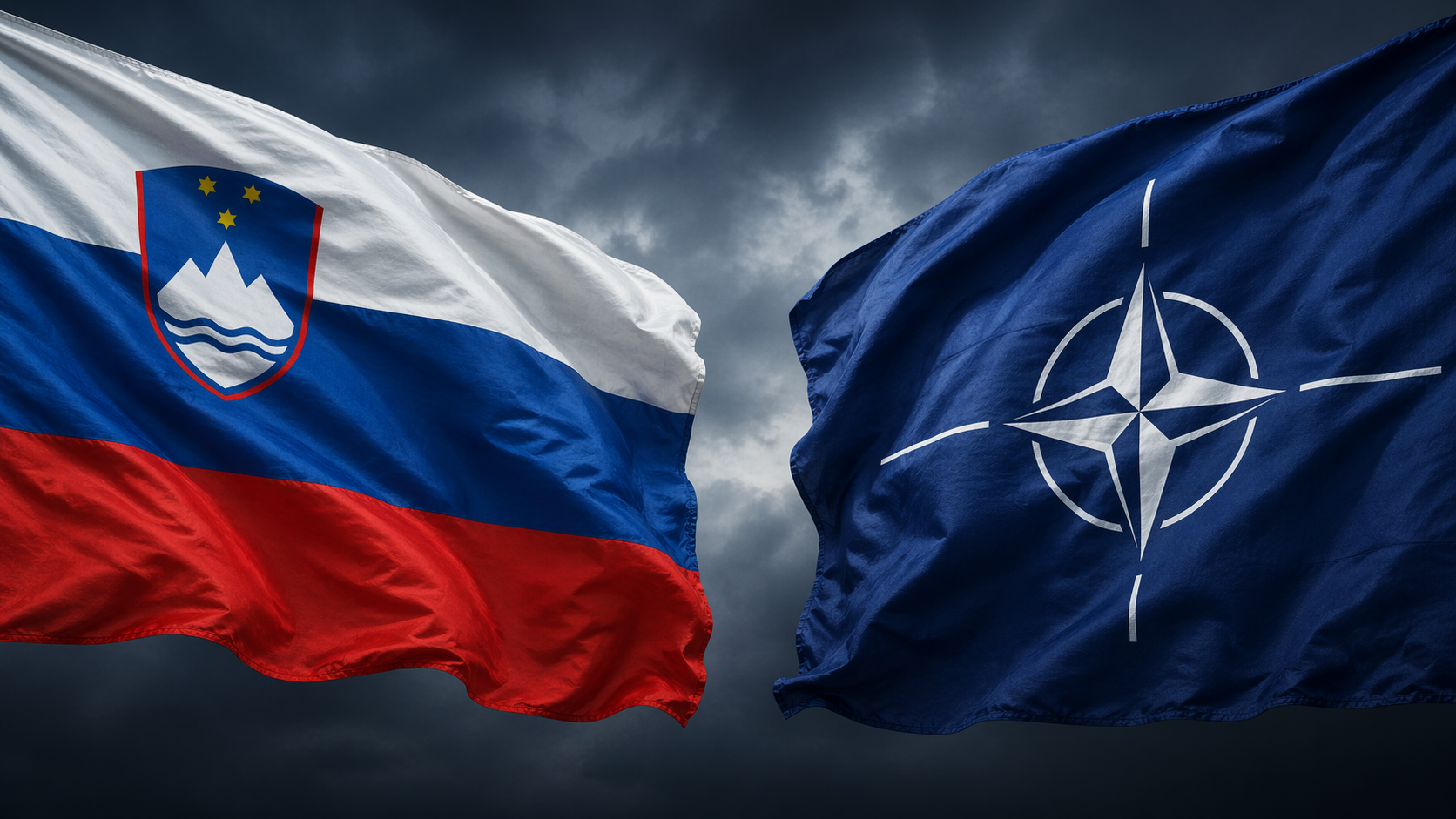
The initiative for a possible referendum on Slovenia’s NATO membership is being presented not only as a domestic political issue, but also as a development with wider security implications for Europe.
In a recent analysis published by CIVIL – Center for Freedom, author Xhabir Deralla argues that reopening the question of Slovenia’s place in the Alliance could go beyond democratic debate and enter the realm of strategic instability. According to the analysis, such a move risks reinforcing narratives that seek to undermine NATO’s cohesion at a sensitive geopolitical moment.
The text suggests that the issue is emerging under particularly fragile circumstances: a political landscape shaped by elections without a clear majority, institutional uncertainty and growing international tension. In that environment, questions tied to national security can quickly become tools for political mobilization and outside influence.
The analysis further warns that even the campaign for such a referendum could have consequences beyond Slovenia itself. It argues that raising doubts about NATO membership inside one member state may create uncertainty that hostile actors could exploit, while also testing the unity and resilience of the Alliance.
From that perspective, the debate is framed not simply as a national choice, but as a signal that could resonate across the region and beyond. The concern is that it may encourage similar initiatives in other countries, particularly where anti-NATO and anti-European narratives already have political traction.
Special attention is placed on the Western Balkans, where security dynamics remain closely tied to NATO’s presence and role. Any suggestion that Euro-Atlantic integration can be reversed, the analysis notes, could deepen political divisions and strengthen actors opposed to the region’s Western alignment.
Overall, the piece presents the Slovenian initiative as part of a broader struggle over political influence, information pressure and democratic resilience in Europe. Rather than viewing the referendum question in isolation, it argues that the consequences could reach far beyond Slovenia’s borders.