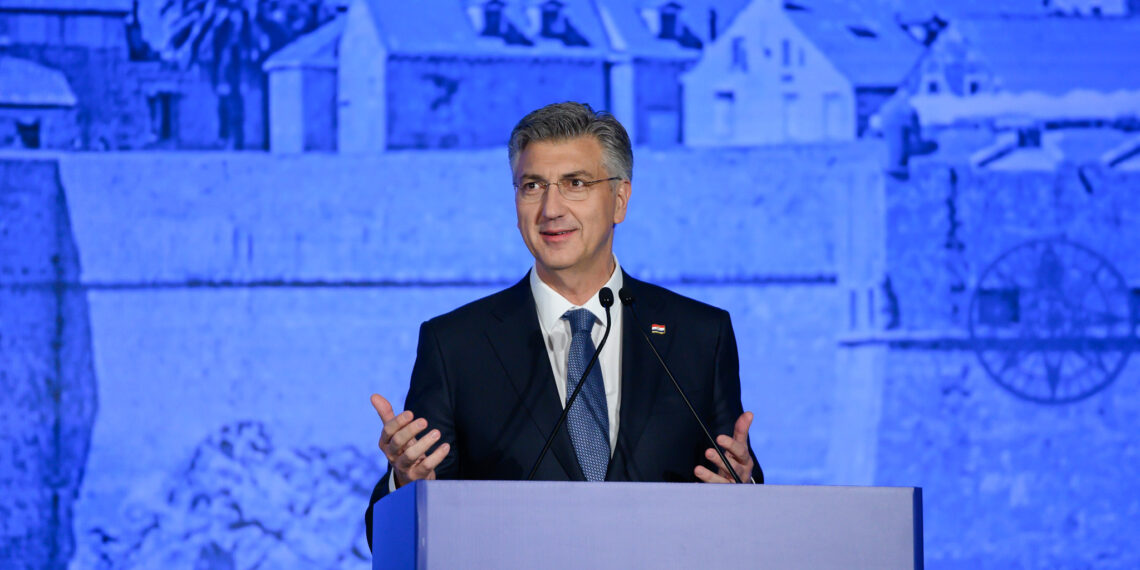
Croatian energy policy is once again turning toward nuclear energy as one of the key answers to future challenges in electricity supply, after Prime Minister Andrej Plenković announced in Dubrovnik that the state is seriously considering expanding nuclear capacities and deepening cooperation around the Krško power plant.
The statements were made following the Three Seas Initiative Summit, where Croatia and the United States signed a joint declaration for strengthening cooperation in civilian nuclear energy. In Croatian media, this step is interpreted as opening the door for new investments and potential involvement of American partners, among which Westinghouse is mentioned, a company with long standing experience in the nuclear sector.
In his address, Plenković pointed out that within European frameworks, a broader consensus is gradually being built around nuclear energy, which is once again seen as a stable and low carbon source. He indirectly referenced the energy policies of some countries post Fukushima, emphasizing that today some of them are reconsidering decisions to abandon nuclear power plants.
An additional push in this direction was given by Economy Minister Ante Šušnjar, who announced an ambitious plan by 2030 to increase the share of nuclear energy in Croatia’s energy mix from the current approximately 16 % to at least 30 %. According to him, the country’s future energy system will rely on a combination of nuclear energy, renewable sources, LNG infrastructure on the island of Krk, and regional energy connections.
At the center of these plans remains the Krško nuclear power plant, which currently provides a significant portion of electricity for Croatia. Its operational lifespan is officially projected until 2043, but expert analyses appearing in the public sphere indicate that, with modernization and investment, it could function for several decades longer.
From Zagreb, a signal has already been sent to Ljubljana that there is readiness for discussion not only about extending the operation of the existing capacity, but also about its expansion. This further opens the topic of the future model of joint management of the power plant.
Although nuclear energy is returning to focus, Croatian energy strategies do not neglect the green transition either. On the contrary, it is emphasized that the future system will have to combine multiple sources: from solar and wind, to gas and nuclear energy, to ensure grid stability in conditions of growing consumption and climate targets.
In a broader context, Croatia’s energy plans are increasingly treated as a matter of strategic security. Following recent European energy crises, secure supply of electricity and gas is gaining geopolitical weight. Therefore, announcements for strengthening the nuclear sector are interpreted as Zagreb’s attempt to solidify its position in the region, where key decisions will still depend on agreements with Slovenia, the financial viability of projects, and public opinion toward the new energy direction.