Serbian President Aleksandar Vučić is set to launch new modules and an upgraded supercomputer at the State Data Center in Kragujevac, a facility that has become the cornerstone of Serbia’s ambitious bid to dominate the Balkans’ digital and artificial intelligence landscape.
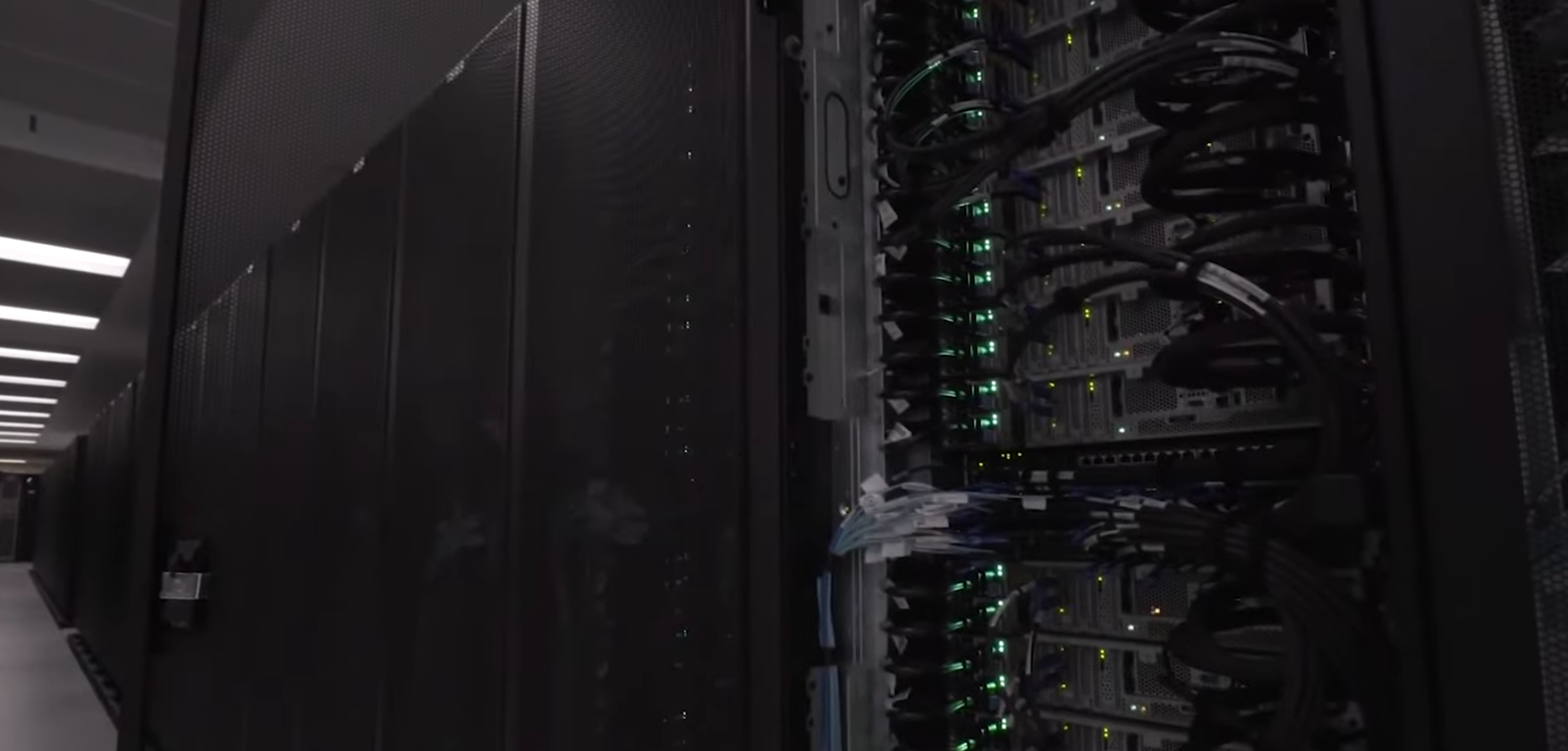
Opened in December 2020 on a 4 hectare plot with approximately 14,000 square meters of space, the Kragujevac center is the first Tier 4 certified data facility in Eastern and Southeastern Europe, meeting the highest global standards for reliability and security with 99.995% uptime guarantees and 2N redundant power systems. The center currently houses Serbia’s National Platform for Artificial Intelligence, a supercomputer purchased in 2021 for 2 million euros that delivers 5 petaflops of performance using NVIDIA DGX A100 systems with 32 GPUs, making it roughly 33,000 times faster than an average computer and completely free for universities, scientific institutes, and domestic startups.
The expansion Vučić is launching addresses surging demand as user numbers and resource needs grow exponentially. The first upgrade, a 5 million euro system featuring six NVIDIA DGX H200 units with 48 GPUs, will deliver 32 petaflops of AI performance and was expected to come online by end of 2025. More significantly, Serbia is finalizing a 36 million euro contract for a third supercomputer based on 640 NVIDIA Grace Hopper superchips across 160 computing nodes, with 2.5 petabytes of storage capacity, which Vučić announced at the AI Summit in New Delhi in February 2026 should arrive by the end of the year. This phased approach, combined with a strategic partnership with French AI company Mistral and a 50 million euro Franco-Serbian project for the largest supercomputer cluster in Southeast Europe, positions Serbia to leapfrog regional competitors in the race for AI sovereignty.
The geopolitical implications extend beyond computing power. By signing a memorandum with CERN in December 2023, Serbia became only the seventh European country where the European nuclear research center stores data, and Serbian researchers have contributed to CERN’s CMS experiment since 2001.
Global IT giants including Oracle, IBM, and Huawei already store data in Kragujevac, while a September 2025 deal with UAE based e& enterprise aims to triple national capacity by adding 40 megawatts to the existing 14 megawatt campus, cementing Serbia’s role as what officials call “the digital nerve center for Southeast Europe”. For the Balkan region, Serbia’s digital infrastructure buildout represents both an opportunity for regional technological leadership and a challenge, neighboring countries must now decide whether to integrate into Belgrade’s expanding digital ecosystem or risk falling behind in the AI driven economy of the next decade.