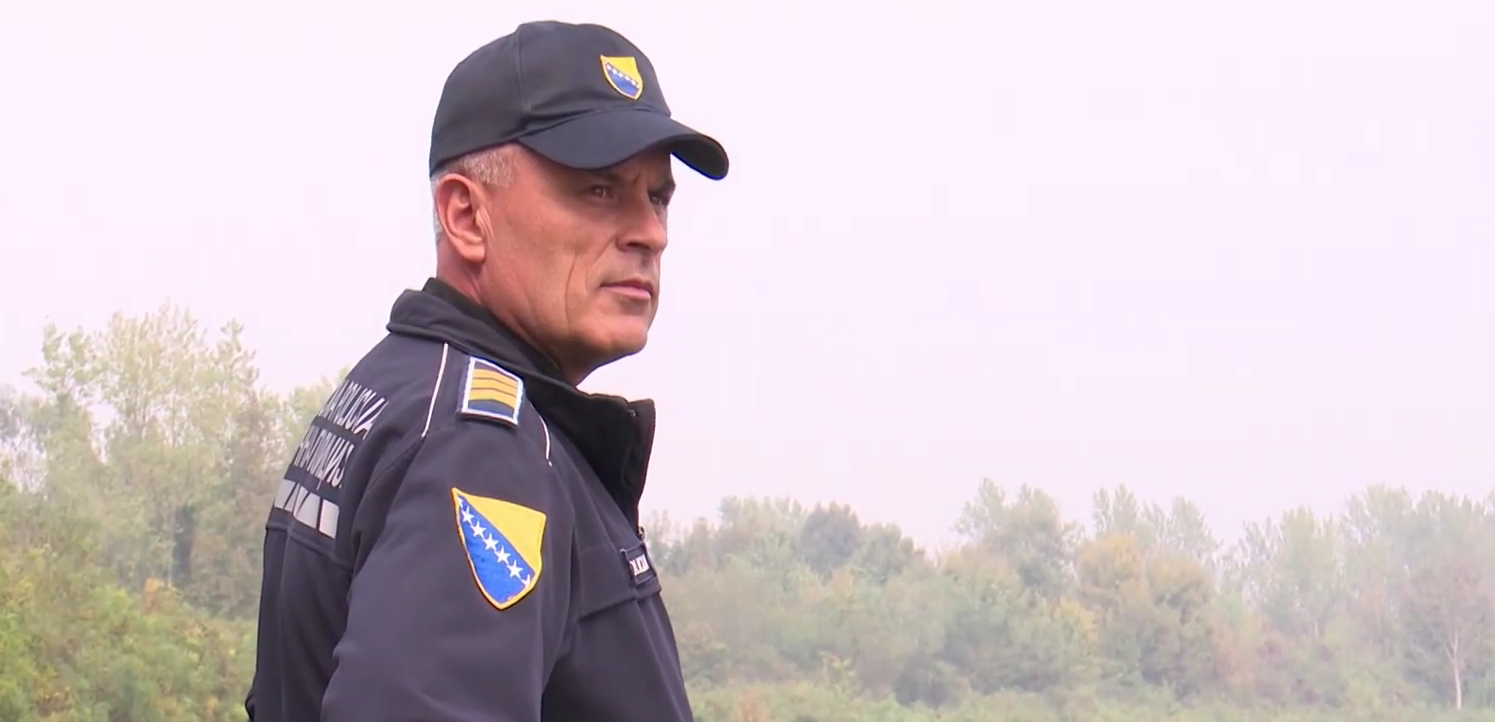
The European Union, alongside Germany, Italy, and the Netherlands, delivered specialized equipment to Bosnia and Herzegovina’s Border Police in Sarajevo as part of a broader effort to combat migrant smuggling and human trafficking across the Western Balkans. The donation package, valued at approximately 200,000 euros under the EU4FAST project, includes document examination magnifiers, heartbeat detectors for identifying people hidden in truck compartments, and a patrol boat for river rescue operations where migrants risk drowning during dangerous crossings.
This handover represents the latest phase of a 50 million euro regional initiative that combines hardware with intensive training, with German Federal Police experts having just completed specialized courses on document fraud detection and heartbeat detector usage for BiH officers, with additional training scheduled for the following week.
The timing is critical. Bosnia and Herzegovina sits on the so called Balkan route, a key corridor for irregular migration into the European Union that has seen persistent pressure from organized smuggling networks exploiting the country’s complex administrative structure and porous green borders. The heartbeat detectors address a particularly grim reality, migrants suffocating or freezing in concealed vehicle compartments, while the patrol boat responds to drowning risks at river crossings that have claimed multiple lives in recent years. EU Ambassador Luigi Soreca emphasized that strengthening border capacities directly advances BiH’s alignment with EU accession standards under Chapters 23 and 24, which cover justice, freedom, security, and regional cooperation, while urging Sarajevo to update possible plans for potential migration surges. BiH Border Police Director Mirko Kuprešaković highlighted the operational value of the equipment, noting that Frontex support has already contributed significantly to improving field efficiency, while German Ambassador Alfred Grannas stressed that the partnership reflects years of sustained cooperation combining European resources with national expertise.
For the Western Balkans, the EU4FAST project illustrates the transactional nature of Brussels’ engagement with the region, concrete security support in exchange for progress on reforms that remain stalled in many capitals. While the equipment enhances immediate operational capacity, the deeper challenge lies in Bosnia and Herzegovina’s political fragmentation, which has complicated consistent border management and delayed EU accession progress for years. The project also reveals how migration control has become the primary lens through which the EU evaluates partnership readiness, often prioritizing border hardening over addressing the root causes that drive people to attempt these dangerous journeys. As the Iran war and global instability risks triggering new displacement waves, the patrol boat and heartbeat detectors may soon face tests far beyond their training scenarios.