Language is more than a means of communication. It is identity, memory, and continuity. In Macedonia, May 5 is observed as Macedonian Language Day, a moment to reflect on the historical milestones and cultural depth of the Macedonian language.
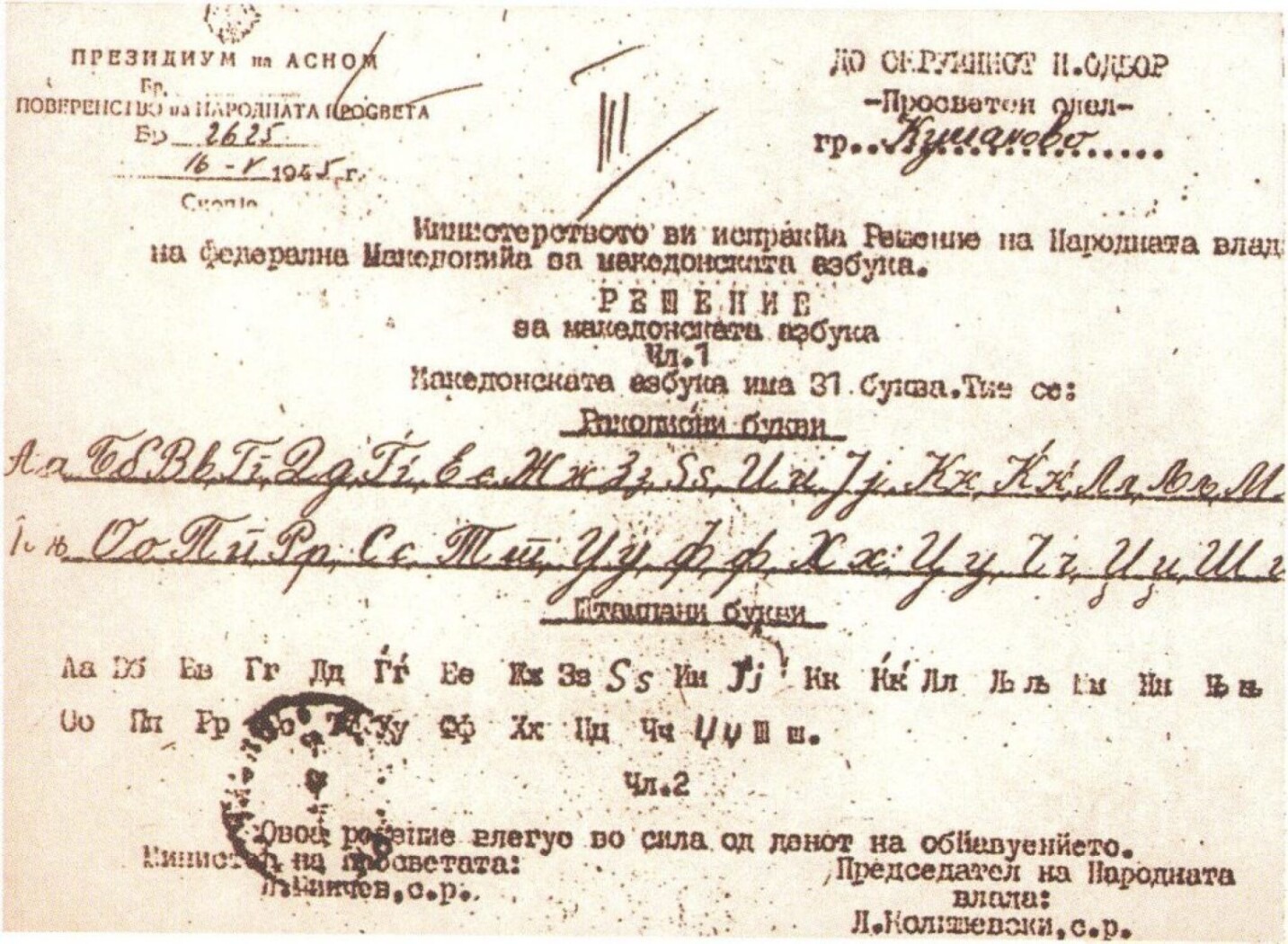
This date marks one of the most significant turning points in modern linguistic history. In 1945, the Macedonian alphabet was officially adopted, laying the foundation for the standardization of the language and its institutional use. This step was not only administrative but deeply symbolic, affirming the language as a pillar of statehood and national identity in the years following World War II.
The development of the Macedonian language did not stop there. Just a few years later, the publication of the first modern grammar by Krume Kepeski further codified its structure and rules, giving it a formal academic framework. This milestone is being commemorated as well, marking eight decades since the appearance of a work that remains essential to linguistic education and scholarship.
At the heart of this journey stands Blaže Koneski, whose contribution to the standardization and affirmation of the Macedonian language continues to shape its modern form. His well known reflection that “Language is our only complete homeland” resonates strongly on this day, capturing the emotional and cultural weight carried by language beyond its practical function.
Today, the Macedonian language remains a central element of identity and shared heritage. It lives not only in institutions, literature, and education, but also in everyday conversations, traditions, and collective memory. Its endurance reflects the resilience of a culture that has preserved its voice through different historical periods and social transformations.
The observance of May 5 is therefore not only a celebration of the past, but also a call for responsibility in the present. In an era shaped by globalization, digital communication, and rapid change, the protection, development, and proper use of the language depend on continuous awareness and collective care.
Language evolves, adapts, and grows. Yet its essence remains unchanged as a space where identity is expressed and preserved. Macedonian Language Day serves as a reminder that safeguarding this heritage is not only a cultural duty, but a shared commitment to future generations.