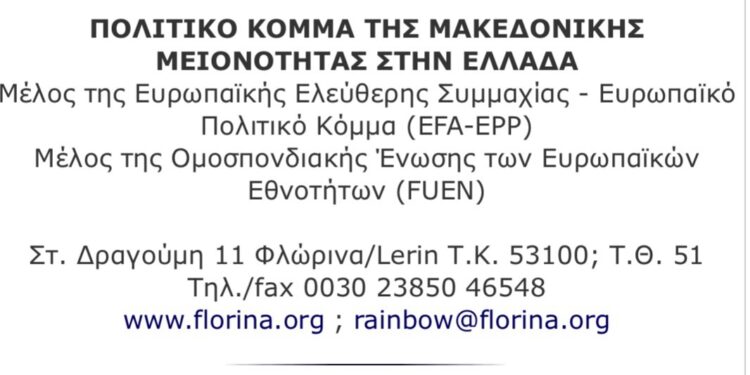
Members of the Macedonian community in Greece say they have been waiting for seven years for a response from the Ecumenical Patriarchate of Constantinople regarding their request to hold Orthodox church services in the Macedonian language. According to the reports, the request was originally submitted in 2018 by the political party of Macedonians in Greece, Vinozhito, through a formal letter addressed to Ecumenical Patriarch Bartholomew I.
The request sought permission for liturgies and church services in Macedonian for Macedonians living in Greece, especially in regions where members of the Macedonian minority reside. According to the reports, the initiative was presented as a request connected to the right to worship in one’s mother tongue and the preservation of linguistic and cultural identity within the Orthodox tradition.
Despite the passing of seven years, no official response has been received from the Ecumenical Patriarchate. Representatives connected to the initiative say the lack of response has created disappointment among Macedonians in Greece who hoped the request would open space for religious services in their native language.
The issue is viewed by supporters of the initiative not only as a religious matter, but also as a broader question of recognition and cultural rights. The reports emphasize that liturgy in one’s mother tongue is considered an important part of spiritual life and identity preservation, particularly for minority communities.
The original letter reportedly stressed that Macedonian-speaking Orthodox believers in Greece remain attached to the Orthodox faith and sought only the possibility of understanding and participating more directly in worship through the use of their own language. The initiative did not ask for separate ecclesiastical structures, but rather for the opportunity to hold services in Macedonian within the framework of existing Orthodox church life.
This issue has again drawn public attention after renewed statements and reactions connected to the continued absence of an answer from the Patriarchate. Supporters of the initiative say they still expect dialogue and an institutional response from the Ecumenical Patriarchate regarding the request first submitted in 2018.