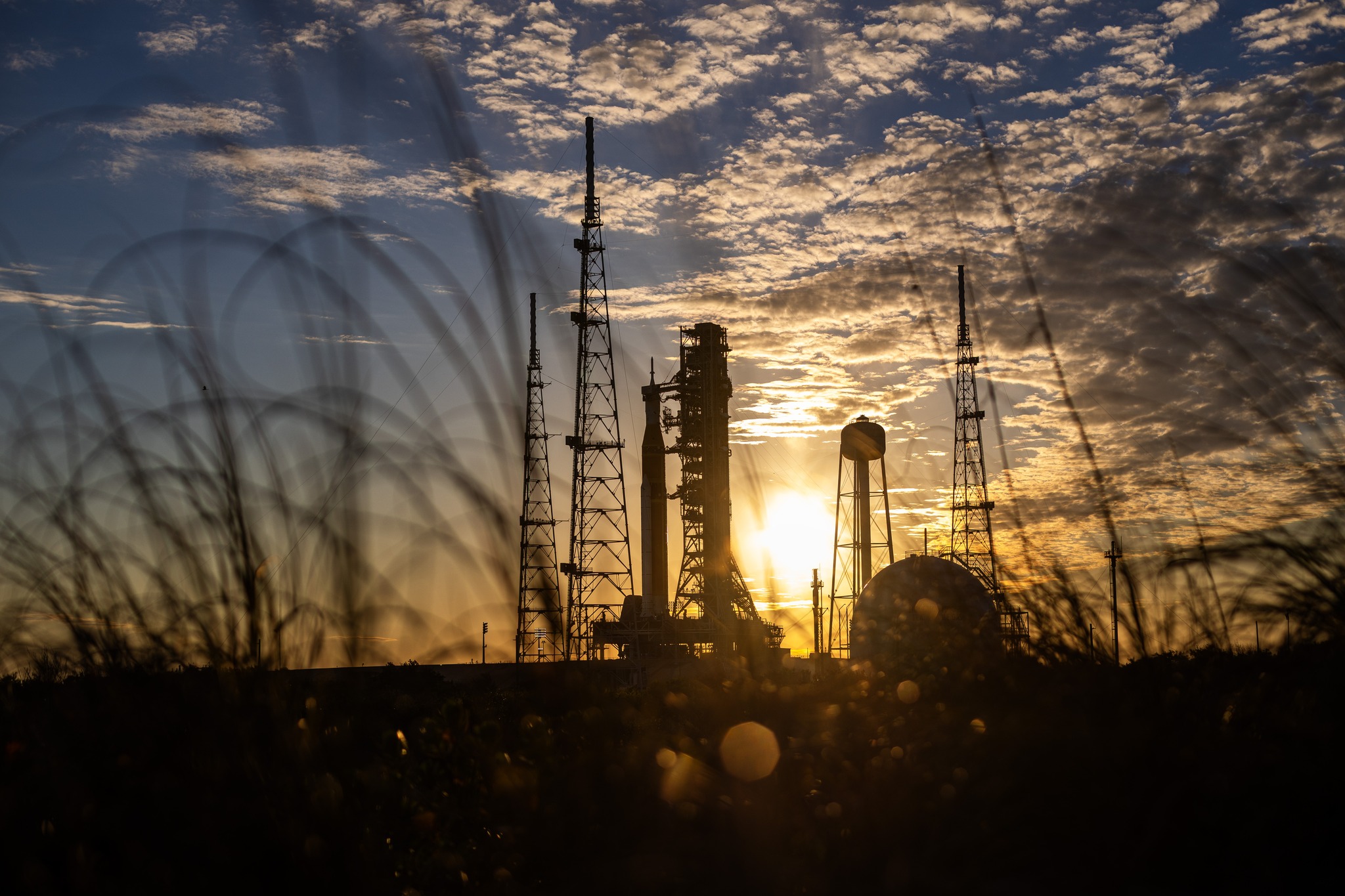
NASA has unveiled revised plans for Artemis III, shifting the mission from a lunar landing to a critical Earth orbit test that will serve as a stepping stone for the first Moon landing since 1972, now targeted for Artemis IV in 2028. The decision, confirmed by Administrator Jared Isaacman in February 2026, reflects persistent delays in developing the human landing systems needed to return astronauts to the lunar surface.
The redefined Artemis III will launch four astronauts aboard the Orion spacecraft on the Space Launch System rocket, but instead of traveling to the Moon, the crew will remain in low Earth orbit at approximately 460 kilometers altitude. This profile allows more launch opportunities for mission elements and gives SpaceX and Blue Origin additional time to mature their competing landers, Starship HLS and Blue Moon Mark 2, which will be launched separately for rendezvous and docking tests with Orion. The crew will spend more time in space than on previous missions to evaluate life support systems including water, oxygen, and nitrogen supplies, and will for the first time demonstrate orbital docking capabilities essential for future lunar and Mars missions where in-space refueling will be required.
The mission represents a significant departure from NASA’s original Artemis roadmap, which envisioned Artemis III as the first lunar landing. That honor will now fall to Artemis IV in early 2028, with Artemis V following later the same year to begin constructing a permanent lunar base. However, challenges remain, both landers must complete human rating certification, and Axiom Space’s new AxEMU spacesuits, developed with fashion house Prada, face their own delays, with in-space demonstrations planned for 2027. NASA is also seeking industry input on communications solutions since the mission will not use the Deep Space Network, and has invited interest in flying CubeSats as secondary payloads.
Artemis III’s pivot demonstrates the practical reality of deep space exploration, even with $93 billion invested and the success of Artemis II’s historic lunar flyby in April 2026, the technical challenges of sustainable lunar presence require patience. Whether the 2028 landing target holds depends on SpaceX and Blue Origin delivering their landers on schedule, a prospect complicated by SpaceX’s need to demonstrate orbital refueling, which requires multiple tanker missions to fuel a single lunar Starship, and Blue Origin’s robotic Blue Moon test planned for later this year. The race back to the Moon continues, but the finish line keeps moving.