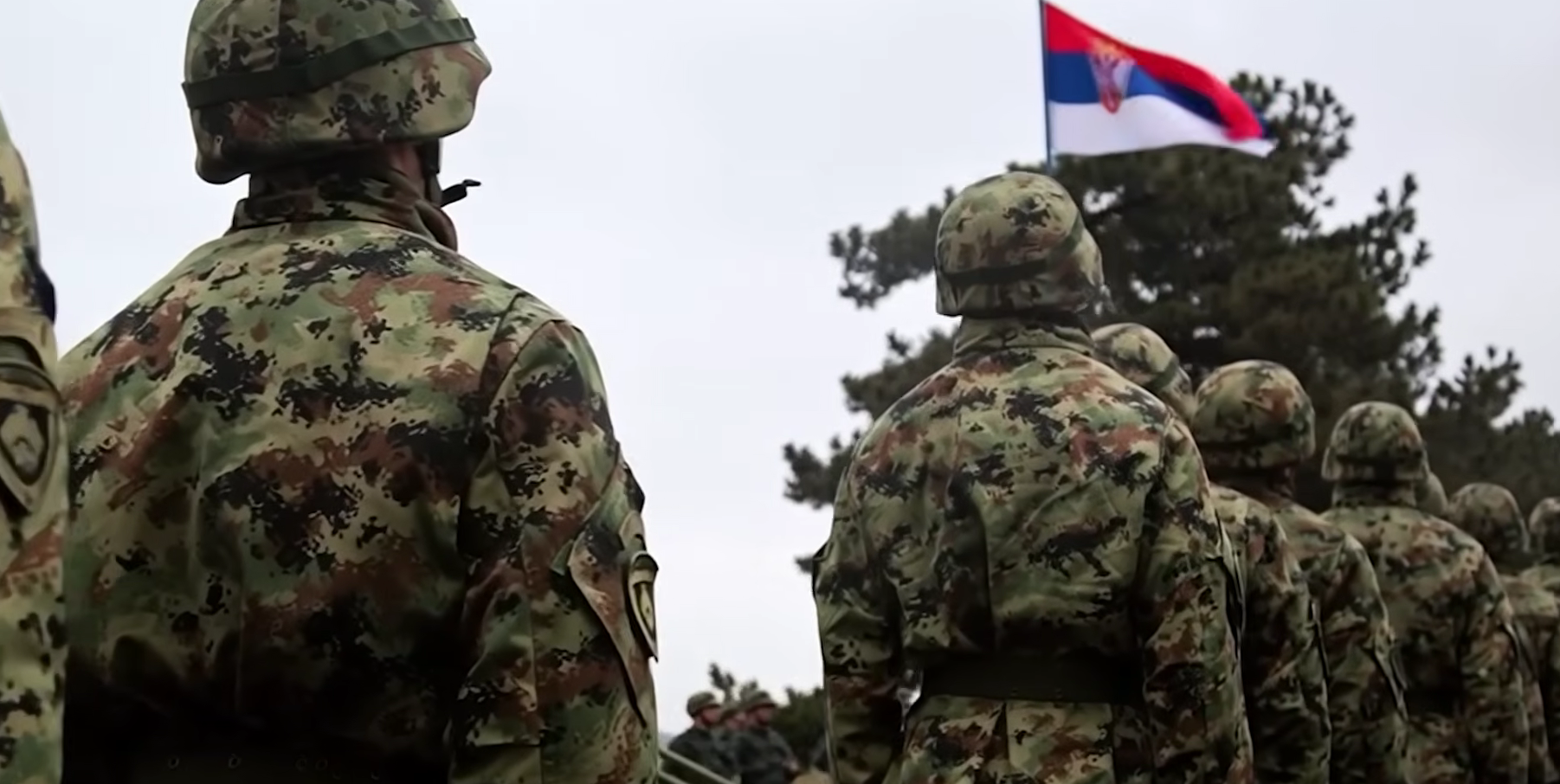
Serbia dominates arms procurement in the Western Balkans, spending 6.4% of its budget on defense and importing 15 times more weapons over five years than all other regional states combined, according to research presented at a “New Economy” and SIPRI conference in Belgrade titled “The Price of Security.” The conference highlighted that Serbia’s military imports, fueled by its large army and ambitions to cover more military capabilities than neighbors, include fighter jets, transport aircraft, and air defense systems that NATO members have chosen not to maintain, instead delegating airspace protection to the alliance.
The data reveals stark disparities between 2020 and 2024, Serbia spent nine times more on weaponry than Albania, with Chinese systems dominating procurement at 61% of deliveries, followed by Russia at 7% and France at 12%. The Rafale deal with France, while framed as a strategic pivot westward, represents a marginal correction to a portfolio dominated by Chinese and Russian hardware including FK-3 missile batteries, Pantsir-S1 systems, and CH-92A/CH-95 drones . Military analyst Dejan Džebić warned that Serbia’s acquisition of Chinese CM-400 supersonic missiles, previously possessed only by China and Pakistan, creates a continental security concern, with ranges reaching 450-500 kilometers when air launched, far exceeding regional defense needs. President Vučić has explicitly linked these purchases to perceived threats from the Croatia-Albania-Kosovo military alliance, while Croatia’s Prime Minister Plenković has raised the issue with NATO, calling the weapons “innovations” previously unseen in Europe.
Transparency emerged as a central theme, with researchers praising Macedonia and Croatia for publicly announcing planned weapons purchases while noting Serbia’s minimal disclosure, particularly regarding Chinese acquisitions. The conference also addressed global trends, worldwide military spending reached $2.8 trillion in 2025, up 2.9% from 2024, with Ukraine spending 40% of its GDP on defense, the highest globally. The arms buildup reflects both NATO membership obligations and unresolved security dilemmas. Serbia’s “military neutrality”, never fully explained, leaves it surrounded by NATO states while deepening ties with China and Russia, creating what ISAC Fund analyst Igor Novaković called a problematic position in an emerging bipolar world between Beijing and Washington. Whether this remilitarization stabilizes the region or triggers a classic security dilemma, where each state’s defensive buildup provokes neighbors to respond in kind, remains the critical unanswered question as the Balkans navigate the most militarized environment since the Yugoslav wars.