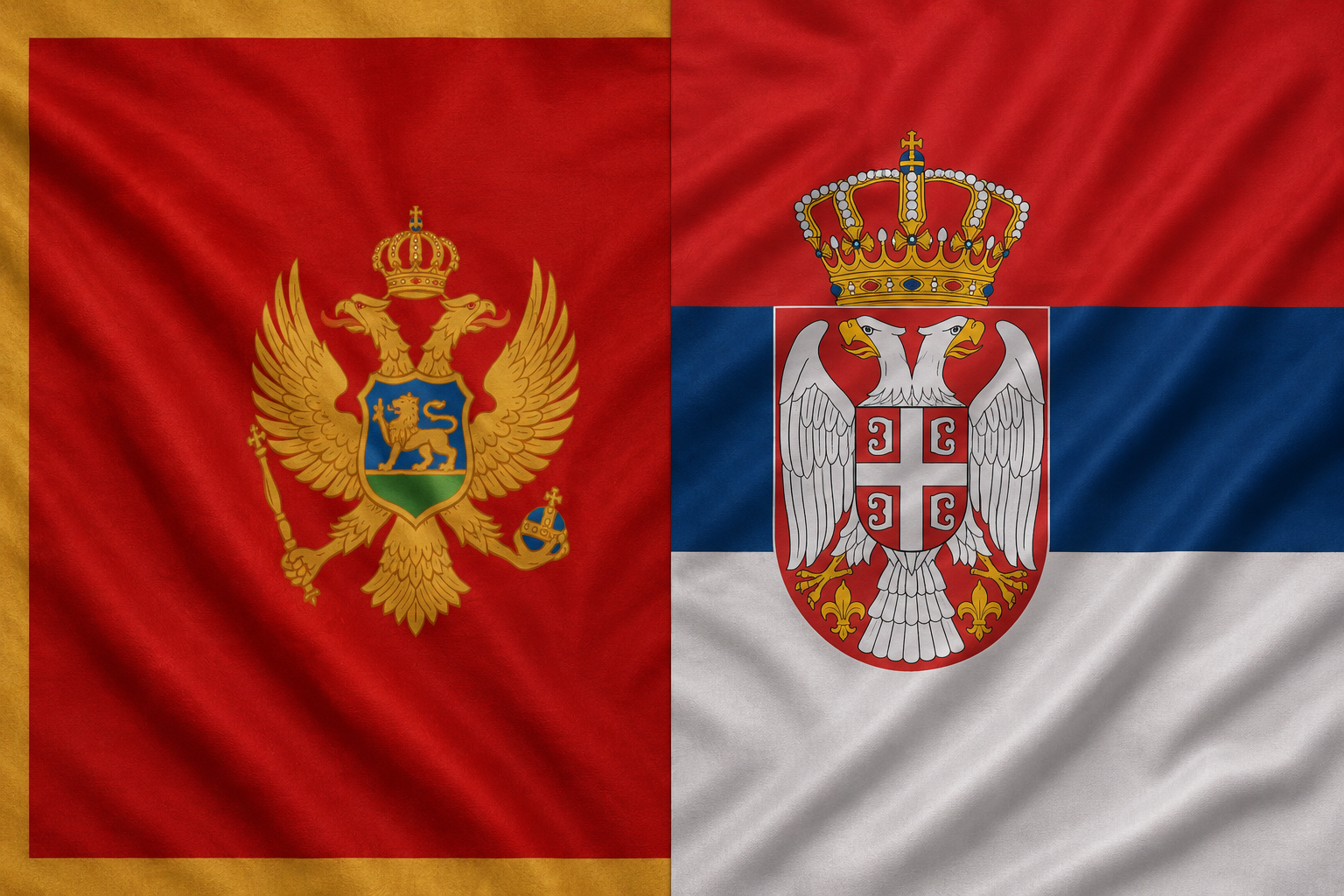
Twenty years after Montenegro restored its independence, the 2006 referendum remains one of the most significant political turning points in the post-Yugoslav region.
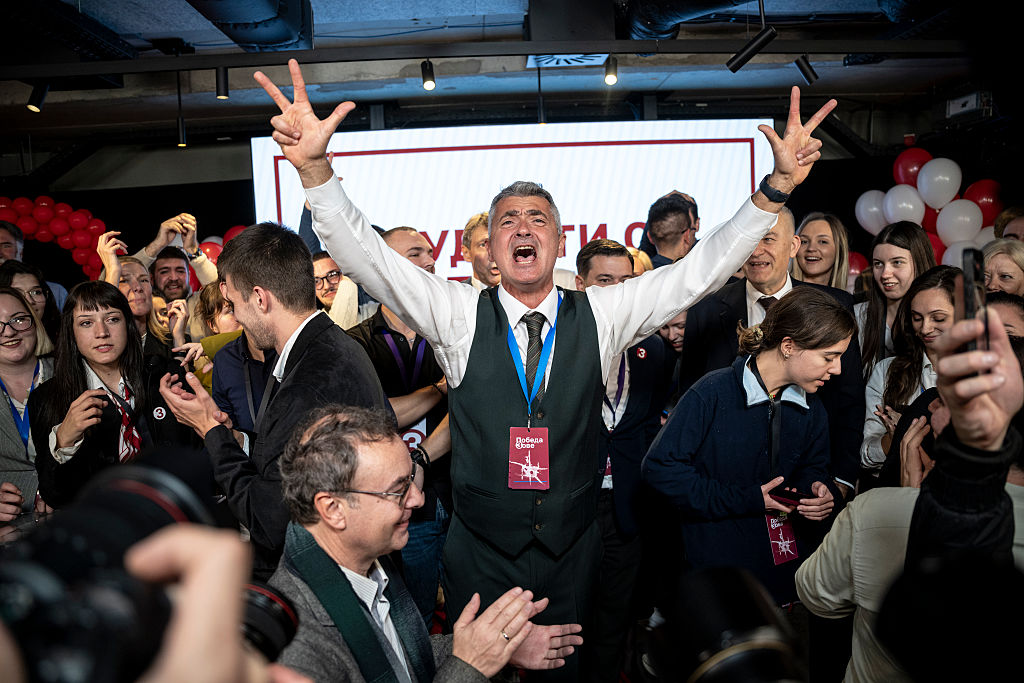
On May 21, 2006, Montenegro voted to leave the State Union of Serbia and Montenegro. The result was extremely narrow: 55.5 percent of voters supported independence, just above the required 55 percent threshold. With that decision, Montenegro became independent, while Serbia also became an independent state, although Serbian citizens did not vote in a referendum of their own.
Today, the two neighboring countries formally share the same strategic goal, membership in the European Union, but they are moving toward it at different speeds. Montenegro, a NATO member since 2017, is described as being in the final stage of European integration, while Serbia’s EU negotiations have been stalled for years.
František Lipka, the Slovak diplomat who was involved in organizing the 2006 vote, told BBC Serbian that the referendum allowed Montenegro to open a new chapter in its history and determine its own future. According to Lipka, Montenegro used the separation to focus on reforms, build a multiethnic society, improve relations with its neighbors and define Euro-Atlantic integration as a key strategic direction.
The path to the referendum was politically and emotionally charged. Serbia and Montenegro had created the Federal Republic of Yugoslavia in 1992, after the breakup of socialist Yugoslavia. In 2003, that state was transformed into the looser State Union of Serbia and Montenegro, with the possibility of a referendum three years later.
Lipka, who served as president of Montenegro’s Republican Referendum Commission, recalled that the atmosphere before the vote was full of tension, uncertainty and nervousness, but also relief that the future relationship between Serbia and Montenegro could be resolved peacefully and democratically. He said both political blocs maintained a high level of mobilization among supporters, while carefully avoiding a loss of control over the process.
The pro-independence bloc was a multiethnic coalition led by Milo Đukanović’s Democratic Party of Socialists, while the unionist bloc was led by the Socialist People’s Party of Montenegro and allies of the former Slobodan Milošević regime. According to Lipka, even technical details — from ballot boxes and voting papers to how the “yes” or “no” option would be marked — had to be agreed upon carefully to keep both sides in the process.
After the referendum, official Belgrade recognized the result. Then Serbian President Boris Tadić visited Podgorica on May 27, 2006, only days after the vote.
Two decades later, Serbia and Montenegro remain closely connected by history, culture, similar language and personal ties between their citizens. However, they also share serious challenges, including problems with the rule of law, corruption and organized crime.
Croatian historian Hrvoje Klasić said Montenegro may appear much better from the outside than from the inside, pointing to corruption and nepotism as internal problems. Still, he assessed that Montenegro has moved further than Serbia in terms of democratization, even though its path has been difficult.
In Serbia, Klasić said, power has been concentrated around one man for 15 years, while in Montenegro political change has proven possible. The article notes that Serbia has seen major anti-government protests over the past decade, but President Aleksandar Vučić’s Serbian Progressive Party has continued to win elections.
The two countries also differ in their relationship with the European Union. Lipka said Serbia has remained trapped in old ideas that continue to shape its domestic, regional and foreign policy. He argued that Serbia has not built a new national program that would allow it to move forward, and that long-term stagnation in European integration is turning into regression.
The article also highlights differences in public trust toward the EU. According to the Spring 2026 Eurobarometer cited in the text, 36 percent of people in Serbia trust EU institutions, while 59 percent do not. In Montenegro, the situation is reversed: 65 percent trust EU institutions, while 31 percent do not.
Relations between Belgrade and Podgorica remain sensitive. Ahead of the 20th anniversary of Montenegro’s independence, Serbian President Aleksandar Vučić said he did not want to attend the official celebration and wrote that Serbia had wanted to live in the same state with Montenegro. Montenegro’s Foreign Ministry responded that good neighborly relations must be based on equality and mutual respect, and cannot be built through offensive qualifications, historical revisionism or political patronage.
Belgrade has criticized Podgorica over Montenegro’s decision to join NATO and its recognition of Kosovo’s independence, which Serbia does not recognize. Lipka said poor relations between states are always a burden, but he added that, in his long-term view of Belgrade-Podgorica relations, Montenegro does not appear to have ambitions to influence Serbia’s internal political affairs.
The two countries have also moved in different directions in their relations with Russia. After 2006, Russians were among the most significant investors in Montenegro, particularly in mining and coastal tourism. But Montenegro’s NATO membership, an attempted coup involving Russian citizens and the introduction of sanctions against Russia over the war in Ukraine dramatically changed relations between Podgorica and Moscow.
At the same time, Belgrade continues to maintain a traditional partnership with Moscow, mainly because of energy dependence and Russia’s opposition to Kosovo’s independence. Serbia has refused to impose sanctions on Moscow over the invasion of Ukraine. According to Eurobarometer data cited in the article, four years after the beginning of the war, 71 percent of people in Serbia still had a positive view of Russia.
Twenty years after one referendum created two independent states, Serbia and Montenegro remain deeply connected but politically divided. The 2006 vote ended their state union peacefully, but it did not end the debates over history, identity, regional policy and the future direction of both countries.
For Montenegro, the referendum marked the restoration of independence. For Serbia, it brought independence it had not directly requested. Two decades later, the two former partners continue to move along different political paths — one closer to Euro-Atlantic integration, the other still balancing between Europe, Russia and its own unresolved regional questions.