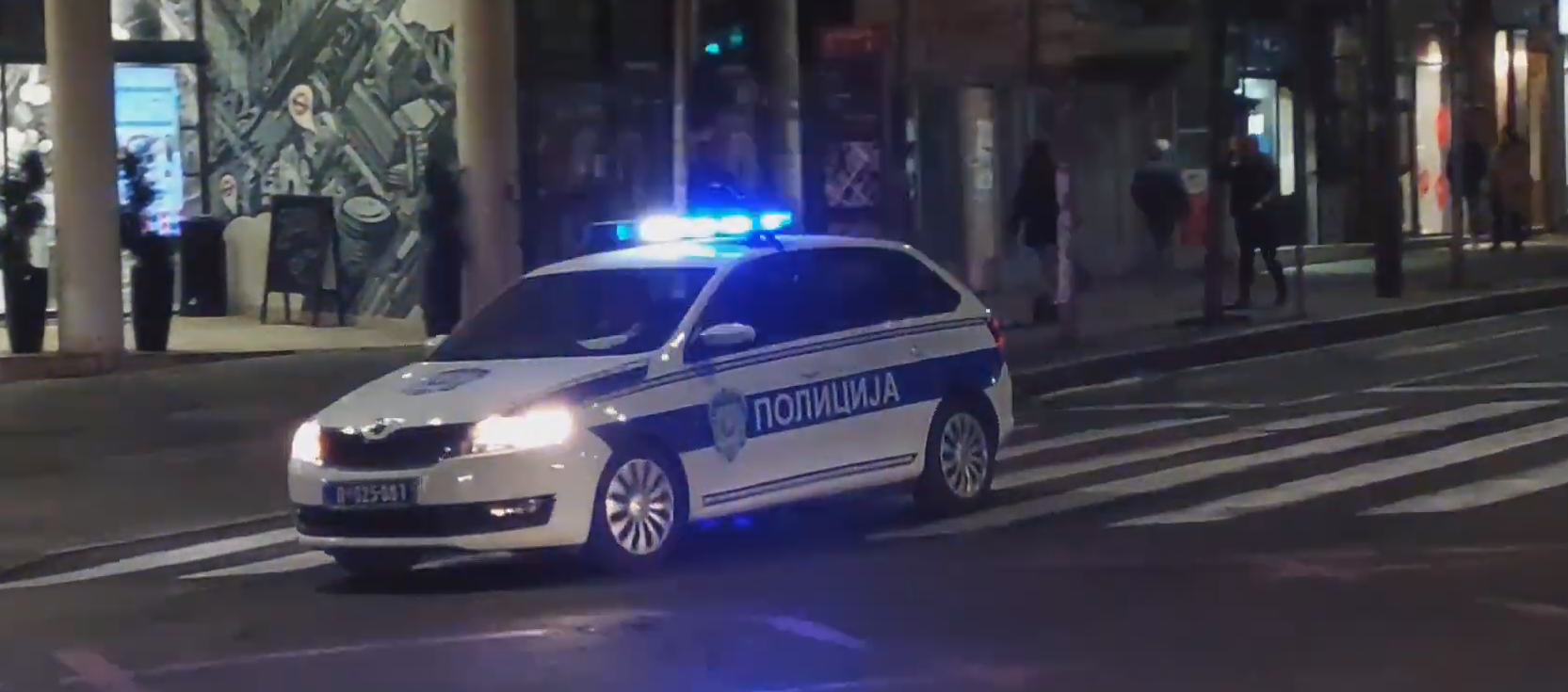
Belgrade has been rocked by a fresh wave of mafia violence over the past ten days, including a shooting at the Jerry restaurant in New Belgrade that wounded one patron, a string of Molotov cocktail attacks on bars in the upscale Vračar district, and the recent murder at a Senjak eatery that has drawn renewed public attention to the city’s long simmering underworld wars. The latest shooting occurred only hours after unknown assailants firebombed several hospitality venues in Vračar, one of them reportedly owned by Vuk Bajrušević, who himself survived a shooting at his café in December. A young suspect was arrested near the Jerry restaurant and faces charges of attempted murder and illegal weapons possession, though prosecutors are still working to identify who ordered the hit. The gun used in the attack was recovered close to the scene, and the victim was rushed to the Emergency Centre where he remains out of life threatening danger.
The Jerry restaurant was already on the radar of organized crime investigators, in February, an explosive device was thrown at its entrance in what was then interpreted as a classic mafia warning, though no one was injured. Journalists and security analysts say the pattern is unmistakable. Vuk Cvijić, a veteran reporter covering organized crime, warned that Serbia has not yet faced the full brunt of underground confrontations involving people in power or close to them. “The situation wasn’t like this even in the nineties,” he said, arguing that the government is not merely failing to control organized crime but is in “symbiosis” with it. Nova Miloš Ž. Lazić, another journalist, added that bars are targeted because perpetrators believe they generate large profits and want a cut, while the police are “caught unprepared” with priorities focused elsewhere. The night before the Jerry shooting, the Molotov attacks in Vračar set several establishments ablaze, fires were quickly localized, but the message was clear.
The spike in violence has turned parts of Belgrade into a landscape more reminiscent of Sicily during the Cosa Nostra’s heyday or Chicago under Al Capone, according to local commentators. U.S. government security assessments have long classified Belgrade as a high threat location for crime linked to organized groups associated with major football clubs and regional narcotics networks, noting that such violence usually involves rival factions targeting each other for control of lucrative rackets. Yet what alarms observers now is the brazenness of the attacks, executed in broad daylight in fashionable neighborhoods and against targets with apparent political connections, and the silence from official channels. With prosecutors vowing to uncover the masterminds behind the Jerry shooting but police offering no public account of the Vračar firebombing, the message emanating from the underworld is outpacing the state’s capacity to respond. Whether the latest bloodshed triggers a genuine law enforcement crackdown or merely heralds a new, more violent phase in Serbia’s chronic organized crime wars will depend on whether the state can prove it is still the ultimate arbiter of force in its own capital.