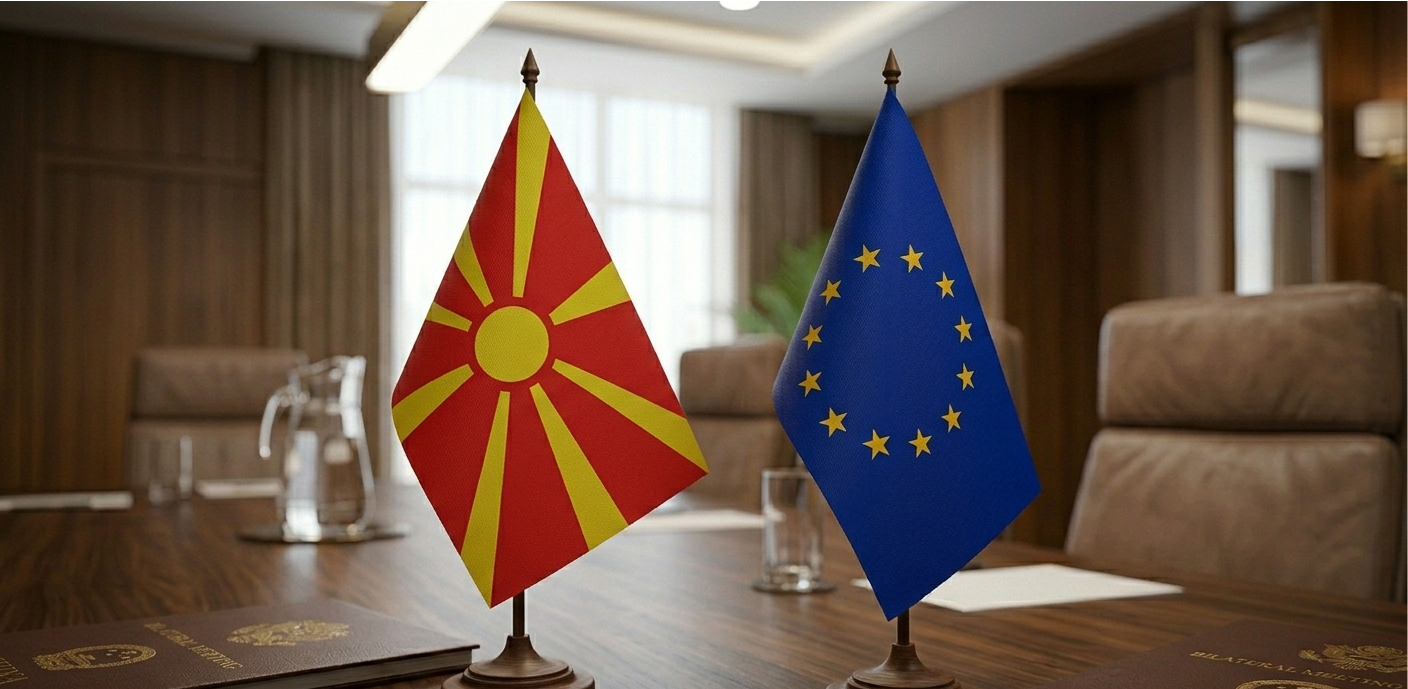
Austria, Italy, the Czech Republic, Slovakia, and Slovenia have circulated a confidential proposal calling for “merit based, step by step” integration of Western Balkan countries into the European Union’s single market before full membership, a model they argue would sustain enlargement momentum and counter Russian and Chinese influence in the region. The initiative envisions systematic sectoral integration in transport, energy, digital markets, and critical raw materials, with safeguards against backsliding. Yet for Macedonia, an EU candidate since 2005, the offer of a “European window” without a “key to the door” highlights a cruel paradox, Brussels may be inventing new halfway houses precisely because the path to full membership remains obstructed by the same bilateral disputes that have stalled the Balkans for decades.
The five country paper is careful to stress that it does not replace formal accession. Candidate states would still need to align with EU law, meet conditions, and progress through negotiations. The novelty lies in timing, sectors where readiness is achieved early could gain market access before all 33 chapters are closed. For Macedonia, this could mean earlier integration into European transport corridors, energy grids, and digital roaming regimes, tangible benefits that Prespa Institute analyst Andreja Stojkovski says could “seriously stimulate reforms” if they create visible gains before formal membership. Yet Stojkovski warns of a trap, if gradual integration becomes a permanent alternative rather than a transitional phase, it risks degenerating into “another name for the long waiting room.” The country’s own track record fuels such skepticism. Despite opening accession negotiations in July 2022 after accepting the French proposal to overcome Bulgaria’s veto, Skopje has failed to amend its constitution to recognize ethnic Bulgarians, a condition Sofia demands and the EU framework requires. Bulgaria’s Foreign Minister Velislava Petrova-Čamova reiterated on 20 May that her government “categorically opposes any attempt to circumvent or renegotiate” the July 2022 consensus, mobilizing all institutional resources to prevent any backsliding.
Domestic politics in Skopje have turned the constitutional amendment into a Gordian knot. SDSM leader Venko Filipče on 20 May publicly appealed to Prime Minister Hristijan Mickoski to jointly enact the changes, offering to share political responsibility for what he acknowledged would be a painful but necessary step. “We will remain on the sidelines, we will have no chance, we will not survive,” Filipče warned, predicting poverty and accelerating emigration if the moment is missed. Mickoski’s VMRO-DPMNE, which rode to power in 2024 on a nationalist platform opposing the French proposal, has shown no sign of bending. Former foreign minister Antonio Milošoski captured the governing party’s stance by demanding a single, honest offer from EU member states rather than “phrases” that prove insincere in implementation. “For us, EU accession has turned into a moving target,” he said. Meanwhile, analyst Siniša Pekovski dismisses the five country initiative as Brussels theatre, an attempt to show activity while the EU itself is too divided to reform enlargement rules or override Bulgarian objections. With public trust in the judiciary at zero and state capture by partisan interests pervasive, Pekovski argues, no amount of external opportunity will matter if Macedonia cannot reform for its own sake.
The French proposal of 2022, which Macedonia’s then SDSM government approved by a razor thin 68 votes in a 120 seat parliament, was meant to break the Bulgarian veto by embedding bilateral disputes into the accession framework itself. Instead, it enshrined nationalism at the core of the process, Sofia gained effective veto power over every subsequent step, while Skopje was required to constitutionalize a Bulgarian minority numbering fewer than 3,500 people according to the latest census. The move triggered months of protests, deepened inter ethnic tensions between Macedonians and Albanians, and ultimately contributed to the SDSM’s electoral collapse. Today, with VMRO-DPMNE in power and Bulgaria unyielding, the five country initiative risks looking like another layer of ambiguity atop an already convoluted structure. Whether sectoral integration can generate enough momentum to break the domestic deadlock, or merely provides Brussels with a face saving alternative while the Western Balkans wait indefinitely, will depend on whether the EU can transform “step by step” from a slogan into a credible, irreversible pathway. For now, Macedonia has a window, but still no clear path.