Visit Marked by Political and Economic Agreements
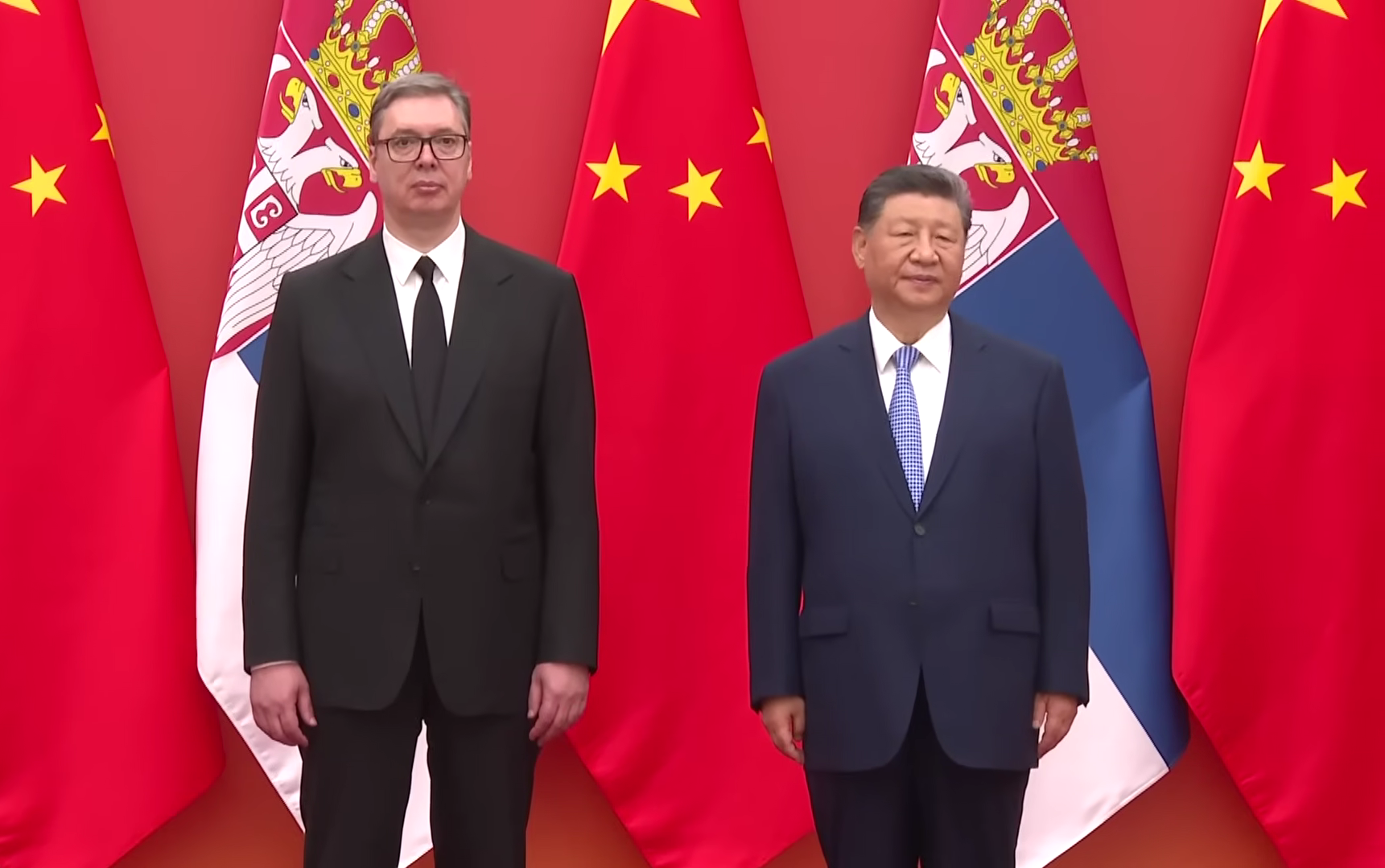
Serbian President Aleksandar Vučić completed his multi day official visit to China, which he described as highly successful in economic terms and one of the longest bilateral visits he has had so far. Speaking from Shanghai, Vučić said he was proud of everything Serbia had achieved during the five day visit and stated that he had held talks with representatives of 29 Chinese companies. According to him, the level of interest was so high that he could have met with another 50 companies.
During the visit, new areas of cooperation were discussed, including investments, infrastructure, high technologies, artificial intelligence, robotics, energy, security and defense capacities. Vučić said Serbia had “achieved many important agreements” for the benefit of both the Serbian and Chinese people. One of the central political moments of the visit was the presentation of China’s Order of Friendship, described as the highest Chinese state decoration for foreign citizens.
Nearly One Billion Euros in Agreements and New Investment Plans
During the visit, investment agreements worth 953 million euros were signed in the Chinese city of Jiaxing. Vučić said the new investments would be directed toward several Serbian cities, including Niš, Novi Sad, Zrenjanin, Šabac, Ćuprija and Inđija. He also announced expectations of major investment news for Šid and Zrenjanin during June, saying that one or possibly both northern Serbian cities could receive significant new projects.
Vučić said Linglong’s planned investment would amount to 530 million euros, describing it as a major figure for Serbia. He added that “hundreds of millions” of euros in additional investments were also under discussion, but that he could not speak about them before agreements were signed. He said he expected many things to be completed in June and July.
Robotics, Artificial Intelligence and Technology Transfer
A major part of the visit focused on high technology, robotics and artificial intelligence. Vučić announced that the first phase of robot production in Serbia would begin in Šabac between July 10 and July 20. He said the project would develop in three phases: first, robot assembly in Serbia; second, the development of training centers and so-called data factories for robot training; and third, the full application of artificial intelligence.
Vučić said that 250 workers would be employed in the robot factory in Šabac and argued that robots and artificial intelligence represent the future. Responding to claims that robots could leave people without jobs, he said Serbia should not reject technological progress. According to him, Serbia will soon have humanoid robots produced in the country and should use this opportunity to move forward technologically.
Serbia also discussed possible inclusion in chip supply chains, cooperation between Serbian and Chinese research institutes, energy cooperation including modular reactors, and broader technological partnerships.
Talks with Chinese Companies and Trade Opportunities
In Shanghai, Vučić held talks with several major Chinese companies, including Guannan Group, Zijin Mining Group, TBEA and CETC. The discussions covered new investments, the continuation of existing projects and the creation of new jobs in Serbia. He also met an official in charge of trade relations in the Shanghai government to discuss how Serbian products could be positioned in Shanghai markets and how Serbia could strengthen its online sales offer.
Vučić said that after receiving the decoration from Chinese President Xi Jinping, many Chinese partners expressed willingness to work with Serbia “in all possible ways” and to come to Serbia in the coming months.
Political Relations Between Serbia and China
The visit was also presented as a confirmation of strong political relations between Belgrade and Beijing. Chinese President Xi Jinping reportedly said that mutual political trust between China and Serbia is “as solid as a rock,” noting that he and Vučić had met 12 times in previous years. Joint projects such as the Belgrade-Budapest high-speed railway and cooperation between Chinese company HBIS and the Smederevo steel plant were presented as symbols of successful cooperation.
Vučić also said Serbia and China had agreed on more frequent consultations on foreign policy issues, adding that China has important information on global political relations.
Kosovo and Political Messages from China
During his address from China, Vučić also commented on Kosovo-related issues and upcoming elections in Kosovo. He said Serbia would try to do what it could under difficult conditions and argued that leaving homes was not a solution. He also criticized the European approach, saying that if Europe had wanted, it could have pressured for the formation of the Community of Serb Municipalities. He said Serbia was waiting for the moment when the Brussels Agreement could be fulfilled and when the United Nations Charter would be respected.
Critical Reactions and Concerns Over Dependence on China
The visit also prompted criticism. Economic journalist Miša Brkić argued that Serbia’s current policy toward China could soon prove to be a wrong economic and political choice in foreign policy terms. He said China had lost Hungary as a major partner in Europe after parliamentary elections there and was now looking for a new partner, with Serbia potentially taking that role. However, he pointed out that Hungary is a member of the European Union while Serbia is not.
Brkić also warned that stronger financial ties with China could affect Serbia’s position as a debtor country. He said no reasonable person is against new jobs and investments, but argued that the other side of the relationship must also be considered, especially Serbia’s financial dependence. He also raised questions about the announced humanoid robots, asking what they would be used for, whether there is demand for them, whether Serbia would sell them, and what impact they could have on the labour market.
According to Brkić, Serbia’s deepening economic and political relations with China could also become a problem on its European path. He suggested that one of the future conditions for Serbia’s EU accession, if Serbia continues to pursue that goal, could be the need to clarify its economic and political relations with China.
A Visit Presented as Historic, but Followed by Open Questions
Vučić presented the visit as a major success for Serbia, highlighting new investments, advanced technology, robotics, artificial intelligence and stronger political ties with China. He said the visit opened new opportunities and gave him strong motivation to continue working more intensely.
At the same time, the visit also opened questions about Serbia’s long-term foreign policy direction, the economic risks of stronger reliance on China, the real impact of robot production, and how Serbia’s growing partnership with Beijing could affect its relations with the European Union.