China increasingly views Serbia not only as a market or infrastructure corridor, but as a potential technology, logistics and production base for its wider presence in Europe and the Western Balkans, according to an analysis by the International Institute for Middle East and Balkan Studies, IFIMES.
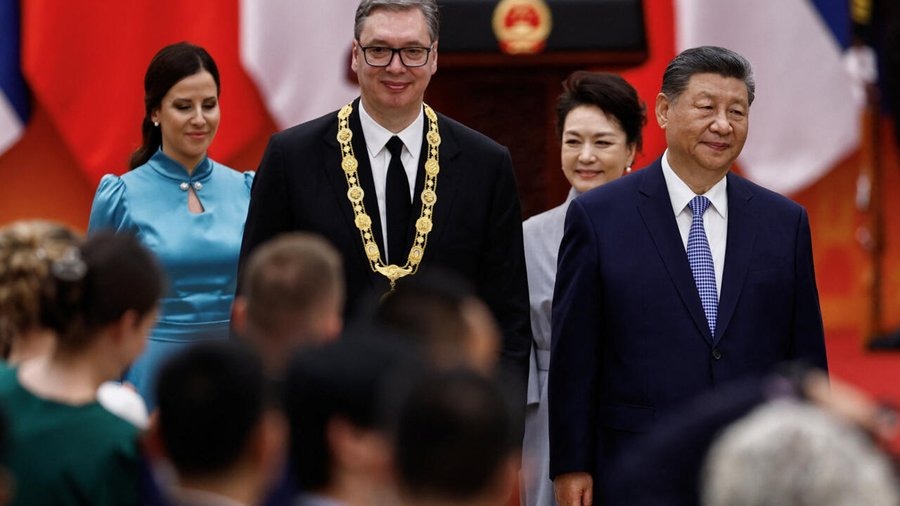
The assessment follows Serbian President Aleksandar Vučić’s official visit to China from May 24 to May 28, 2026, which IFIMES described as one of Serbia’s most politically and economically significant bilateral activities in recent years. The institute noted that the length of the visit reflected the high level of political trust between Belgrade and Beijing, as well as Serbia’s growing role in China’s economic and geopolitical strategy toward Southeast Europe.
According to the analysis, Serbia is positioning itself as China’s key partner in the Western Balkans, with cooperation moving beyond traditional infrastructure, mining and energy projects toward technology, digitalization and robotics.
One of the main points highlighted by IFIMES is the announced start of robot production in the Serbian city of Šabac in July 2026. Serbian officials have presented the project as a major technological step for the country and a sign that Serbia wants to become more than just a destination for foreign investment.
However, IFIMES warned that the real impact will depend on whether Serbia can develop domestic expertise, local suppliers, research centers and intellectual property around these projects. If Serbia remains only a place where foreign technology is assembled, the benefits may be limited. But if Chinese investment is combined with local engineering, education and innovation, the partnership could support long-term industrial modernization.
China is already one of Serbia’s most important economic partners outside Europe. Trade between the two countries is estimated at between $6.5 billion and $7.5 billion annually, with Serbian exports to China exceeding $1 billion and imports from China surpassing $5.5 billion. Major Chinese investments in Serbia include projects by Zijin Mining, Linglong Tire, Huawei and China Road and Bridge Corporation.
During Vučić’s visit, 23 bilateral agreements were signed across several sectors. Meetings with Chinese companies such as Zijin, Linglong, TBEA and Guannan Group further confirmed Beijing’s continued interest in strategic industries in Serbia.
IFIMES said China’s interest in Serbia is driven by several factors, including the country’s central geographic position, its transport infrastructure and its role as a gateway toward European markets. The institute also noted that Serbia’s foreign policy gives China room for long-term institutional presence in a way that may be more complicated in some European Union member states.
At the same time, Serbia’s deepening relationship with China is attracting attention from Brussels and Western capitals, especially because Chinese involvement includes sensitive sectors such as digital infrastructure, energy, surveillance technologies and strategic industries.
IFIMES argued that Serbia’s position should not be reduced to a simple choice between China and Europe. Instead, the key question is whether Belgrade can benefit from Chinese capital, technology and access to markets while still maintaining its European path, regulatory alignment, transparency and strategic independence.
The institute also pointed to possible risks, including dependence on Chinese financing, technological imbalance, lack of transparency and potential environmental and fiscal consequences linked to major investment projects.
In its conclusion, IFIMES said Serbia’s relationship with China is entering a new phase in which technology, innovation, industrial transformation and geostrategy are becoming more important than traditional infrastructure projects. The real test, according to the analysis, will be whether Serbia can turn Chinese investment into sustainable domestic development or remain mainly a platform for expanding Chinese influence in the Western Balkans and Southeast Europe.