European stock markets moved lower on Wednesday morning after investors reacted to reports that Washington is preparing additional tariffs on imports from dozens of economies, including the European Union, China and Japan.
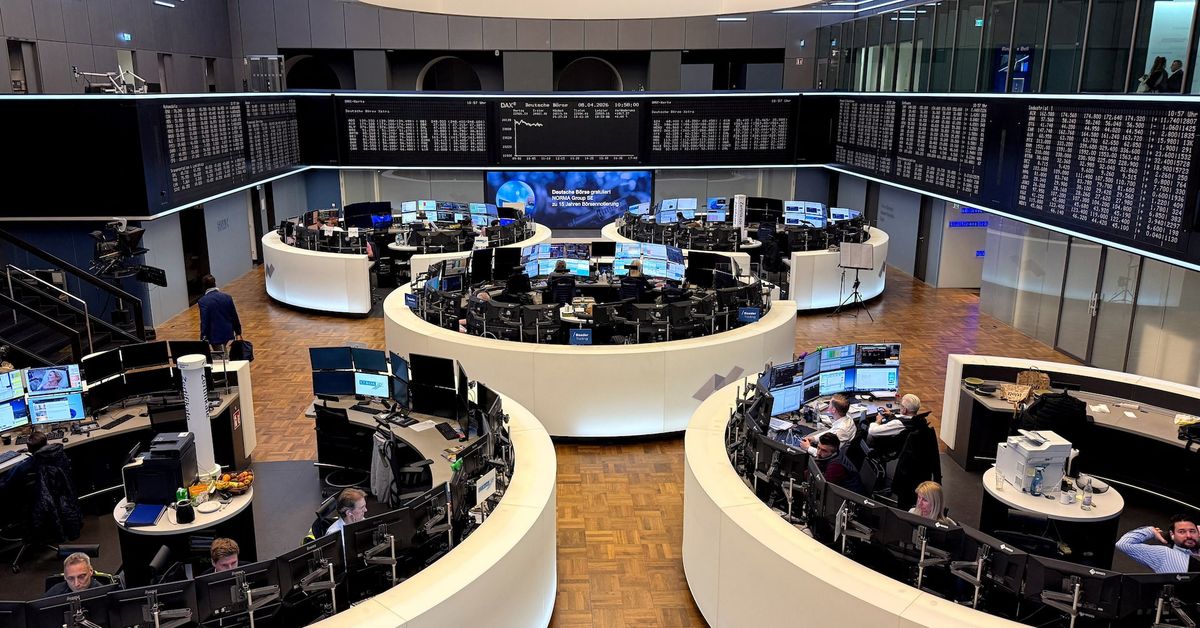
The pan-European STOXX 600 index was down 0.3 percent in early trading. Germany’s DAX fell 0.80 percent to 24,925 points, France’s CAC 40 slipped 0.39 percent to 8,176 points, while London’s FTSE index declined 0.14 percent to 10,359 points.
Market sentiment weakened after the administration of President Donald Trump proposed new tariffs of 10 percent or 12.5 percent on imports from around 60 countries. The measure is reportedly aimed at economies accused of failing to restrict trade in goods produced with forced labor, which Washington says harms U.S. trade interests.
The tariff announcement added fresh uncertainty to global markets, already under pressure from geopolitical tensions and concerns about the outlook for international trade. Investors have been cautious as potential new trade barriers could affect companies with major exposure to global supply chains.
In Asia, most major markets moved higher, following gains on Wall Street. Japan’s Nikkei rose strongly and reached a new record level, while stocks in Shanghai and Australia also advanced. However, markets in India and Hong Kong declined.
On Wall Street, the Dow Jones Industrial Average rose 0.45 percent, the S&P 500 gained 0.13 percent and the Nasdaq added 0.03 percent in the previous session, supported mainly by technology stocks.
Chipmakers were among the strongest performers, with the PHLX semiconductor index jumping nearly 6 percent. Marvell Technology surged 32 percent, while Hewlett Packard Enterprise gained 19 percent after reporting stronger-than-expected quarterly results.
Despite the positive momentum in U.S. tech shares, European investors remained focused on the risk of a renewed trade dispute between Washington and key global partners. Analysts warn that additional tariffs could increase costs for businesses and consumers, while also raising the risk of retaliatory measures from affected countries.
The news comes as global markets continue to monitor tensions in the Middle East, which have added another layer of uncertainty to investor sentiment.