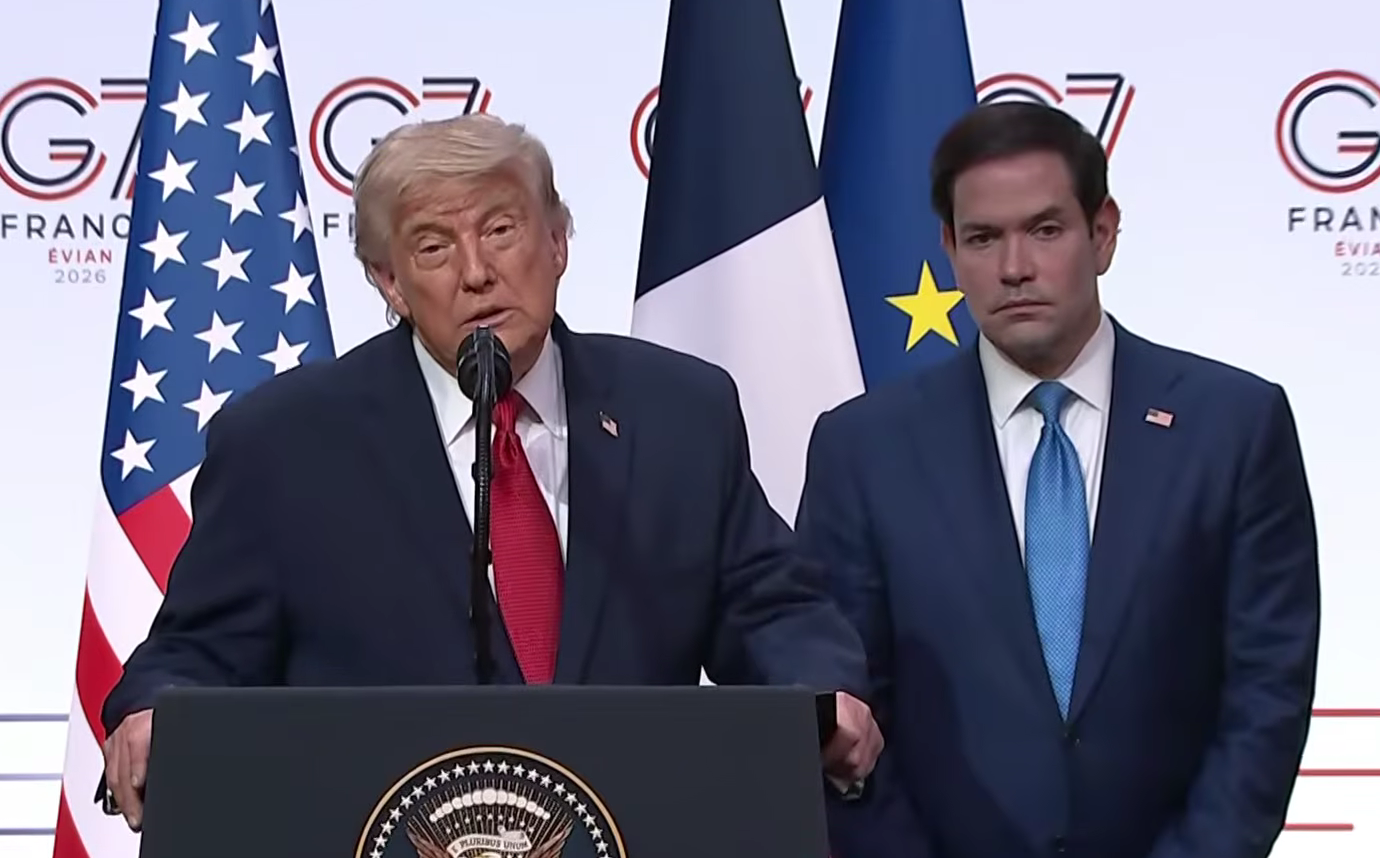
US President Donald Trump and Iranian President Masoud Pezeshkian have signed an initial peace agreement at the G7 summit in France, aiming to end a war that has raged since February and sent shockwaves through the global economy. The memorandum of understanding, inked during a state dinner hosted by French President Emmanuel Macron at the Palace of Versailles, includes the immediate reopening of the Strait of Hormuz, a $300 billion reconstruction plan for Iran, and the termination of all US sanctions on the Islamic Republic. The deal takes effect immediately, but the central issue that triggered the conflict, Iran’s nuclear program, has been kicked down the road to a 60 day negotiating period that can be extended by mutual consent.
The agreement marks a dramatic pivot for Trump, who launched the war on February 28 alongside Israel with a strike that assassinated Supreme Leader Ayatollah Ali Khamenei and top military officials. Since then, the conflict has spiraled, with Iran imposing a de facto closure of the Strait of Hormuz through which roughly 20% of the world’s oil and liquefied natural gas passes. The resulting energy crisis has driven up gasoline prices and inflation worldwide, with Brent crude hovering around $79 per barrel even after dipping 1% following the announcement, still approximately $8 higher than pre war levels. Trump defended the deal as a necessary measure to avert “worldwide depression,” telling reporters that “every time we talked about the possibility of peace, the stock market shot up like a rocket ship.”
The memorandum’s provisions reveal significant concessions on both sides. Iran reaffirms it shall not procure or develop nuclear weapons, and its enriched uranium stockpile will be down blended on site under IAEA supervision, a notable retreat from Washington’s original demand that the material be removed from the country entirely. Ships will transit Hormuz toll free for 60 days, though Iranian parliamentary speaker Mohammad Bagher Ghalibaf warned the strait “will not return to pre war conditions” and suggested future charges may apply. Trump also softened his previous stance on Iran’s ballistic missile program, stating it would be “OK” for Tehran to retain such weapons “if other countries have them.” The deal further declares the “immediate and permanent termination of military operations on all fronts, including in Lebanon,” though Israel has already indicated it has no plans to withdraw troops from Lebanon and launched fresh attacks on Hezbollah on Wednesday.
The domestic political fallout has been swift and bipartisan. Republican Senator Bill Cassidy of Louisiana called the agreement “the worst foreign policy blunder in decades,” while Senator Ted Cruz, a longtime Iran hawk, questioned the $300 billion reconstruction fund, saying “giving billions of dollars to theocratic lunatics who want to murder us is not a good idea.” The White House insisted the US would not pay “a cent,” suggesting instead that third parties like the UAE could invest in Iranian infrastructure with American blessing. Democrats were equally scathing. Senator Jeanne Shaheen of New Hampshire called it “a very bad deal” that failed to address Iran’s support for proxies like Hezbollah or its missile program. Trump’s own past rhetoric has come back to haunt him, he previously railed against Barack Obama for unfreezing $1.7 billion in Iranian assets under the 2015 nuclear deal, which he scrapped during his first term. Now, he says frozen Iranian assets “should be returned,” admitting “it’s their money, and we froze it.”
The most critical uncertainty remains whether this initial accord can evolve into a durable settlement. Ghalibaf, who also served as a key negotiator, told state media that Iran’s “finger is on the trigger” and warned that “if the enemy does not understand the language of logic, we will enter again with the language of power.” Iran’s Foreign Ministry spokesperson Esmail Baghaei had earlier dismissed reports of a finalized deal as “merely speculation,” saying Tehran had “not reached a final decision.” The 60 day window for nuclear negotiations will test whether both sides can bridge the gap between a ceasefire and a comprehensive agreement. For Trump, who faces a restive Congress and a war weary public, the deal offers a path out of a conflict that has killed American service members and battered his domestic standing. For Iran, it provides sanctions relief and reconstruction funds while preserving its nuclear infrastructure and regional missile capabilities. Whether this proves to be a historic breakthrough or merely a pause before renewed hostilities will depend on what happens in the negotiating rooms over the next two months.