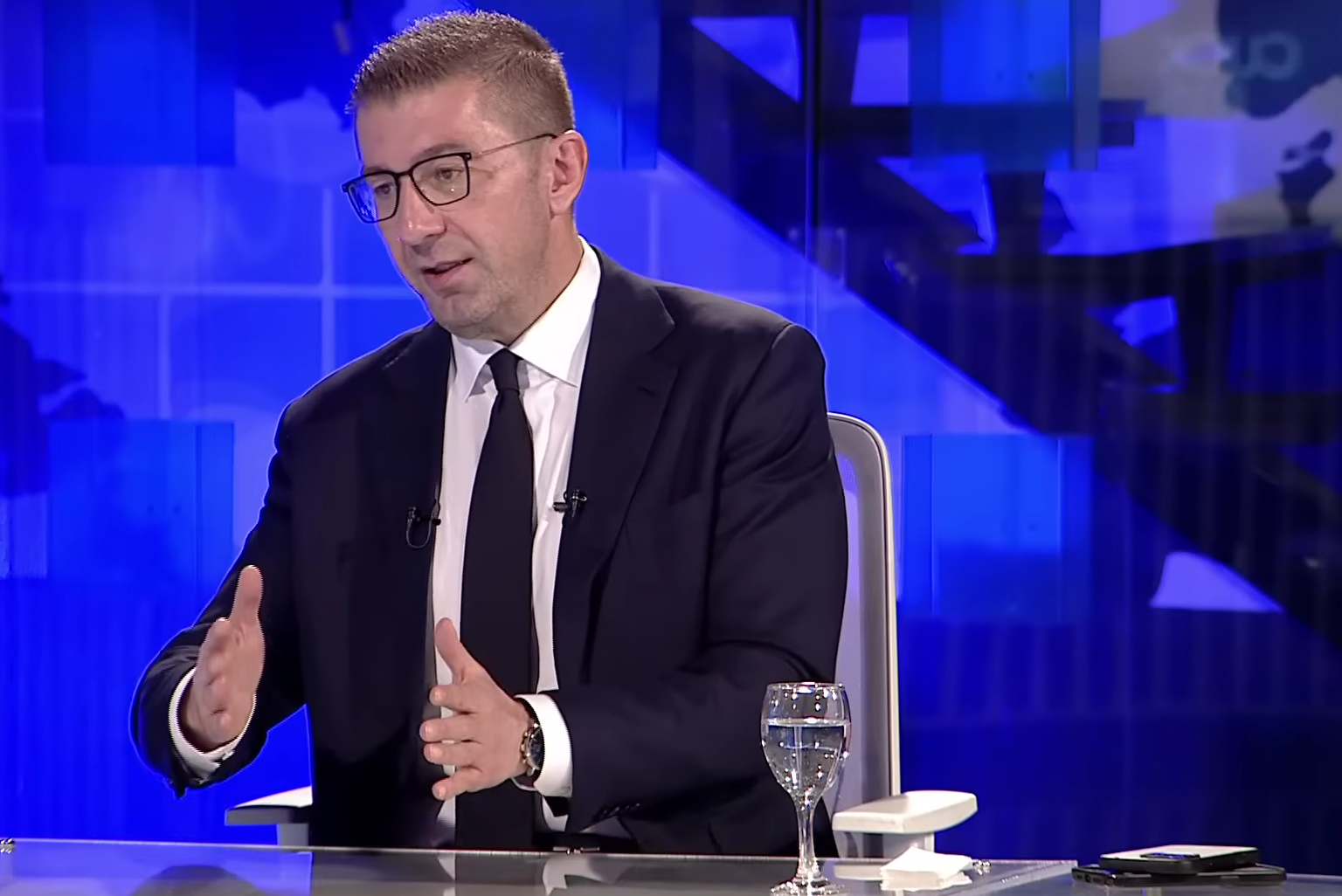
Macedonian Prime Minister Hristijan Mickoski has declared a new chapter for his country, one defined by accelerated European integration, but only on terms that protect national identity from further concessions. Speaking at a VMRO-DPMNE party rally in Strumica marking the party’s 36th anniversary, Mickoski delivered a defiant message to both Brussels and the domestic opposition, Macedonia will speed toward EU membership, but “there will be no bargaining with our Macedonian identity.” The speech, framed under the motto “Macedonia Accelerates, Our Obligation,” outlined a vision of a “state of opportunities, not excuses,” while simultaneously announcing a potential government reconstruction and readiness for early elections.
Mickoski’s stance on EU accession reflects the core tension that has paralyzed Macedonia’s European path for years. The country, which changed its name from the Republic of Macedonia to North Macedonia under the 2018 Prespa Agreement to resolve a dispute with Greece and secure NATO membership, now faces a Bulgarian blockade demanding constitutional recognition of a Bulgarian minority. Mickoski has made it clear that his government will not accept what he calls “bilateral conditioning” or further concessions on language, history, or national identity. “Bring a conclusion that there will be no more bilateral issues, that the Macedonian multi century identity, culture, tradition, customs, and language are a constant and a fact,” he told European institutions. This hardline position has left accession talks stalled since 2022, when the so called French Proposal embedded Bulgaria’s demands into the EU negotiating framework. The European Commission, led by Ursula von der Leyen, has maintained that constitutional amendments are the prerequisite for opening the first negotiation cluster, a position Sofia has reinforced with a parliamentary resolution declaring “not a single centimeter will be taken back” from the 2022 consensus.
Domestically, Mickoski used the rally to project strength and castigate his opponents. He accused the previous SDSM led government of causing “serious damage” through its conciliatory approach to Bulgaria and framed his administration as the defender of national dignity. “There is no pact and no alliance with crime and criminals,” he declared, vowing that corrupt judges and prosecutors would soon face justice. He announced a government reconstruction to address observed weaknesses, warning officials that his “threshold of tolerance is huge, but that does not mean I will tolerate irresponsibility.” He also taunted the opposition, claiming it was “the only opposition in the world that does not want elections” and asserting that his government was prepared for any scenario. The speech comes as VMRO-DPMNE attempts to maintain its dominant position ahead of local elections, with analysts noting that the party’s nationalist rhetoric serves to consolidate its base amid frustration over the protracted EU waiting room.
The broader context reveals a country caught between European aspiration and identity preservation. According to the latest Balkan Barometer, only half of Macedonia’s population believes EU membership would be a positive development, a dramatic collapse in enthusiasm after decades of compromises. Mickoski’s government has sought alternative diplomatic avenues, including outreach to the Trump administration and Hungarian Prime Minister Viktor Orbán, but these efforts have yielded little tangible progress on the Bulgarian impasse. The Kočani disco fire tragedy, which has become a symbol of institutional decay under Mickoski’s watch, adds pressure for the government to deliver tangible results beyond nationalist symbolism. For now, Mickoski’s “no bargaining” stance has drawn applause from supporters who view previous concessions as humiliating, but it also risks cementing Macedonia’s place in what one analyst called “the endless anteroom of integration.” Whether this approach breaks the deadlock or simply hardens it will determine whether Macedonia’s European dream remains alive or fades into permanent limbo.