The Obama Presidential Center officially opens its doors to the public on June 19, 2026, the Juneteenth holiday commemorating the abolition of slavery in the United States, following a star studded dedication ceremony the day before presided over by former President Barack Obama and former First Lady Michelle Obama. The $850 million campus, situated on 19.3 acres of historic Jackson Park on Chicago’s long neglected South Side, represents the largest single investment in the neighborhood in a century and the first fully digitized presidential library in American history. Funded entirely through private donations raised by the Obama Foundation, the center welcomed an A list lineup of performers including Stevie Wonder, Bruce Springsteen, Jennifer Hudson, John Legend, Common, Christina Aguilera, Eddie Vedder, Bono, and The Roots, with proceedings livestreamed globally for ticketed guests and the public alike.
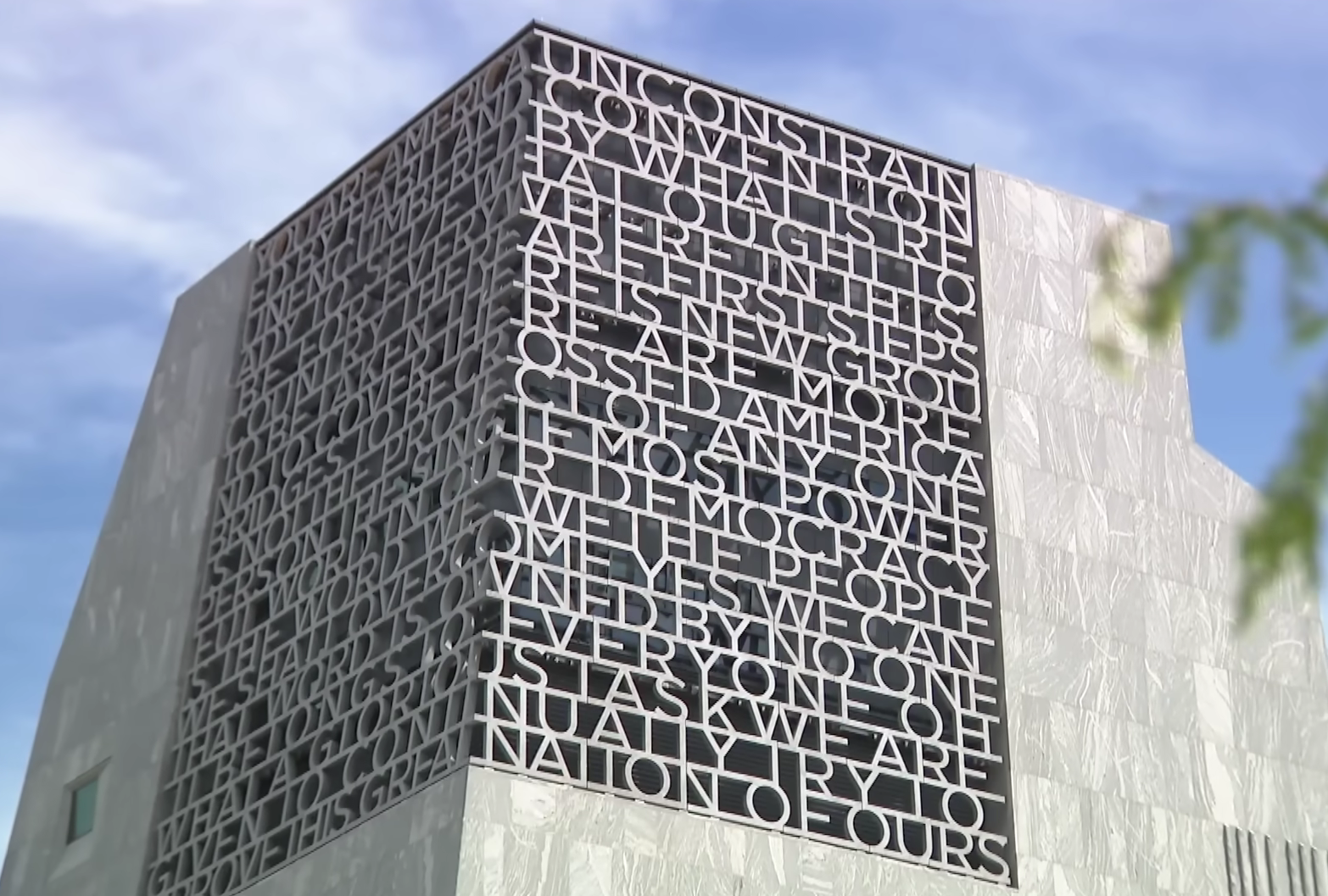
The architectural vision, led by New York based Tod Williams Billie Tsien Architects in partnership with Chicago’s Interactive Design Architects, blends landscape and structure across a site originally designed by Frederick Law Olmsted for the 1893 World’s Columbian Exposition. The centerpiece is an eight story, irregularly shaped granite clad museum tower, locally nicknamed the “Obamalisk”, that houses exhibitions devoted to Obama’s personal journey and his two terms in office from 2009 to 2017. An excerpt from his 2015 Selma speech, delivered on the 50th anniversary of “Bloody Sunday,” wraps around an upper corner as a sunscreen like text installation. The campus extends beyond the museum to include a Great Lawn for year round recreation, a new branch of the Chicago Public Library, an Eleanor Roosevelt named fruit and vegetable garden, an outdoor plaza honoring the late civil rights leader John Lewis, an NBA regulation “Home Court” athletic center, and the multimedia Forum performance space. Twenty eight original artworks are integrated throughout, including an 83 by 25 foot painted glass window by Ethiopian-American artist Julie Mehretu titled “Uprising of the Sun.”
The opening arrives at a politically charged moment, with the Obamas framing the center as an antidote to the toxicity of the current era. Valerie Jarrett, the foundation’s chief executive and Obama’s longest serving senior White House adviser, described the campus as a place that “breathes new hope” at a time when civil liberties protections and diversity programs have been rolled back under the Trump administration. The word “Hope,” rendered in sculpture near the main entrance, deliberately echoes the resonant theme of Obama’s 2008 campaign. Yet the project has not been without controversy. Construction, which began in August 2021 after years of federal review and legal challenges from preservation groups, faced delays, budget overruns, and allegations of racial discrimination in hiring. Local residents have expressed fears of gentrification and displacement, with some calling the tower a “monstrosity.” The Chicago City Council approved a 99 year lease for the land at $10, with the city retaining ownership, and negotiated housing protections for the surrounding Woodlawn neighborhood. Organizers project 750,000 to 1 million annual visitors, most of whom will enjoy free admission. For Chicago’s South Side, the center offers both a monument to a historic presidency and a test of whether civic investment can uplift a community without displacing it.