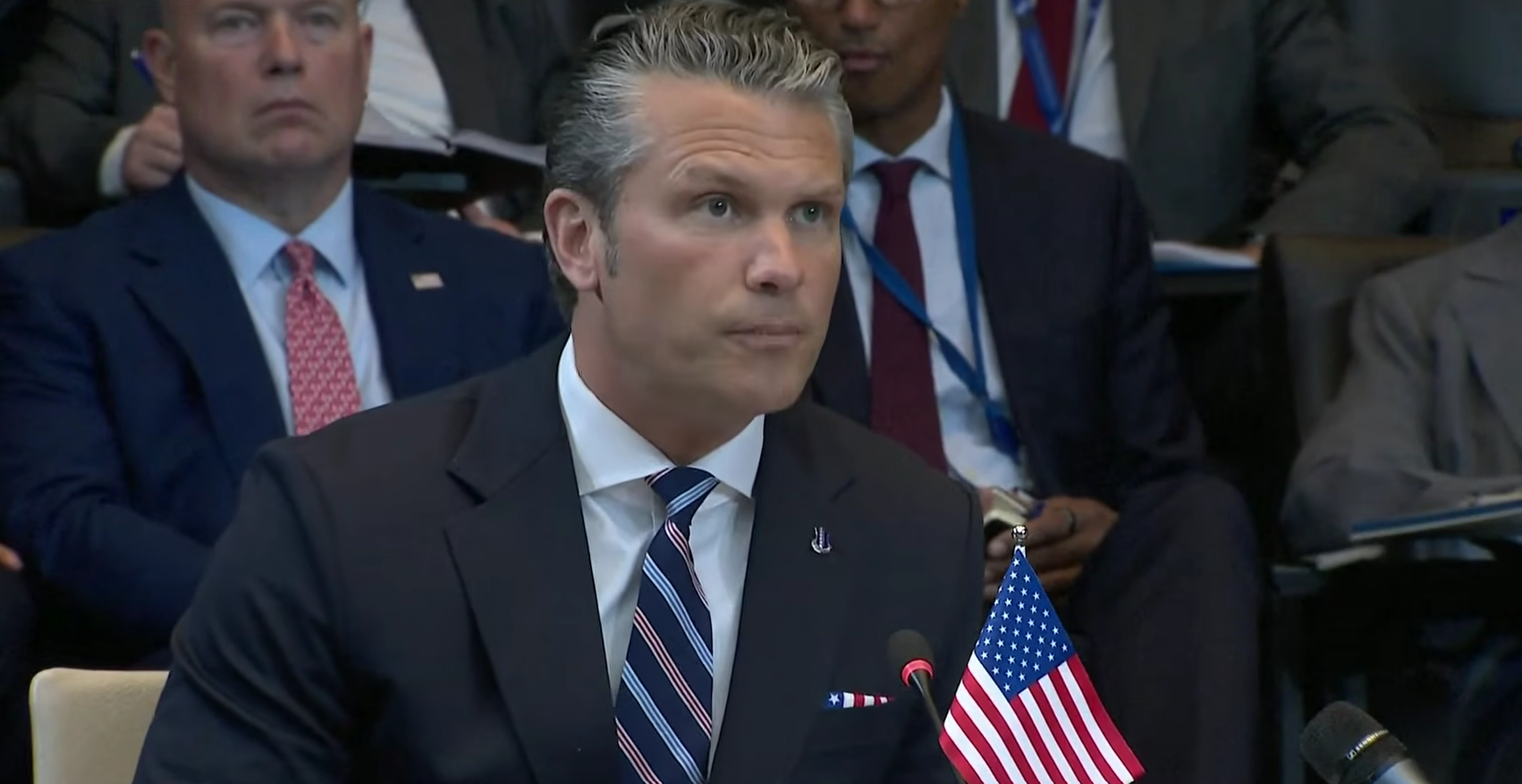
US Defense Secretary Pete Hegseth has announced a sweeping six month review of American forces in Europe, doubling down on the Trump administration’s combative posture toward NATO and demanding that European allies assume primary responsibility for the continent’s defense. Speaking at a meeting of NATO defense ministers in Brussels, Hegseth declared the review would “examine America’s force posture and basing in Europe” and promised it would be “designed to ensure that NATO is moving fast and irreversibly towards Europe stepping up.” He framed the initiative as a means to “transform NATO back into a real military alliance that’s focused on hard power and real deterrence,” warning that “some countries will fail and others will pass with flying colors.”
The announcement comes on the heels of a confirmed US reduction in its contributions to the NATO Force Model, the framework that organizes the alliance’s joint forces and war plans. NATO Secretary General Mark Rutte acknowledged Wednesday that Washington had adjusted its pledges, though he sought to downplay the impact by insisting that the US, with its nuclear umbrella, remained “committed” to the alliance. The practical effects, however, are significant. EUCOM commander General Alexus Grynkewich announced on June 3 that the US would “rightsize” its Force Model contributions, including cuts to fighter jets, air to air refueling planes, and naval vessels committed to NATO crisis response. The Pentagon is reportedly weighing a reduction of F-16 and F-15E fighter jets from roughly 153 to 99, while a planned deployment of an Army armored combat brigade to Poland was canceled last month and a brigade was removed from Romania last year. These moves are part of the administration’s broader “NATO 3.0” vision, championed by Pentagon policy chief Elbridge Colby, which seeks to reallocate resources toward the Indo-Pacific and Western Hemisphere.
The pressure on Europe to fill the gap is immense, and growing. At the 2025 Hague Summit, European NATO allies pledged to spend 5% of GDP on defense and related infrastructure by 2035, a dramatic increase from the previous 2% target. In 2025, European allies and Canada boosted military spending by 20% to $574 billion in real terms, with Poland, Lithuania, and Latvia already exceeding the new 3.5% core defense target. Yet the spending surge has exposed critical capability gaps. Ammunition shortfalls, production delays, and fragmented procurement systems mean that budgets do not automatically translate into deployable forces. As former Pentagon official Jim Townsend noted, “the defense industrial capability in Europe and the United States has atrophied,” and factories cannot instantly produce the weapons NATO says it needs. Hegseth’s review, due to conclude around the time of the July NATO summit in Ankara, will test whether European pledges can be converted into genuine military self reliance, or whether the transatlantic alliance is entering an era of managed, but potentially destabilizing, separation.