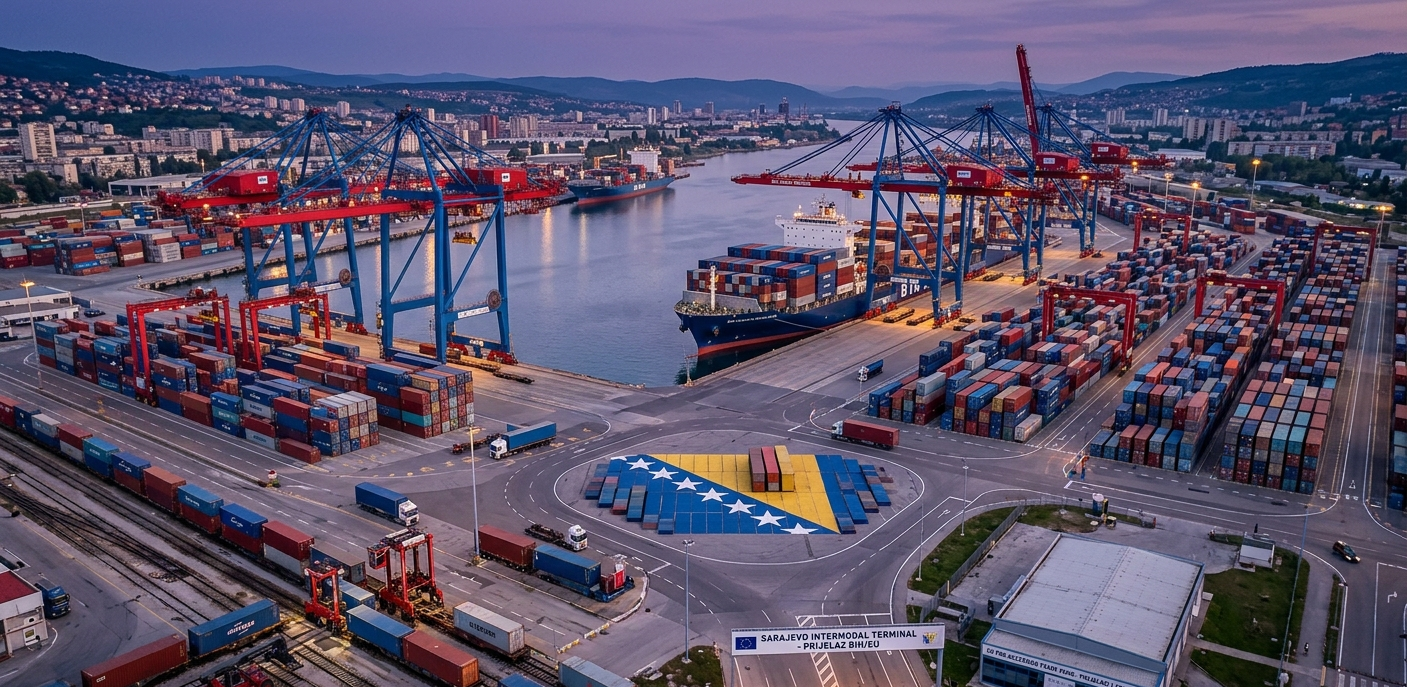
Bosnia and Herzegovina recorded more than $6.5 billion in total foreign trade during the first quarter of 2026, according to a new analysis adopted by the country’s Council of Ministers. While overall trade activity showed modest growth compared to the same period last year, officials highlighted that the country continues to face a significant trade deficit and a strong dependence on imports, raising concerns about the long term competitiveness of domestic industries.
Between January and March 2026, Bosnia and Herzegovina’s total trade volume reached approximately $6.51 billion. Exports accounted for around $2.37 billion, while imports climbed to roughly $4.14 billion, resulting in a trade deficit of approximately $1.77 billion. Compared with the first quarter of 2025, total foreign trade increased by 0.77%, with imports rising slightly faster than exports. As a result, the trade gap widened by more than 1.5%, while export coverage of imports fell marginally to 57.25%.
The European Union remained Bosnia and Herzegovina’s most important economic partner. Exports to EU member states reached approximately $1.83 billion during the first three months of the year, marking a 5.7% increase compared to the same period in 2025. The continued growth in exports to the EU highlights the bloc’s central role in supporting Bosnia’s trade sector and economic activity.
Despite the positive export trend, analysts note that the country remains heavily reliant on imported goods and raw materials. The latest figures underline ongoing structural challenges, including limited industrial competitiveness, a relatively narrow export base, and the need for greater investment in domestic production. Economic experts have frequently emphasized that strengthening manufacturing, expanding export oriented industries, and improving productivity will be essential if Bosnia and Herzegovina hopes to reduce its trade imbalance in the coming years.
The Council of Ministers has instructed the Ministry of Foreign Trade and Economic Relations to continue providing quarterly analyses of the country’s foreign trade performance. Policymakers are expected to use these reports to monitor economic trends and identify measures that could boost exports, attract investment, and reduce dependence on imports.
While the latest figures show that Bosnia and Herzegovina’s trade activity continues to grow, the data also serves as a reminder of the challenges facing the country’s economy. Maintaining export growth while reducing the persistent trade deficit will likely remain one of the key economic priorities for Bosnia and Herzegovina as it seeks stronger long term growth and greater resilience in an increasingly competitive global market.