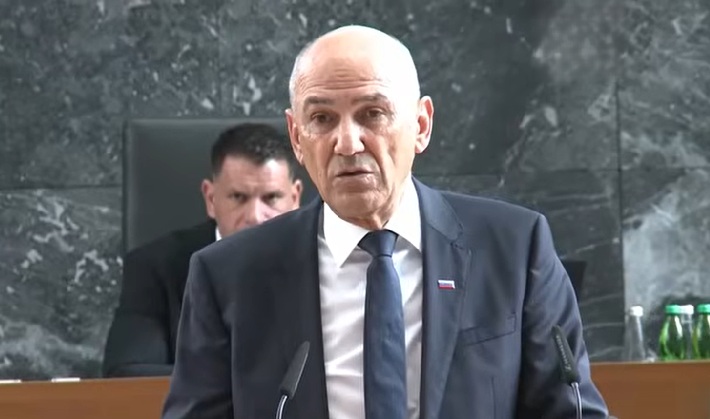
Slovenia’s new government is preparing a significant shift in its Middle East policy, with Prime Minister Janez Janša announcing plans to suspend the country’s recognition of the State of Palestine while restoring and strengthening diplomatic relations with Israel. The move marks a sharp departure from the foreign policy pursued by the previous administration.
According to Janša, the decision to freeze the recognition of Palestine was one of the conditions agreed upon during coalition negotiations. He argues that the previous government’s recognition of a Palestinian state was not adopted in accordance with Slovenian law and should therefore be suspended pending further legal review.
The new government has also announced plans to deepen political and diplomatic cooperation with Israel. Among the proposed measures is the relocation of Slovenia’s embassy from Tel Aviv to Jerusalem, a step that would make Slovenia the first European Union member state to establish its embassy in the Israeli capital.
The policy reversal follows a period of strained bilateral relations. Under the previous government, Slovenia recognized the State of Palestine, imposed restrictions on arms trade with Israel, and adopted several measures critical of Israeli policies in Gaza. Janša has pledged to reverse many of those decisions, describing Israel as an important strategic partner for Europe.
Israeli officials have welcomed the announcement, describing it as the beginning of a new chapter in relations between the two countries. Israel has also confirmed plans to open its first resident embassy in Ljubljana, further underscoring the renewed diplomatic engagement.
Although the proposed changes have drawn international attention, they are also expected to spark debate within Slovenia and across the European Union, where most member states continue to support a two-state solution while maintaining their embassies in Tel Aviv. The government’s plans will require further legal and political procedures before they can be fully implemented.