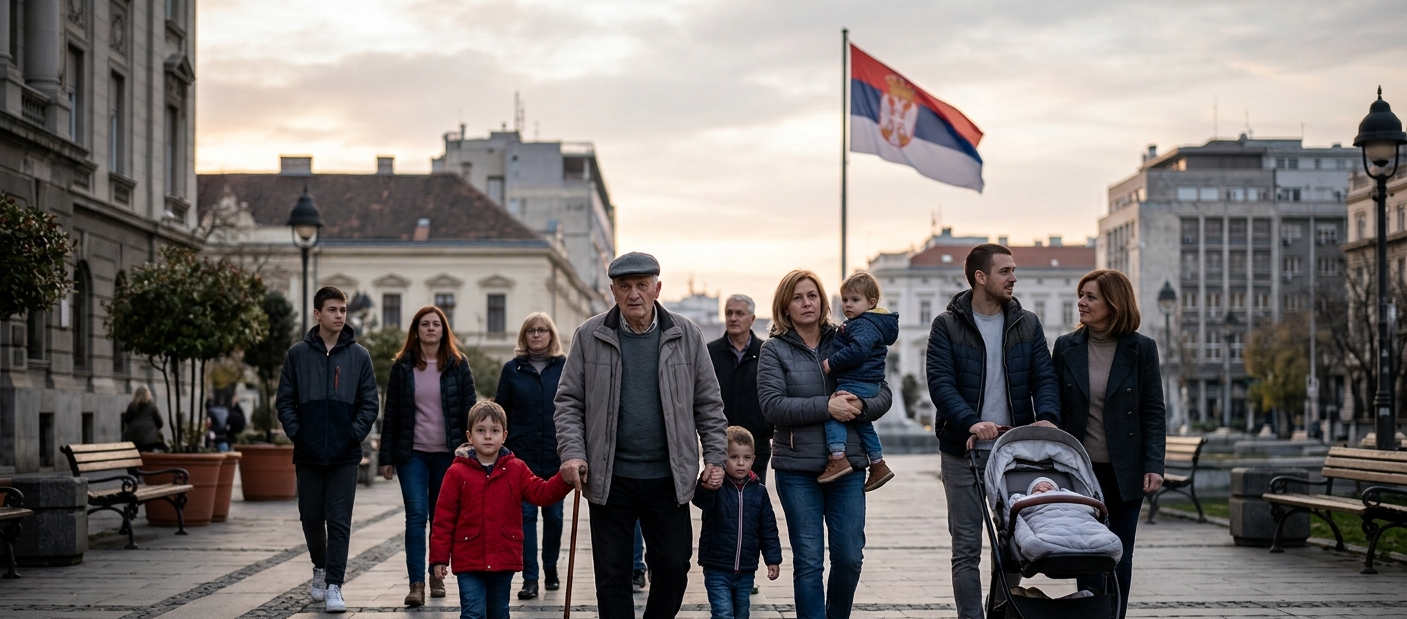
Serbia’s population has dropped to an estimated 6,549,901 in 2025, marking a decline of nearly 435,000 people since 2016 as deaths continue to significantly outpace births, according to data released by the Republic Statistics Office (RZS). The figures underscore a deepening demographic crisis that has seen the country lose the equivalent of a mid sized city annually, driven by a natural population decrease that has persisted for more than three decades. With only 59,483 live births recorded against 95,247 deaths last year, the Balkan nation is confronting one of Europe’s most severe sustained contractions.
The RZS estimates, which are based on the 2022 population census combined with annual statistics on natural changes and internal migration, reveal a stark imbalance in the country’s vital statistics. Women currently comprise 51.3% of the population at 3,363,297, while men account for 3,186,604. The total decline of 434,948 people over the past nine years is attributed almost entirely to this natural decrease, a trend that began over 30 years ago and shows little sign of reversing. Demographers note that Serbia likely holds the longest continuous record of sub replacement fertility in the world, having failed to reach the necessary 2.1 children per woman since the late 1950s. The current fertility rate stands at approximately 1.62, which while placing Serbia among the top five European countries by this indicator, remains insufficient to halt the population slide.
Demographic projections paint an even more sobering picture for the decades ahead. According to statisticians’ forecasts, by 2041 Serbia’s population could shrink to just 5.2 million inhabitants, with the average age rising to 46.4 years and one in four citizens over the age of 65. The nation already ranks among the ten oldest countries globally by share of elderly population, with more than a quarter of women now over 65 years old. This aging dynamic is steadily eroding the base of women entering reproductive age, creating a self reinforcing cycle of decline. While Belgrade and Novi Sad serve as partial exceptions, Novi Sad being the only major city in the former Yugoslavia where more children are born today than in the early 1990s, these urban centers cannot offset the broader national trend.
Emigration compounds the structural demographic pressures. Serbia has experienced predominantly negative net migration for decades, losing an average of 11,000 to 12,000 people annually as young, educated citizens, typically aged 30 to 35, seek opportunities in Germany, Austria, France, and Switzerland. Between the 2011 and 2022 censuses alone, approximately 147,000 residents left the country, and the outflow continues to hollow out the working age population. In the first half of 2025, the negative natural increase stood at 21,450 people, with births down an additional 5.2% compared to the same period the previous year, suggesting the downward trajectory is accelerating rather than stabilizing.
Serbia’s demographic trajectory presents profound challenges for its economic future, pension systems, and labor market sustainability. With the working age population shrinking and the elderly dependency ratio rising, policymakers face mounting pressure to implement comprehensive measures, from enhanced family support policies to aggressive talent retention strategies, to slow the exodus and encourage higher birth rates. Without significant intervention, the steady erosion of Serbia’s population threatens to reshape the country’s social fabric, strain public services, and undermine its long term economic competitiveness in an increasingly integrated European landscape.