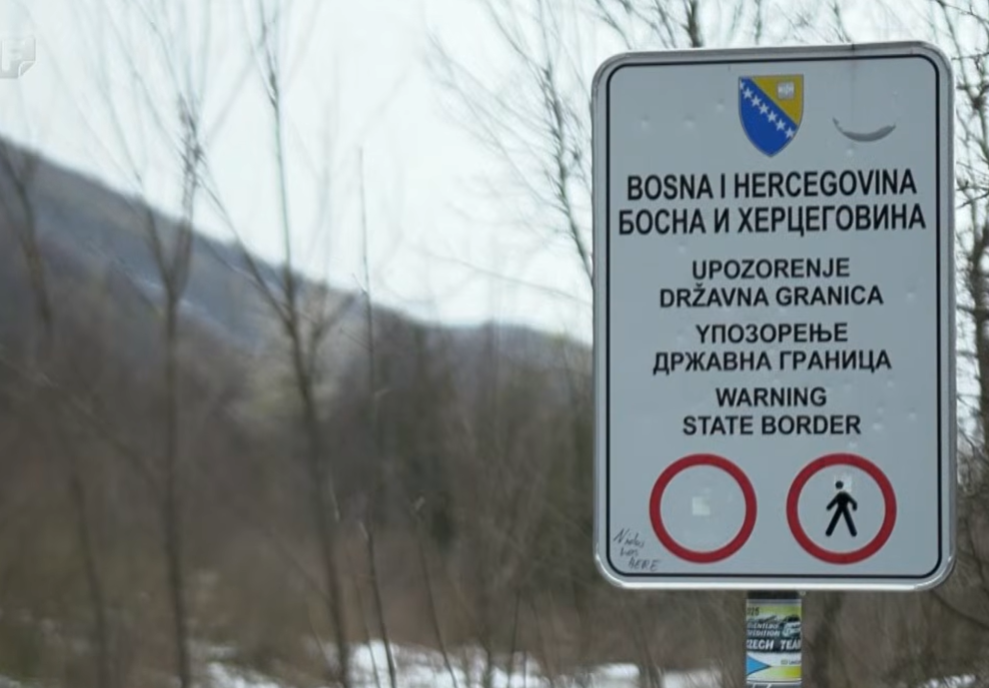
Relations between Bosnia and Herzegovina and Croatia are facing renewed strain following plans to establish a migrant reception center at the former Željava military airbase, located near the border between the two countries. The proposed site lies between the Una National Park and Plitvice Lakes National Park, raising environmental, security, and economic concerns on both sides.
The project reportedly envisions accommodating more than 1,500 migrants, with discussions already underway at various institutional levels. In Sarajevo, members of the Council of Ministers are being urged to respond more actively, particularly after parliamentary inquiries were submitted to Chairwoman Borjana Krišto. However, officials have so far avoided giving detailed explanations, which adds to public uncertainty.
The development comes against the backdrop of longstanding disagreements over Trgovska Gora, where Croatia’s plans to store radioactive waste have already strained bilateral ties. Critics in Bosnia and Herzegovina argue that the proposed migrant center represents another unilateral move near the shared border, intensifying concerns among local communities.
In Bihać, a city heavily affected by previous migration waves, local authorities and residents fear a repeat of earlier crises marked by overcrowded camps and security challenges. Mayor Elvedin Sedić warned that the planned facility could function more like a detention center than a temporary shelter, potentially placing additional pressure on the region.
State-level officials have also raised alarms. Lawmaker Albin Muslić** called for urgent diplomatic action, criticizing what he described as a lack of awareness and responsiveness from national leadership regarding the project.
Opposition is not limited to Bosnia and Herzegovina. In the Croatian municipality of Plitvička Jezera, residents have already organized protests, expressing fears that the center could negatively impact tourism—one of the region’s main economic drivers. Local officials, including municipal head Hrvoje Matejčić, confirmed that discussions about the project are ongoing, with mentions of a temporary facility consisting of hundreds of container units.
Although no final decisions have been publicly confirmed, indications suggest that construction could begin soon, partly driven by funding timelines linked to the European Union. Some local leaders interpret the plan as part of a broader European strategy to manage migration flows closer to external borders.
As uncertainty continues, the Željava project is emerging as a new point of contention in already fragile relations between the two neighboring countries, with both political leaders and citizens demanding greater transparency and coordination before any final steps are taken.