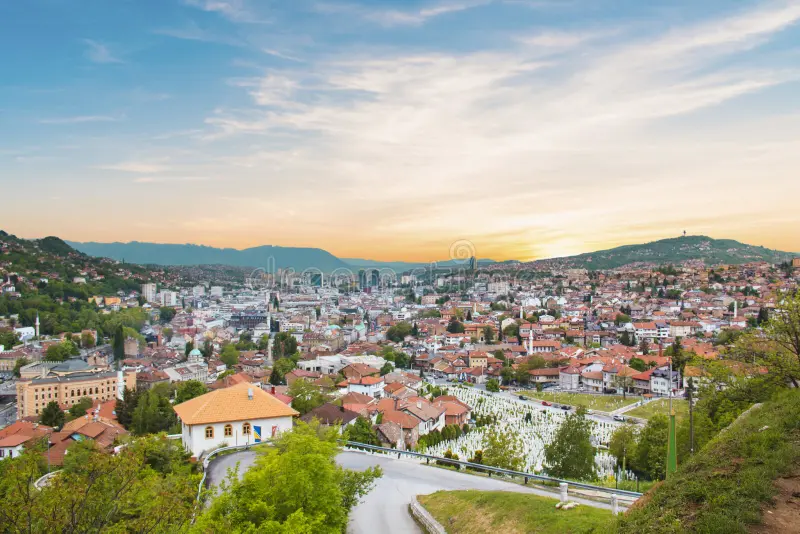
The city of Sarajevo is marking its City Day today with a series of commemorative, ceremonial, and cultural activities, honoring one of the most significant dates in its history.
April 6 holds a special place in the city’s collective memory, symbolically linking two pivotal historical moments: the liberation of Sarajevo from fascist occupation in 1945 and the beginning of the siege in April 1992. As such, the date represents both the struggle for freedom and a lasting tribute to those who lost their lives defending the city.
The day began with citizens and officials laying flowers and paying tribute at several memorial sites, including the Eternal Flame, Kovači Memorial Cemetery, the memorial to the children killed during the siege, the monument to fallen police officers in Veliki Park, and the Vraca Memorial Park. Delegations from various levels of government, institutions, veterans’ organizations, and members of the public took part in the commemorations.
During the siege of Sarajevo, the forces killed 11,541 civilians, including 1,601 children. The city endured widespread destruction, with homes, infrastructure, cultural heritage, and medical facilities severely damaged. Residents lived for years without necessities such as electricity, water, heating, and adequate medical care. Despite these conditions, the citizens and the Army of the Republic of Bosnia and Herzegovina ultimately defended the city.
The central event of the day is scheduled for this evening at Sarajevo City Hall, where a formal session of the City Council will be held. The session will be opened by Council Chairman Alen Girt, followed by an address from Mayor Samir Avdić. During the ceremony, the City of Sarajevo awards for 2026 will be presented, including the traditional April 6 Award, recognizing individuals and organizations for their outstanding contributions to the city’s development.
The program also includes a wide range of cultural, artistic, and sporting events across the city, highlighting Sarajevo’s long-standing values of unity and multiculturalism.
As part of the celebrations, Sarajevo’s city museums are hosting a special “Olympic Heritage of Sarajevo – Open Doors Day,” offering free entry to institutions such as the Olympic Museum, the “Valter Defends Sarajevo” exhibition, and the Sarajevo Memorial Room. The initiative aims to preserve the memory of the Winter Olympics while promoting the city’s rich cultural and historical legacy.
This year’s observance once again serves as an opportunity to reflect on Sarajevo’s complex past while reaffirming the enduring principles of freedom and solidarity that define the city.