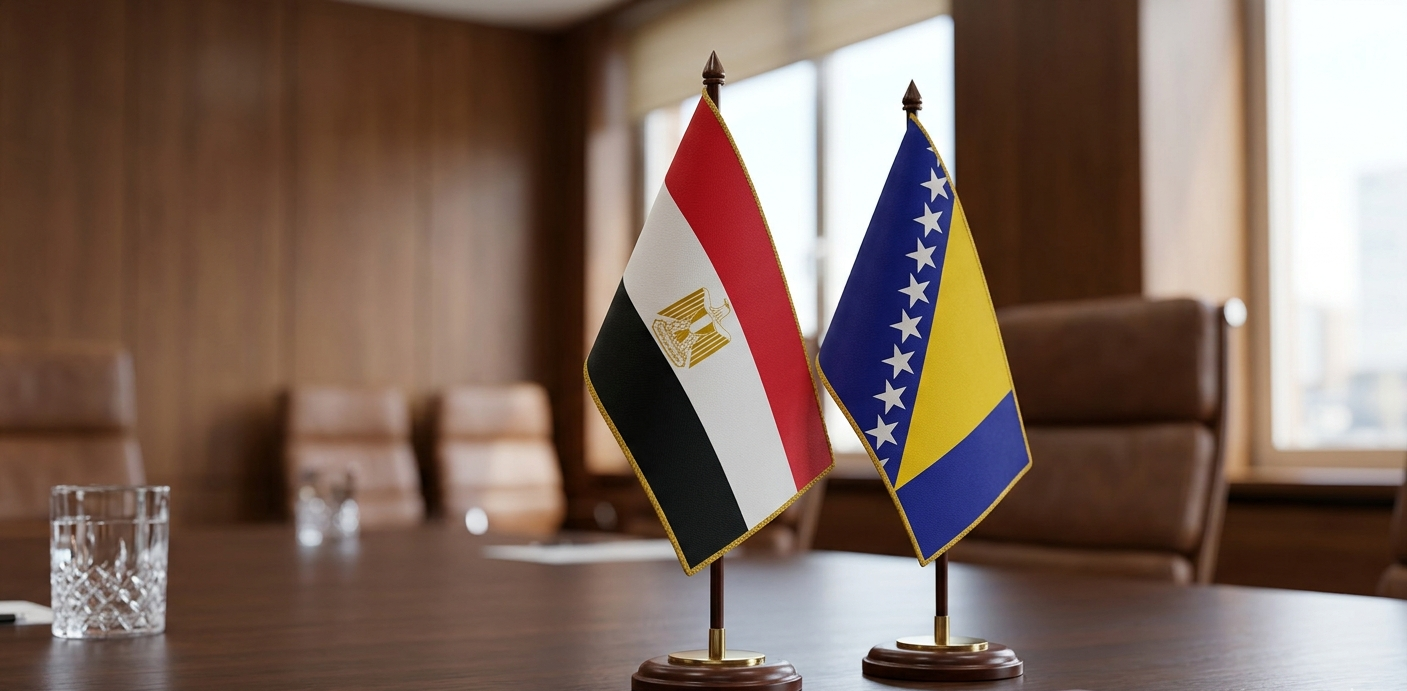
Bosnia and Herzegovina is poised to sign its first ever defense cooperation agreement with an Arab and African nation, as Minister of Defense Zukan Helez received Egyptian Ambassador Walid Haggag in Sarajevo on Wednesday to finalize preparations for the historic pact. The agreement, approved by the Council of Ministers in March and subsequently by the Presidency, will be formally signed during Helez’s second official visit to Cairo in June alongside Egyptian Defense Minister General Abdel Mageed Saqr, marking the first strategic step in formalizing security and defense relations between the two countries . Ambassador Haggag emphasized that this will be the first agreement of its kind between Bosnia and Herzegovina and an Arab and African country, expressing pride in the initiative’s significance for both nations.
The defense partnership builds on a foundation of growing economic ties, particularly in the arms trade. Egypt has emerged as the most important African export destination for Bosnia’s defense industry, with Egyptian imports of Bosnian weapons and ammunition reaching approximately 57 million euros in 2019 and remaining robust through 2020 and 2021. During Helez’s first visit to Cairo in September 2025, five Bosnian defense companies accompanied the delegation to explore business cooperation, and the two ministers discussed Egypt serving as a “strategic hub” for distributing Bosnian defense products across Africa and the Arab world, while Bosnia could facilitate Egyptian products’ entry into European markets. The Egyptian side has already promised to accept all Bosnian military candidates for training at Egypt’s prestigious Military Academy and to support procurement of specialized NATO certified vehicles for transporting dangerous explosive materials.
For Bosnia and Herzegovina, the agreement represents a significant diversification of its defense partnerships beyond traditional Euro Atlantic frameworks. While the country maintains close cooperation with NATO through its Membership Action Plan and a newly adopted Individual Tailored Partnership Program for 2025-2028, and receives substantial US military donations including helicopters and Humvees, the Egyptian deal opens access to new markets and training opportunities. The timing is particularly relevant given Bosnia’s booming defense industry, which exported approximately €200 million worth of military equipment in 2025, double from previous years, and has become an increasingly significant supplier of artillery ammunition and military components to over 40 countries amid global instability. As Helez noted, the two countries’ economies once had much closer cooperation, and he believes defense industry achievements can now drive the revival of broader economic ties. Whether this strategic pivot can deliver tangible benefits for Bosnia’s underfunded armed forces while navigating the complex geopolitics of Middle Eastern security partnerships remains to be tested in Cairo this June.