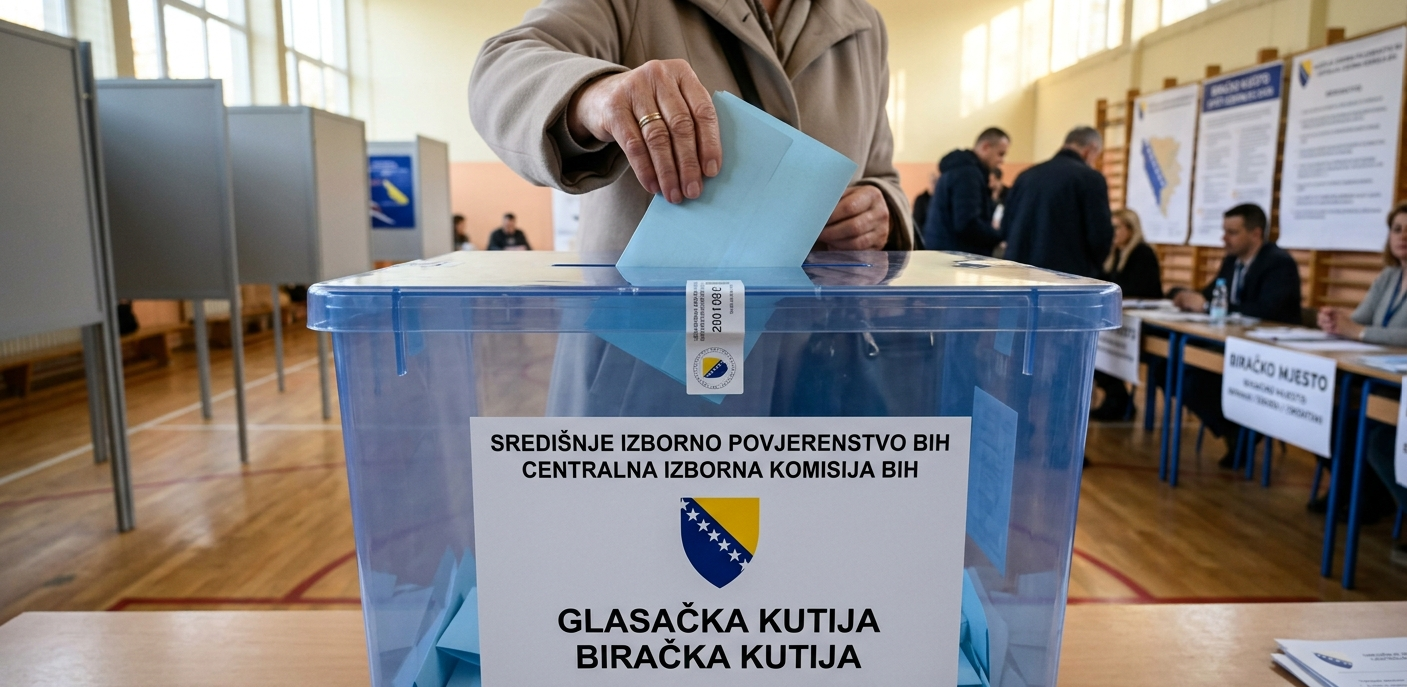
The Central Election Commission of Bosnia and Herzegovina formally adopted a decision on May 6, 2026, to hold general elections on Sunday, October 4, triggering a campaign season that will unfold against the most volatile political landscape in the country since the 1992-1995 war. The elections will determine the three member rotating presidency, the 42 seat national House of Representatives, entity parliaments in both the Federation and Republika Srpska, plus cantonal assemblies and the RS presidency, an extraordinarily complex electoral architecture that reflects the Dayton Agreement’s ethnic power sharing framework. The CEC simultaneously closed the central voters’ register, adopted instructions on election activity deadlines, and announced plans for finalizing ballot designs, with more details promised at a forthcoming press conference.
The timing could not be more precarious. Bosnia is emerging from its worst political crisis in three decades, triggered by Republika Srpska President Milorad Dodik’s separatist legislation in 2023 that attempted to nullify the authority of Bosnia’s Constitutional Court and High Representative, followed by his February 2025 conviction and one year prison sentence for defying state institutions. Although Dodik was formally removed from office in August 2025 after the Appeals Chamber upheld the verdict, his SNSD party engineered the election of loyalist Siniša Karan as acting president, while Dodik retained SNSD chairmanship and continued separatist rhetoric during a controversial February 2026 visit to Washington where he pursued US support for RS status. The November 2025 snap RS presidential election that brought Karan to power was damaged by such severe irregularities that the CEC annulled results at 136 polling stations across 17 constituencies, forcing a partial rerun in February 2026 that Karan narrowly won again, underscoring the fragility of electoral integrity that will haunt the October vote.
Beyond the immediate crisis, structural challenges threaten the credibility of the 2026 elections. The OSCE and CEC have launched voter education campaigns targeting first time voters, but political actors continue blocking electoral technology reforms that could enhance transparency, with some politicians spreading disinformation claiming such technologies are “unproven” despite their widespread use elsewhere. The Electoral Vulnerability Index identifies government intimidation, voting irregularities, vote buying, and restrictions on opposition parties as persistent risk factors, while the current dispute between RS and central authorities over judicial and law enforcement jurisdiction may escalate further before October. International observers warn that without progress on constitutional reform, media freedom protection, and inter ethnic reconciliation, the risk of election related violence remains high. For Bosnia’s citizens, the October vote represents more than a routine democratic exercise, it is a test of whether the state can survive its most severe internal challenge since Dayton, or whether Dodik’s separatist project will find new institutional channels to advance.