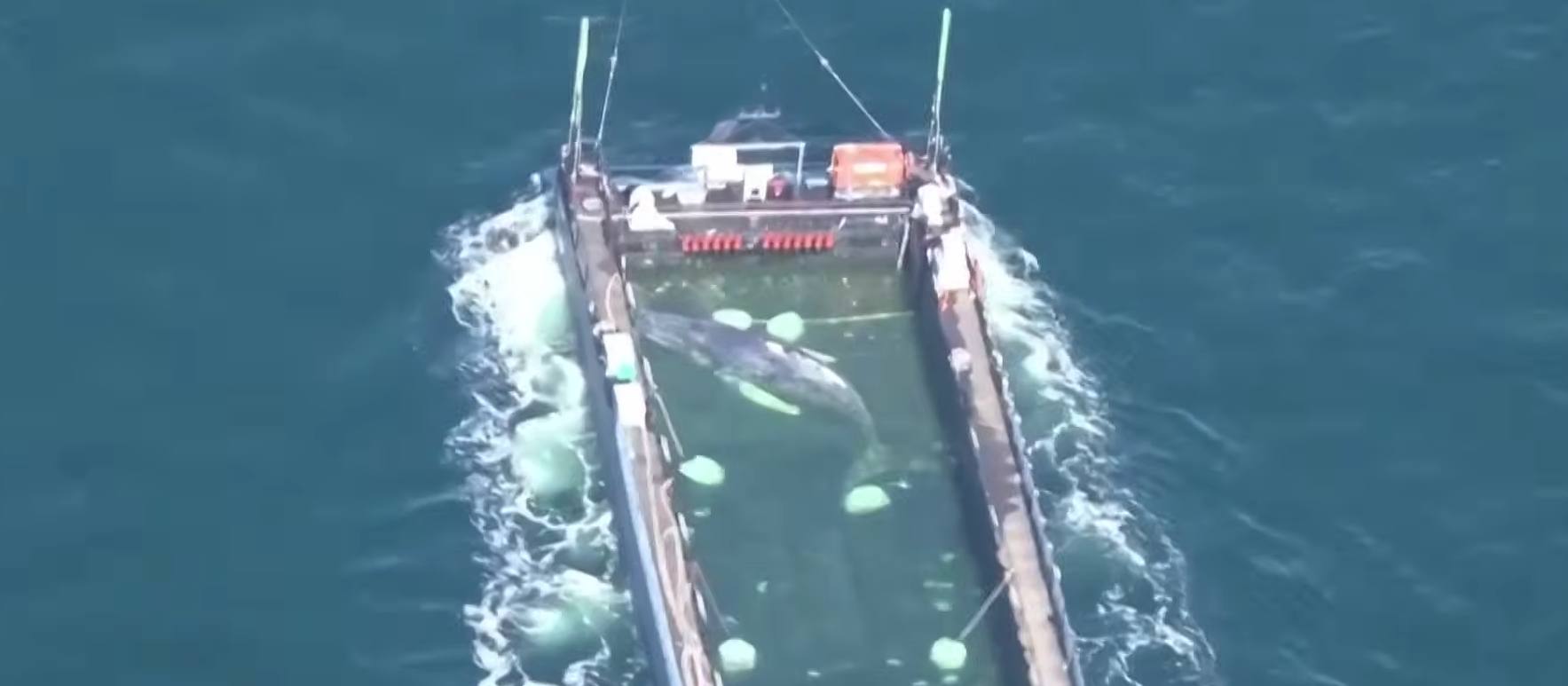
Timmy, the humpback whale that captured global attention after stranding in German waters for over a month, is now presumed dead following a controversial private rescue operation that marine biologists had warned would likely prolong the animal’s suffering rather than save its life. The 40 foot whale, which became stranded in the Baltic Sea near Wismar in early March with fishing nets embedded in its mouth and severe freshwater skin disease from the low salinity environment, was finally loaded onto a massive water filled barge and transported to the North Sea in a daring operation funded by German multimillionaires Karin Walter Mommert and Walter Gunz at a cost exceeding 1.5 million euros. Despite celebrations from the private rescue team when Timmy was released using a quick release lasso approximately 70 kilometers north of Skagen, Denmark, an area of intense shipping traffic, marine biologists from the German Oceanographic Museum now believe the animal almost certainly perished due to extreme exhaustion and the inability to survive in deep water after prolonged stranding.
The rescue ignited a fierce debate between hope and scientific caution that exposed deep divisions in how modern societies respond to wildlife crises. The International Whaling Commission repeatedly criticized the intervention, arguing that “these interventions, although well meant, impose very considerable additional stress upon a creature that is already gravely ill, to little ultimate benefit,” while acknowledging the “considerable technical, logistical and financial effort” involved. German authorities and institutional experts had initially advocated allowing Timmy to die naturally on the sandbank, with one scientist from the German Oceanographic Museum inviting journalists to observe a planned necropsy rather than a rescue. The situation spiraled into chaos when celebrity biologist Robert Marc Lehmann mobilized public opinion through social media, accusing officials of incompetence and attracting a motley crew of volunteers including a self proclaimed “Whale Whisperer,” a tattooed YouTuber with alleged far right ties, and a veterinarian from Hawaii. Veterinarian Kirsten Tenis later claimed she was barred from witnessing the release and that the animal was freed “prematurely and in secrecy,” while the tugboat captain expressed regret for participating in an operation where his company was initially praised then accused of animal abuse.
The tragedy of Timmy extends beyond one whale to illuminate the broader crisis facing marine ecosystems worldwide. Environmental organizations including Greenpeace and WWF had opposed the transport, warning that overfishing, climate change, and fossil fuel exploitation pose existential threats to ocean life, with warming waters driving species migrations and mass die offs of sensitive organisms like coral. The whale’s original stranding likely resulted from human causes, ship collisions that caused lacerations, fishing gear entanglement, and ocean noise pollution that disorients baleen whales navigating by sight and magnetic fields rather than echolocation. The case offers a sobering reflection on how viral social media campaigns, billionaire philanthropy, and emotional public responses can override scientific expertise, producing outcomes that satisfy human narratives of rescue while failing the animals they claim to help. Whether Timmy’s death will prompt more disciplined protocols for future strandings, or merely fuel the next round of crowdfunding for similarly doomed interventions, remains an open question as marine biologists mourn both the whale and the missed opportunity to educate the public about the real threats facing ocean wildlife.