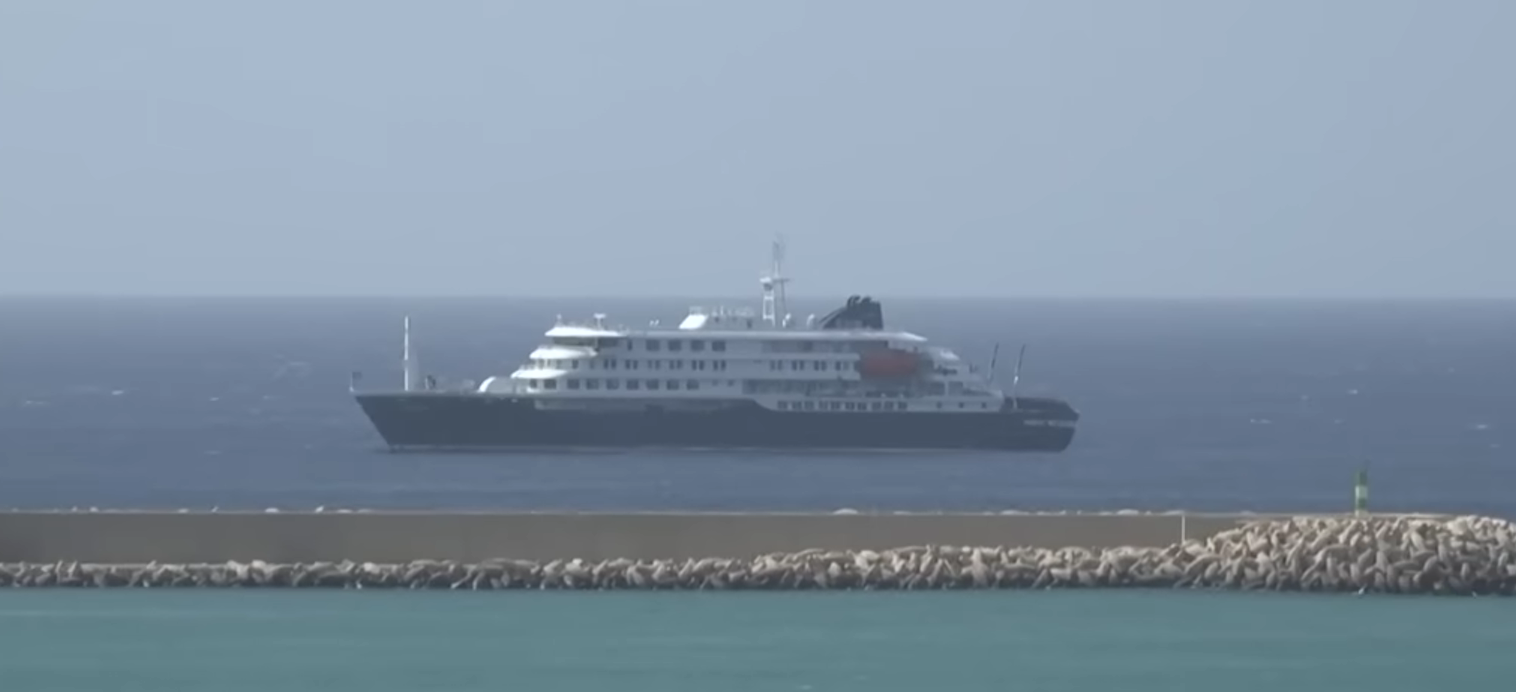
The World Health Organization confirmed on Thursday that eight hantavirus cases, including three confirmed infections and five suspected, have been identified among passengers and crew of the Dutch cruise ship MV Hondius, as health authorities across at least five countries race to trace contacts and contain an outbreak that has already killed three people since the vessel departed Argentina on April 1. The ship, carrying nearly 150 people of 23 nationalities, is currently anchored off Praia, Cape Verde, after local authorities denied it port access, and is now heading toward Spain’s Canary Islands despite objections from regional president Fernando Clavijo, who demanded a meeting with Prime Minister Pedro Sánchez over what he called decisions taken “behind the backs of the Canary Islands institutions”.
The outbreak involves the Andes strain of hantavirus, the only known variant capable of rare human to human transmission through close contact, which causes hantavirus pulmonary syndrome with a case fatality rate between 20% and 35%. South African laboratory testing confirmed the strain in two cases linked to the ship, while a Swiss passenger who disembarked earlier tested positive in Zurich, and British, Dutch, German, and American nationals are among those evacuated or monitored. The CDC is coordinating a “whole of government response” for 17 American passengers still aboard, while Georgia and Arizona health officials monitor returned travelers who remain asymptomatic. The ECDC warned that everyone on the ship should be considered a close contact due to shared social areas, though it stressed that casual transmission is unlikely and the public health risk remains low.
The situation has drawn inevitable comparisons to the early COVID 19 pandemic, with passengers having dispersed across multiple countries before the outbreak was fully understood, yet health officials emphasize this is not a comparable threat. The MV Hondius crisis illustrates how modern travel infrastructure, cruise ships connecting remote destinations like Antarctica, Tristan da Cunha, and the South Atlantic, can transform localized rodent borne diseases into international incidents within weeks. Argentine investigators believe the index case, a Dutch couple who died, may have contracted the virus during a bird watching outing at a Ushuaia landfill before boarding, highlighting how tourism intersects with ecological risk in an era of climate driven disease expansion. Whether the Canary Islands docking plan, which involves offshore anchoring and direct airport transfers to avoid local contact, can prevent further spread remains uncertain as the ship’s doctor and two other patients were evacuated to specialized European hospitals in serious condition.