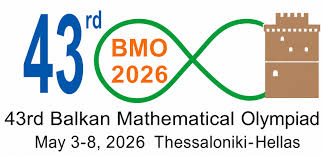
Bosnian students delivered a historic performance at the 43rd Balkan Mathematical Olympiad in Thessaloniki, Greece, winning two gold and three silver medals to secure second place among 11 competing nations, the country’s best ever team result at any Olympiad. Vuk Janković from Trebinje achieved a perfect score of 40 points, becoming the only competitor among 64 official participants to solve all problems flawlessly and further cementing his status as the most successful mathematical competitor in Bosnia and Herzegovina’s history. His teammate Dino Ahić also claimed gold as a first grade student, while Andrej Krčmar, Harun Memić, and Adnan Osmić added silver medals, with sixth competitor Faris Šabeta falling just two points short of bronze.
The triumph builds on a remarkable trajectory for Bosnian mathematics that has accelerated dramatically in recent years. Janković, who began winning bronze at the International Mathematical Olympiad while still in elementary school, has now accumulated multiple gold medals at both Balkan and world levels, including a record breaking 35 out of 42 points at the 2024 IMO in Australia that ranked him 27th among 609 competitors from 108 countries. The Sarajevo Canton Mathematicians’ Association, founded in 2016 by faculty from the University of Sarajevo’s Department of Mathematics, has systematically developed this talent pipeline through local competitions, training camps, and international mentorship, with team leaders Amar Kurić and Tijana Babić, former IMO competitors themselves, guiding the current generation. The 2026 Balkan result marks the first time Bosnia has placed among the top three teams at the Balkan Games, surpassing traditional powerhouses like Serbia, Bulgaria, and Greece.
For a country more often associated with political fragmentation and economic struggle, the mathematics success offers a rare narrative of excellence that transcends ethnic boundaries and administrative divisions. The students’ trip was jointly financed by the Sarajevo Canton Ministry of Education and the Republic Pedagogical Institute of Republika Srpska, demonstrating that educational achievement can serve as common ground in a divided society. Yet the broader context remains challenging, Bosnia’s education system is fractured along entity lines, university funding is scarce, and brain drain continues to claim talented young people who seek opportunities abroad. Whether Janković and his teammates remain in Bosnia to build the next generation of mathematical talent, or follow the path of predecessors who left for European and American institutions, will determine whether this historic performance represents the beginning of a sustained tradition or a fleeting moment of brilliance in a country that struggles to retain its brightest minds.