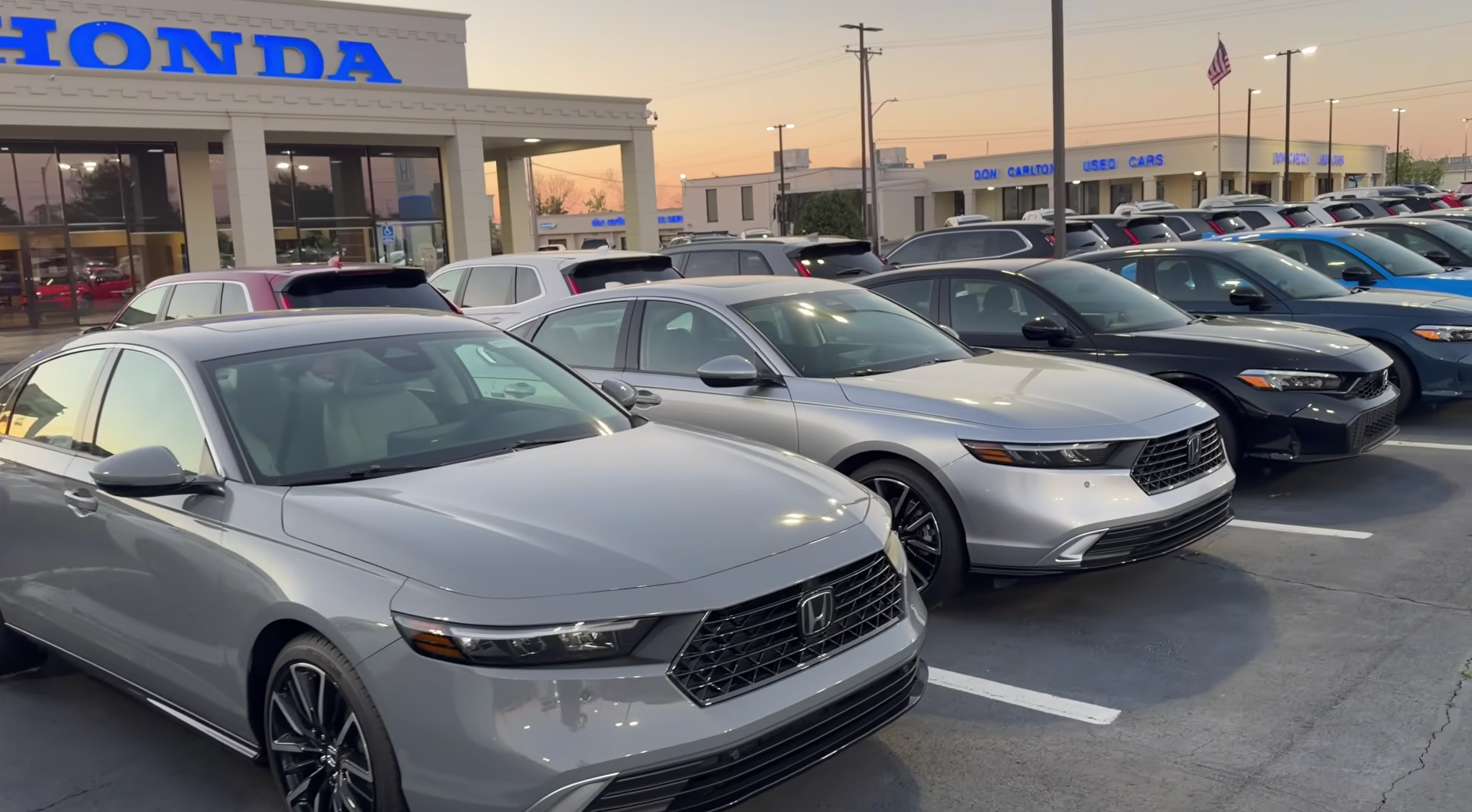
Honda has recorded its first annual loss since 1955, posting a net loss of $2.6 billion for the fiscal year ending March 2026 after taking a nearly $10 billion hit from write downs tied to its abandoned electric vehicle strategy. The Japanese automaker, which had projected a $7.4 billion profit before the charges, saw EV related losses totaling an estimated $16 billion across the past and current fiscal years, prompting CEO Toshihiro Mibe to abandon the company’s 2040 all electric target and pivot back toward hybrids and gasoline engines.
Honda’s collapse is part of an industry wide bloodbath that has seen Detroit’s automakers torch over $53 billion in shareholder value. Stellantis led the carnage with a $26.3 billion net loss and €25.4 billion in EV write downs, its first annual loss since forming in 2021, while Ford took a $19.5 billion charge and GM absorbed $7.6 billion in EV related costs. The root cause traces to the Trump administration’s September 2025 elimination of the $7,500 federal EV tax credit and rollback of Biden era emissions standards, which caused US EV sales to drop roughly 40% overnight and left automakers with billions in stranded factory equipment, battery contracts, and supplier commitments for vehicles Americans no longer wanted to buy.
Despite the massive retreat, automakers have not abandoned electrification entirely. Tougher emissions rules in Europe and Asia, plus the existential threat of low cost Chinese EV manufacturers, mean companies must maintain some electric presence even as they return focus to high margin gasoline trucks and SUVs. Honda’s motorcycle division provided a lifeline, with sales rising to 22.1 million units and helping overall revenue reach $138 billion, while the company forecasts a return to $1.7 billion profit for fiscal 2027. For the global auto industry and consumers, the episode exposes the dangers of tying multi decade industrial strategy to short term political incentives, billions invested based on Biden era subsidies and penalties were rendered worthless by a single election, leaving workers, suppliers, and shareholders to absorb the costs of policy whiplash.