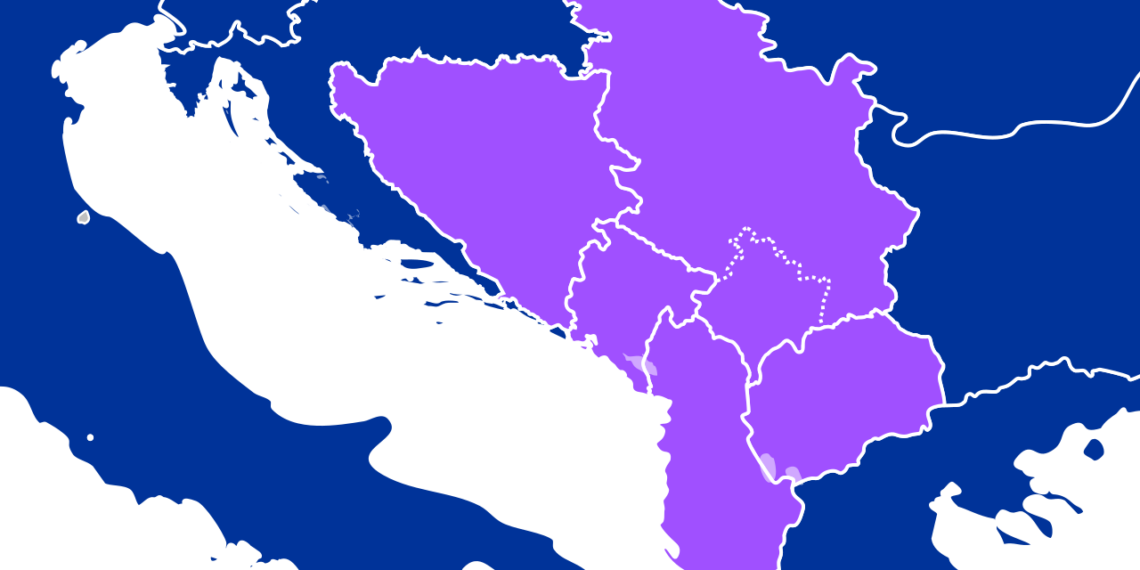
A new non paper reportedly backed by five European Union member states proposes a gradual integration model for the Western Balkans, aiming to bring the region closer to EU membership through phased access to the European Single Market before full accession.
The document focuses on the idea of “intermediate steps” toward membership, arguing that countries in the region should begin benefiting from parts of the EU system earlier in the accession process, particularly in areas tied to trade, mobility, services, infrastructure, and economic integration.
According to the proposal, deeper access to the Single Market could serve as both a political incentive and an economic accelerator for the Western Balkans, helping candidate countries narrow the development gap with EU member states while reforms continue.
The initiative reflects a broader shift in European discussions on enlargement, where gradual integration is increasingly seen as a more realistic and dynamic approach compared to the traditional “all or nothing” accession model. Supporters of the concept argue that allowing earlier participation in certain EU mechanisms could strengthen regional stability, attract investments, and reduce economic fragmentation.
The proposed framework reportedly builds on the EU Growth Plan for the Western Balkans, which already foresees stronger integration with the EU Single Market in sectors such as transport, digital services, energy, payments, and the free movement of goods and workers. The Growth Plan is supported by a €6 billion financial package for the period between 2024 and 2027.
Analysts note that the proposal could particularly benefit countries that are more advanced in the accession process, such as Montenegro, Albania, and North Macedonia, by allowing them to integrate economically with the EU even before achieving formal membership.
At the same time, the initiative reflects growing concern within parts of the EU that the enlargement process has become too slow and politically uncertain. By introducing phased integration, Brussels could attempt to maintain momentum in the region while encouraging governments to continue implementing reforms tied to the rule of law, governance, and economic standards.
Although the non paper does not represent an official EU position, it signals increasing discussion among member states about redesigning the enlargement process and creating more tangible short term benefits for Western Balkan countries on their path toward European Union membership.