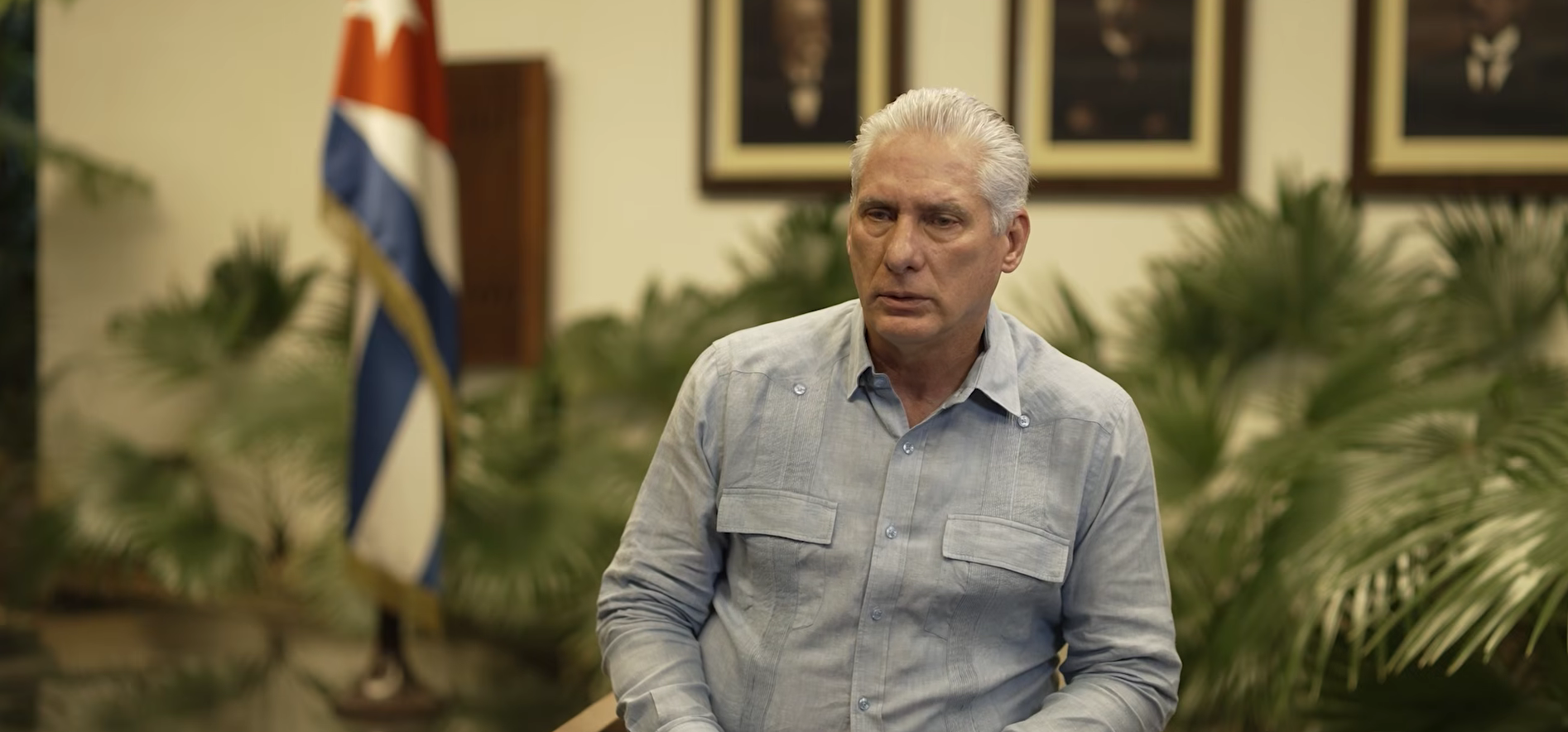
The Trump administration has imposed sweeping sanctions on Cuban President Miguel Díaz-Canel, members of the Castro family, and key military and economic entities, escalating a pressure campaign that already includes an oil blockade, tariffs on fuel suppliers, and the recent indictment of former president Raúl Castro. Announced on 4 June, the measures target Díaz-Canel’s wife and stepson, Raúl Castro’s son and grandson, the Ministry of the Revolutionary Armed Forces (MINFAR), and the military conglomerate GAESA, which controls much of Cuba’s economy. Secretary of State Marco Rubio framed the sanctions as a strike against those who “sustain the regime’s malicious campaign to subvert and destabilize U.S. national security,” warning that foreign banks and companies dealing with designated entities risk secondary sanctions.
The sanctions are the latest salvo in an administration strategy that appears designed to incapacitate the Cuban economy and force political change in Havana. Trump has imposed tariffs on countries supplying oil to Cuba, aggravating an energy crisis that has caused widespread blackouts, food shortages, and the collapse of the island’s ageing power grid. The president has also floated a “friendly takeover” of the country and sent a military carrier to the region, though he denied plans for military escalation after the Castro indictment, saying “the place is falling apart.” Rubio’s statement on Thursday accused Havana of serving as a “forward operating base for global irregular warfare against U.S. interests,” claiming the regime recruits, trains, and equips “violent left wing militants” including “Marxist terrorist groups in the United States.” The State Department fact sheet accompanying the sanctions warned that anyone dealing with entities 50% or more owned by GAESA, MINFAR, or the Ministry of the Interior faces sanctions exposure and should freeze related activities.
Despite the punitive measures, Rubio left the door slightly ajar for diplomacy. Testifying before the House Foreign Affairs Committee on 3 June, he said the U.S. “is open to a negotiated situation that puts Cuba on a path towards democracy, prosperity, freedom, normalcy,” and suggested a transition modelled on the Czech Republic or Poland that preserves “certain institutions in their society in order to provide stability and longevity.” Yet he acknowledged that Washington has not found a Cuban equivalent to Delcy Rodríguez, the former Maduro associate who helped facilitate Venezuela’s transition, and admitted there is no singular individual the U.S. would trust to lead a Cuban transition “from start to finish.” The admission underscores a fundamental challenge, the administration is squeezing Havana with ever tighter sanctions while lacking a clear vision for what comes next. Whether the pressure produces regime change, humanitarian catastrophe, or simply entrenches the Communist Party’s grip on power remains the unanswered question at the heart of Trump’s Cuba policy.