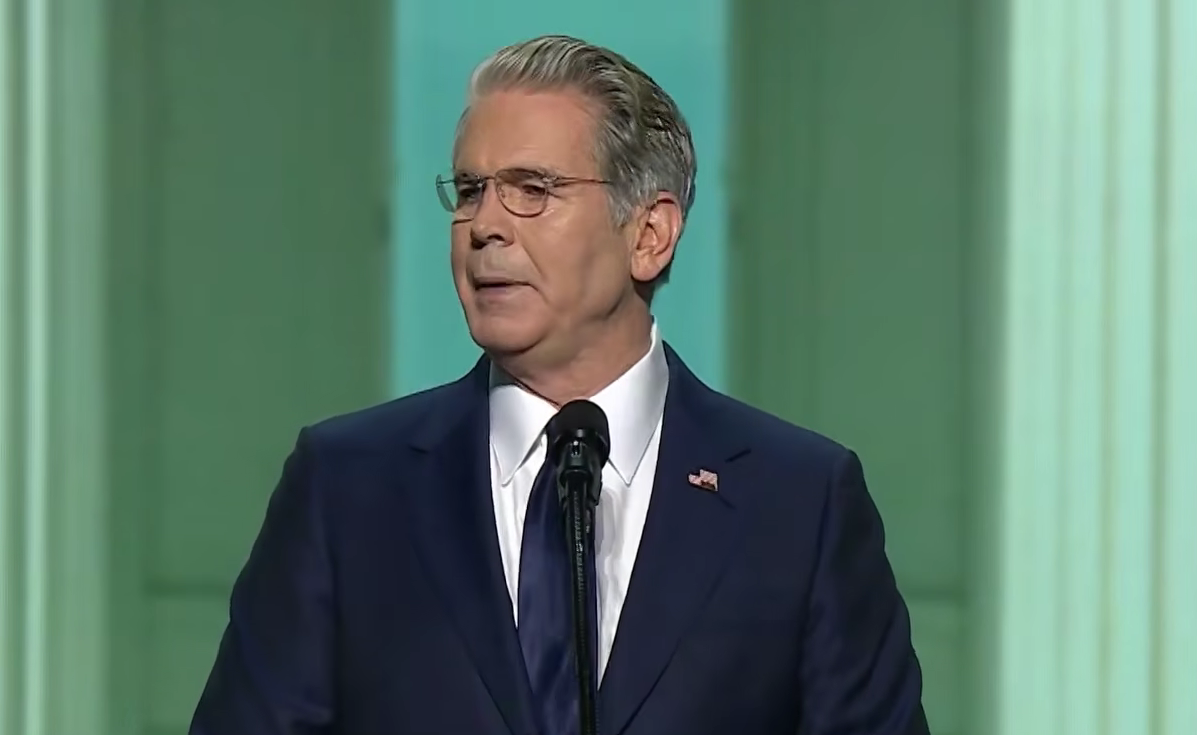
U.S. Treasury Secretary Scott Bessent has openly defended using America’s financial strength as a tool of foreign policy, arguing that the country’s economic resources can support allies and advance broader strategic goals. Speaking at the SMU Cox School of Business, Bessent pointed to Argentina as an example, saying Washington’s support for President Javier Milei’s government was based on his view that its economic policies were moving in the right direction.
His comments offer a clear indication that the Trump administration sees financial policy not only as an economic instrument but also as a way to expand U.S. influence abroad. Argentina has become one of the clearest examples of this strategy, with the United States previously providing a multibillion dollar financial support package aimed at stabilizing the country’s currency and strengthening confidence in Milei’s economic program.
Bessent Promotes Financial Power as Foreign Policy
Bessent described Argentina as a leading example of Washington using its financial position to encourage a government viewed as friendly to U.S. interests. The approach reflects a broader effort by the Trump administration to deepen American influence in the Western Hemisphere, particularly as Washington competes for regional influence with other global powers.
Bessent’s comments also highlight the Treasury Department’s increasingly direct involvement in international financial markets. One example was the rare joint intervention with Japan on July 31 to support the yen and reduce the risk of instability spreading through global markets. Bessent said close coordination with Japanese policymakers gave the United States a strong understanding of how Japan would respond to currency pressures.
The Treasury has continued emphasizing cooperation with Japan, with Bessent recently stressing the importance of addressing excessive yen weakness and maintaining stability in financial markets. However, the effectiveness of such interventions has not always been straightforward, as currency and bond markets are influenced by numerous economic and geopolitical factors.
The yen has strengthened significantly in recent weeks, while broader movements in currency and bond markets have been driven by geopolitical tensions, oil prices and expectations for central bank policy. At the same time, U.S. long term borrowing costs have remained elevated despite Treasury efforts to improve market conditions.
The department recently announced plans to purchase as much as $6 billion of longer dated Treasury bonds in a single operation, an increase intended to improve market liquidity. Rising Treasury yields are particularly important because they influence borrowing costs throughout the American economy.
The 30 year Treasury yield recently reached its highest level since 2007, while the benchmark 10 year yield has also remained near multi year highs. Mortgage rates have responded to those pressures, with the average U.S. 30 year fixed mortgage rate reaching 6.85% for the week ending September 4, its highest level since June 2025.
U.S. Financial Power Faces Benefits and Risks
Higher borrowing costs can make homes, business investment and government financing more expensive, demonstrating the limits of how easily policymakers can influence financial markets. While government intervention can provide additional leverage, markets continue to respond to economic fundamentals and investor expectations.
Bessent’s broader approach fits into a growing use of economic tools as part of U.S. foreign policy. The Treasury Department has also expanded sanctions and financial restrictions against governments and organizations Washington considers threats to U.S. interests. In September, the department announced new sanctions targeting Iran’s aviation sector and financial networks, demonstrating how access to the international financial system can be used to pressure foreign governments and organizations.
Supporters of the strategy argue that the United States possesses enormous financial advantages because of the global role of the dollar, the size of its capital markets and the importance of U.S. Treasury securities. Using those advantages can allow Washington to exert influence without relying solely on traditional diplomatic or military tools.
Critics, however, worry that using financial power too aggressively could undermine confidence in U.S. markets or encourage other countries to develop alternatives to the dollar centered financial system. The challenge for the Trump administration will therefore be balancing influence with credibility.
Financial interventions can strengthen alliances and give Washington additional leverage, but markets ultimately respond to economic fundamentals as well as government policy. Bessent’s comments suggest that the Treasury Department intends to make greater use of America’s financial position as part of U.S. foreign policy. Whether that approach strengthens American influence or creates new risks for the U.S. economy will depend on how effectively Washington uses that power without damaging the financial stability it relies on.